
What Does a Commercial Mechanical Contractor Do? A Guide for South Carolina Businesses

Keeping a commercial building running requires much more than fixing the air conditioner when it stops cooling. HVAC equipment, plumbing, electrical systems, controls, piping, and other building components all have to work together to support everyday operations.
That is where a commercial mechanical contractor can make a difference.
Rather than working with separate companies every time a building system needs attention, businesses can turn to a mechanical contractor with expertise across multiple trades. From routine maintenance and emergency repairs to equipment replacements and facility upgrades, the right contractor can help businesses keep essential systems reliable while planning for future needs.
For businesses throughout South Carolina, understanding what a commercial mechanical contractor does can make it easier to determine when it is time to bring one into your facility.
What Is a Commercial Mechanical Contractor?
A commercial mechanical contractor specializes in installing, maintaining, repairing, and upgrading the systems that help commercial buildings function.
Depending on the contractor's capabilities, that can include heating and cooling, plumbing, electrical work, piping, equipment installation, and other building systems.
Commercial properties also present different challenges than residential buildings. An office, restaurant, hotel, retail property, healthcare facility, warehouse, or industrial building may have larger equipment, longer operating hours, greater electrical demand, more complicated plumbing infrastructure, and stricter operational requirements.
That makes commercial mechanical work about more than simply completing an individual repair. Contractors must understand how the building operates and how different systems affect one another.
ServiceWorks provides HVAC, plumbing, electrical, and mechanical services for commercial properties across South Carolina.
Commercial HVAC Services
Heating and cooling are among the most important mechanical systems in many commercial properties. A malfunction can affect employees, customers, tenants, inventory, equipment, and normal business operations.
Commercial HVAC contractors can assist with system diagnostics, repairs, preventative maintenance, equipment replacement, installations, airflow concerns, and other performance issues.
Regular service is particularly important for equipment that operates for extended periods. Small issues such as restricted airflow, worn components, control problems, or dirty equipment can make a system work harder than necessary and potentially contribute to future breakdowns.
ServiceWorks offers commercial AC services designed to help businesses maintain reliable cooling and address performance problems before they create greater disruption.
Eventually, however, every HVAC system reaches the end of its practical service life.
Businesses with older equipment can use commercial HVAC replacement planning to evaluate repair history, equipment condition, building requirements, and operational priorities before an unexpected failure forces a rushed decision.
Commercial Plumbing Services
Plumbing problems can quickly interfere with commercial operations. A leaking pipe, clogged drain, water heater problem, or sewer issue can affect restrooms, kitchens, production areas, customer spaces, and other critical parts of a facility.
Commercial plumbing systems can also experience considerably greater demand than residential systems. Restaurants, hotels, healthcare facilities, multi-tenant properties, and other high-occupancy buildings may depend on plumbing infrastructure throughout the day.
A mechanical contractor with commercial plumbing capabilities can help businesses address repairs, drainage and sewer concerns, water heaters, piping, gas lines, and other plumbing needs.
Routine attention also gives facility managers an opportunity to address developing problems before they cause water damage or disrupt normal operations.
Commercial Electrical Services
Modern businesses rely heavily on their electrical infrastructure. Lighting, computers, HVAC systems, machinery, communications equipment, security systems, appliances, and specialized equipment all depend on reliable power.
As a facility changes, its electrical needs can change too.
Adding equipment, expanding a building, renovating workspaces, or increasing technology use can place new demands on electrical infrastructure that was designed years or even decades earlier.
Professional commercial electrical services can address electrical repairs, new installations, panels and power distribution, lighting, troubleshooting, and preventative maintenance.
Businesses should also pay attention to recurring warning signs such as tripped breakers, unreliable circuits, flickering lights, or difficulty supporting new equipment. ServiceWorks' guide to commercial electrical upgrades provides additional information about when existing infrastructure may need attention.
Why Work With One Commercial Mechanical Contractor?
One of the biggest advantages of working with a full-service mechanical contractor is coordination.
Commercial building systems are interconnected. HVAC equipment requires electrical power. Certain heating and cooling equipment can involve plumbing or drainage. Renovations may require electrical, HVAC, and plumbing modifications at the same time.
When every trade is handled by a different provider, the property manager or business owner can end up coordinating schedules, communicating information between contractors, and determining who is responsible when an issue involves more than one system.
Working with a provider that understands multiple systems can simplify that process.
ServiceWorks discusses this approach further in its guide to using one provider for commercial building maintenance. Having one team familiar with the property can make it easier to coordinate repairs, maintenance, equipment replacements, and larger facility improvements.
When Should You Call a Commercial Mechanical Contractor?
You do not have to wait until something breaks.
A commercial mechanical contractor can be valuable whenever a business is dealing with recurring repairs, aging equipment, rising operating costs, facility renovations, expansion, new equipment installation, or uncertainty about the condition of major building systems.
Businesses may also benefit from professional support when planning capital improvements. Knowing that an HVAC unit, electrical panel, water heater, or other major component may need replacement in the next few years allows decision-makers to budget and schedule work instead of reacting to an emergency.
That is also why preventative maintenance should be part of the conversation.
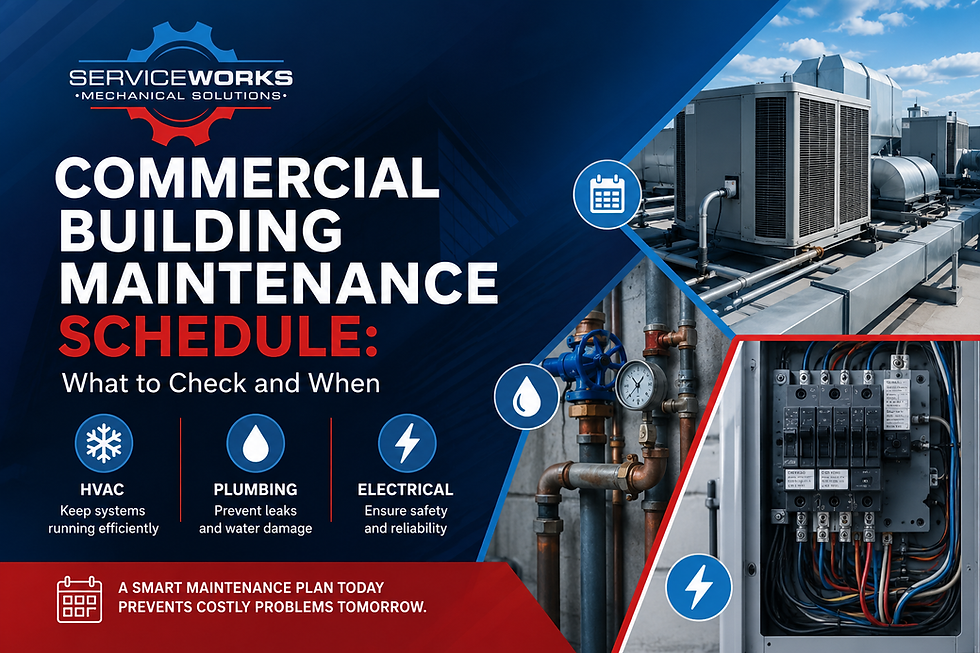
Following a consistent commercial building maintenance schedule can help facility managers monitor HVAC, plumbing, and electrical systems throughout the year.
Maintenance records can also reveal recurring problems and help businesses determine which equipment should be prioritized for repair or replacement.
The Cost of Waiting Until Something Fails
Delaying service may seem like an easy way to control expenses when equipment is technically still operating. However, a small problem can become more expensive if it places additional strain on equipment or leads to an unexpected shutdown.
The true cost of a failure can also extend beyond the repair bill.
A cooling failure could make a customer-facing business uncomfortable. A plumbing problem could close a restroom or kitchen. An electrical failure could prevent employees or equipment from operating normally.
ServiceWorks' breakdown of the cost of deferred commercial building maintenance explains how delaying HVAC, plumbing, and electrical repairs can contribute to greater operating costs, equipment wear, and business disruption.
Proactive mechanical maintenance gives businesses more control over when work takes place and how improvements fit into their budgets.
Choosing a Commercial Mechanical Contractor in South Carolina
When evaluating a mechanical contractor, businesses should look beyond whether the company can solve today's immediate problem.
Consider whether the contractor can support multiple building systems, provide ongoing maintenance, assist with future upgrades, and understand the demands of commercial facilities.
A contractor familiar with your property can also develop valuable knowledge about equipment history, recurring problems, previous repairs, and upcoming replacement needs. Over time, that information can make facility planning more proactive.
Local experience matters as well. ServiceWorks serves businesses throughout Myrtle Beach, Charleston, Columbia, Florence, and surrounding South Carolina communities, providing access to multiple mechanical trades through one service provider.
Simplify Your Commercial Mechanical Needs With ServiceWorks
A reliable commercial property depends on HVAC, plumbing, electrical, and other mechanical systems working together every day.
Instead of waiting for the next breakdown, businesses can take a more coordinated approach to maintaining those systems. Regular maintenance, timely repairs, thoughtful equipment replacement, and long-term facility planning can help reduce unexpected disruptions and give businesses greater visibility into upcoming needs.
ServiceWorks Mechanical Solutions provides commercial HVAC, plumbing, electrical, and mechanical services to help South Carolina businesses keep their facilities comfortable, functional, and ready for what comes next.
Whether you are dealing with an immediate problem, planning an upgrade, or looking for a long-term mechanical services partner, contact ServiceWorks to discuss the needs of your commercial facility.
Call ServiceWorks because our service, works!


Comments