
Why Preventive Maintenance Is the Key to Passing Commercial Building Inspections
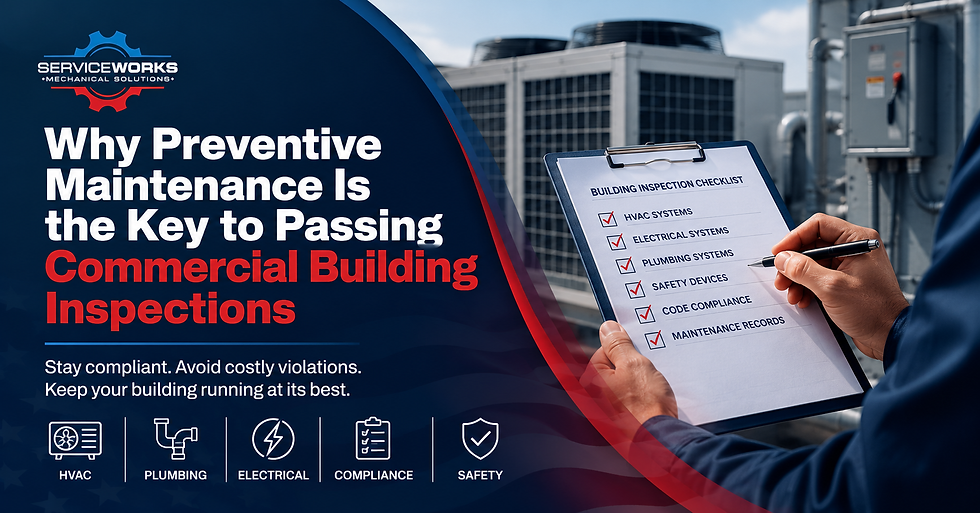
Commercial buildings rely on complex mechanical, electrical, and plumbing systems to keep daily operations running smoothly. Whether you manage an office building, healthcare facility, retail center, manufacturing plant, or educational campus, keeping these systems in good working order isn't just about comfort. It's also critical for safety, code compliance, and successfully passing building inspections.
Too often, facility managers only address problems when equipment fails or an inspection is approaching. Unfortunately, this reactive approach can lead to unexpected violations, costly repairs, and unnecessary downtime. A proactive preventive maintenance program helps identify and correct issues long before they become inspection failures, protecting both your building and your bottom line.
Why Commercial Building Inspections Matter
Commercial building inspections are designed to verify that your facility meets local building codes and safety standards. Depending on your building type and occupancy, inspections may evaluate a wide range of systems, including:
HVAC equipment
Plumbing systems
Electrical infrastructure
Emergency power systems
Ventilation and indoor air quality
Mechanical equipment
Safety controls
Inspectors are looking for more than equipment that simply turns on. They want to see systems that operate safely, efficiently, and according to current codes and manufacturer specifications.
Failing an inspection can result in corrective actions, repeat inspections, operational disruptions, or even temporary shutdowns in severe cases. Preventive maintenance helps reduce these risks by ensuring your building remains inspection-ready throughout the year.
Preventive Maintenance Helps Catch Small Problems Early
One of the greatest benefits of preventive maintenance is identifying developing issues before they become expensive repairs or inspection concerns.
For example, during a routine HVAC inspection, technicians may discover:
Worn belts
Dirty coils
Refrigerant issues
Failing motors
Improper airflow
Loose electrical connections
While these problems may not yet have caused a breakdown, they can reduce system performance and potentially create compliance or safety issues if left unresolved.
The same principle applies to plumbing and electrical systems. Small leaks, deteriorating wiring, overloaded circuits, or aging components are much easier and less expensive to repair during scheduled maintenance than during an emergency.
Documentation Demonstrates Responsible Facility Management
Many commercial inspections involve more than evaluating equipment. Inspectors often request maintenance records that demonstrate systems have been properly serviced.
A preventive maintenance program creates valuable documentation, including:
Service reports
Inspection checklists
Equipment performance records
Repair histories
Recommended corrective actions
These records provide evidence that your facility is being maintained consistently and responsibly. They also make it easier to track recurring issues and plan future upgrades before they become major liabilities.
Well-documented maintenance can simplify inspections and give building owners greater confidence that critical systems have been properly cared for.
Reliable HVAC Performance Supports Compliance
HVAC systems are among the most heavily inspected components in commercial buildings because they directly affect occupant comfort, ventilation, and indoor air quality.
Preventive HVAC maintenance helps ensure:
Proper airflow throughout the building
Safe equipment operation
Efficient heating and cooling performance
Clean filters and coils
Proper thermostat calibration
Reliable ventilation
Neglected HVAC equipment can lead to uneven temperatures, poor indoor air quality, excessive energy use, and unnecessary strain on equipment. These issues may not only impact employee productivity and customer comfort but also create concerns during inspections.
Routine maintenance keeps systems operating as intended while helping extend equipment life and reduce unexpected failures.
Electrical Maintenance Improves Safety
Commercial electrical systems experience constant demand from lighting, HVAC equipment, computers, production equipment, and countless other systems.
Over time, normal wear and tear can create potential hazards such as:
Loose electrical connections
Overloaded panels
Damaged breakers
Faulty wiring
Equipment overheating
Preventive electrical inspections help identify these concerns before they create safety risks or code violations.
Routine testing and maintenance also improve system reliability, reducing the likelihood of power interruptions that can disrupt operations or damage sensitive equipment.
Plumbing Maintenance Helps Prevent Costly Violations
Commercial plumbing problems often develop slowly and remain unnoticed until they become significant.
Preventive plumbing maintenance can identify:
Hidden leaks
Pipe corrosion
Drain blockages
Water pressure issues
Fixture deterioration
Backflow prevention concerns
Addressing these issues early helps prevent water damage, sanitation concerns, and expensive emergency repairs while supporting compliance with local plumbing regulations.
For facilities such as healthcare buildings, schools, restaurants, and manufacturing facilities, properly functioning plumbing systems are especially important for maintaining safe operations.
Maintenance Reduces Emergency Repairs
Emergency repairs rarely happen at convenient times. Equipment failures often occur during periods of peak demand, creating stress for facility managers while increasing repair costs.
Reactive maintenance typically involves:
Emergency service calls
Overtime labor
Expedited parts
Business interruptions
Occupant complaints
Preventive maintenance significantly reduces the likelihood of these situations by addressing equipment issues before they become failures.
Instead of reacting to unexpected breakdowns, facility managers can plan repairs around business schedules, minimizing disruptions and controlling maintenance budgets.
Better Maintenance Supports Longer Equipment Life
Commercial mechanical systems represent significant capital investments. Replacing rooftop units, electrical infrastructure, pumps, or plumbing systems can require substantial financial planning.
Routine maintenance helps maximize these investments by reducing unnecessary wear on equipment.
Tasks such as lubrication, cleaning, calibration, tightening electrical connections, replacing filters, and inspecting moving components all contribute to longer equipment life and improved performance.
Delaying maintenance often accelerates equipment deterioration, leading to earlier replacement than necessary.
Create a Year-Round Inspection-Ready Facility
Waiting until an inspection notice arrives is not the best time to evaluate your building's systems.
Instead, preventive maintenance creates a year-round strategy that keeps facilities consistently prepared. Our maintenance plans are the perfect solution to affordable, routine maintenance.
A comprehensive maintenance program may include:
Seasonal HVAC inspections
Electrical system testing
Plumbing inspections
Refrigeration maintenance
Building controls verification
Equipment performance monitoring
Scheduled repairs
Detailed maintenance reporting
By continuously monitoring building systems, facility managers can address concerns proactively rather than scrambling to fix problems before an inspection.
This approach not only improves compliance but also creates a safer, more reliable environment for employees, customers, and tenants.
Partner With an Experienced Commercial Mechanical Services Provider
Managing commercial facilities requires balancing budgets, minimizing downtime, and maintaining compliance across multiple building systems. Preventive maintenance makes that responsibility much more manageable by reducing unexpected failures and keeping equipment operating efficiently throughout the year.
At ServiceWorks, we provide comprehensive commercial preventive maintenance services for HVAC, plumbing, electrical, refrigeration, and building control systems. Our experienced technicians help facility managers identify potential issues early, maintain reliable building performance, and stay prepared for inspections before problems arise.
If you're looking to reduce emergency repairs, improve equipment reliability, and keep your commercial facility operating at its best, contact ServiceWorks today to learn how a customized preventive maintenance program can support your building's long-term success.


Comments