
Guide
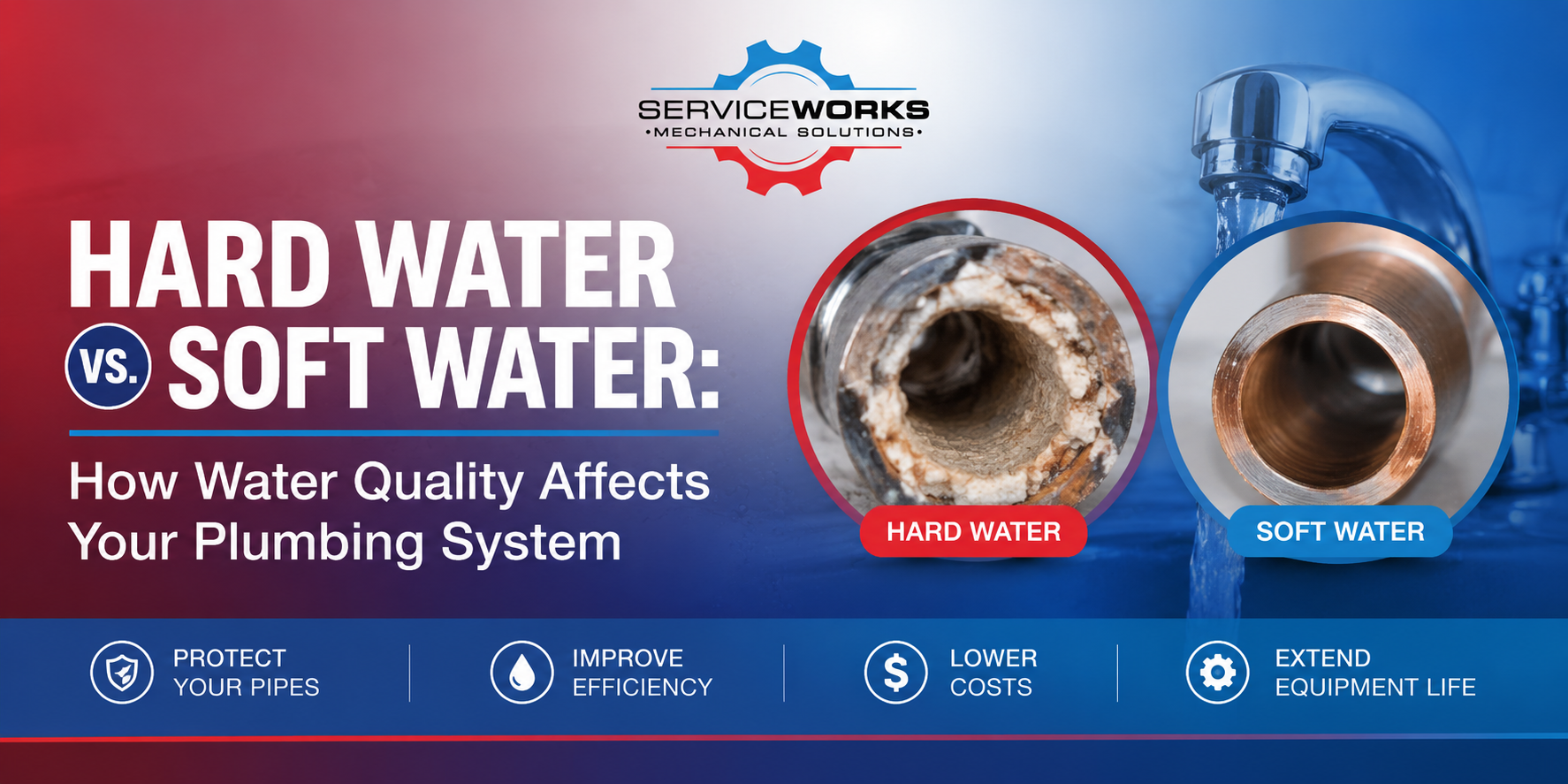
When homeowners think about protecting their plumbing system, they often focus on fixing leaks, clearing clogged drains, or replacing aging fixtures. However, one factor that can have a lasting impact on your home's plumbing is something you use every day: your water.
The difference between hard water and soft water can affect everything from your pipes and water heater to your faucets and household appliances. Understanding how water quality impacts your plumbing system can help you prevent unnecessary repairs, improve efficiency, and extend the life of your equipment.
What Is Hard Water?
Hard water contains higher concentrations of naturally occurring minerals, primarily calcium and magnesium. As water moves through rock and soil, it absorbs these minerals before entering your home's plumbing system.
Soft water, on the other hand, contains much lower levels of these minerals. While hard water is safe to drink, the mineral content can gradually build up inside pipes, fixtures, and appliances over time.
Many homes throughout South Carolina experience varying degrees of hard water, making it important for homeowners to understand how it can affect their plumbing system.
Signs Your Home Has Hard Water
Hard water often leaves behind noticeable clues. If you've experienced any of the following, your home's water may contain excessive mineral content:
White Mineral Buildup
One of the most common signs is the white, chalky residue that forms around faucets, showerheads, and sinks. These mineral deposits, often called limescale, accumulate as water evaporates.
Soap Scum
Hard water makes it more difficult for soap to dissolve completely, leading to stubborn soap scum on showers, tubs, and sinks.
Reduced Water Pressure
As mineral deposits build up inside plumbing pipes and fixtures, water flow can become restricted, resulting in lower water pressure throughout your home.
Spots on Glassware
If your dishes and drinking glasses come out of the dishwasher with cloudy spots or streaks, hard water may be the culprit.
Dry Skin and Hair
Many homeowners also notice that hard water makes it more difficult to rinse soap completely, which can leave skin feeling dry and hair looking dull.
How Hard Water Affects Your Plumbing System
While these visible signs may seem like minor inconveniences, hard water can cause much larger problems behind the scenes.
Mineral Buildup Inside Pipes
Every time hard water flows through your plumbing system, tiny amounts of calcium and magnesium are left behind. Over time, these minerals accumulate along the inside walls of your pipes.
As the buildup grows, it reduces the available space for water to flow freely. This can lead to decreased water pressure and increase the strain on your plumbing system.
Increased Wear on Fixtures
Mineral deposits don't just collect inside pipes. They also accumulate inside faucets, showerheads, valves, and other plumbing fixtures.
These deposits can reduce performance, cause fixtures to wear out more quickly, and increase the likelihood of repairs or replacements.
More Frequent Plumbing Problems
Hard water buildup can contribute to clogged fixtures, leaking valves, and inefficient plumbing components. Addressing these issues early can help prevent more costly repairs down the road.
Your Water Heater Is Especially Vulnerable
Water heaters are one of the appliances most affected by hard water.
As water is heated, dissolved minerals separate from the water and settle inside the tank. Over time, this sediment layer becomes thicker, forcing the water heater to work harder to heat your home's water.
This can result in:
- Longer heating times
- Higher energy bills
- Reduced hot water capacity
- Increased wear on heating components
- A shorter overall lifespan for the unit
Routine water heater maintenance, including periodic flushing, can help remove sediment before it becomes a significant problem.
Hard Water Can Affect More Than Your Plumbing
Your plumbing system isn't the only thing impacted by hard water. Several household appliances rely on clean, unrestricted water flow to operate efficiently.
These include:
- Dishwashers
- Washing machines
- Refrigerators with ice makers
- Tankless water heaters
- Coffee makers
Mineral buildup can reduce efficiency, increase maintenance needs, and shorten the lifespan of these appliances. Protecting your plumbing system also helps protect the equipment connected to it.
Can Hard Water Problems Be Prevented?
Fortunately, hard water doesn't have to lead to expensive plumbing repairs. There are several ways homeowners can minimize its effects.
Install a Water Softener
A water softener removes excess calcium and magnesium before the water enters your plumbing system. This helps reduce mineral buildup throughout your home and can improve the performance of plumbing fixtures and appliances.
Flush Your Water Heater
Regularly flushing your water heater removes sediment that has settled inside the tank, helping improve efficiency and extend the life of the unit.
Schedule Routine Plumbing Inspections
Professional plumbing inspections can identify early signs of mineral buildup, restricted water flow, or equipment wear before they become major issues.
Address Small Problems Early
If you notice decreasing water pressure, visible mineral deposits, or changes in your water heater's performance, having the issue evaluated early can help prevent larger repairs later.
When Should You Call a Professional?
Some hard water issues can be managed with routine cleaning, but others require professional attention.
You should consider contacting a plumber if you experience:
- Consistently low water pressure
- Recurring fixture clogs
- Excessive mineral buildup
- Water heater performance problems
- Frequent plumbing repairs
- Concerns about your home's water quality
An experienced plumbing professional can evaluate your system, identify the effects of hard water, and recommend solutions that fit your home's needs.
Protect Your Plumbing Investment
Your plumbing system is one of the most important parts of your home, and the quality of your water plays a bigger role than many homeowners realize. While hard water is common, it doesn't have to lead to premature equipment failure or costly plumbing repairs.
At ServiceWorks, we help homeowners throughout Myrtle Beach and the Grand Strand protect their plumbing systems with professional inspections, water heater services, plumbing repairs, and preventative maintenance. Whether you're concerned about hard water or simply want to keep your plumbing operating at its best, our experienced team is here to provide honest recommendations and reliable solutions that deliver long-term peace of mind.
testimonials
Customer Testimonials

With approved credit through Wisetack, you can enjoy zero down financing and convenient monthly payments, so you don’t have to wait to get the comfort you deserve.
Recent Blog
Stay updated with our latest blog posts.
Natural Gas vs. Propane: Which Is Best for Your Myrtle Beach Home?