

How a Ductless Mini Split Works — and Why It Matters for Your Surfside Beach Home
How does a ductless mini split work is a great question if you're tired of sweating through a Surfside Beach, SC summer — or paying for conditioned air that never reaches the rooms that need it most. In short, a ductless mini split moves heat between an outdoor compressor unit and one or more indoor air handlers using refrigerant lines, with no ductwork required. Each indoor unit conditions only the room it serves, giving you precise, room-by-room comfort.
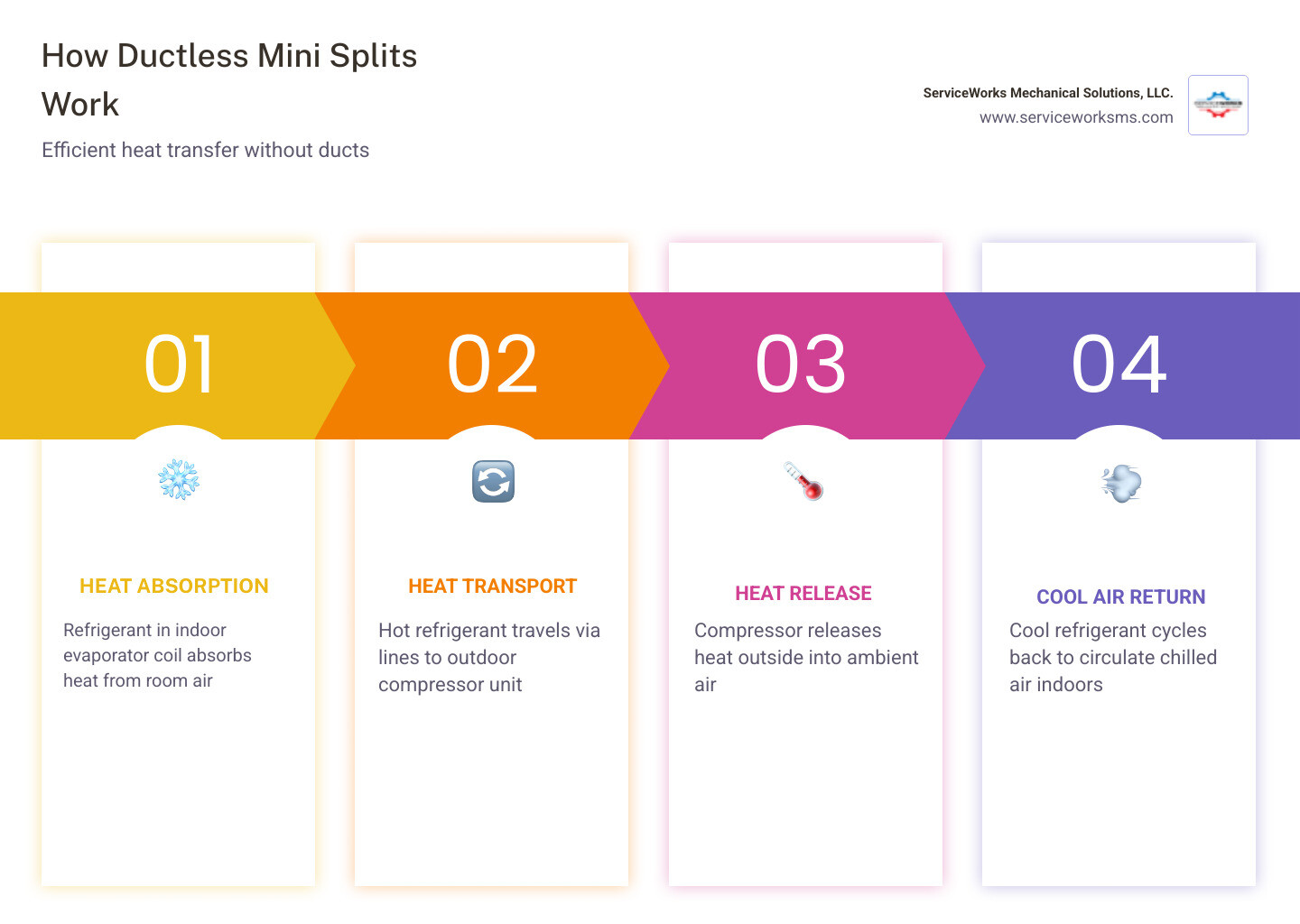
Here's the quick version of how it works:
- Refrigerant absorbs heat from the air inside your room through the indoor unit's evaporator coil
- That heat travels through a small refrigerant line to the outdoor unit
- The outdoor compressor releases the heat outside (or reverses the process to bring heat in during cooler months)
- Cool, conditioned air is circulated back into your room — no ducts, no energy lost through leaky vents
This closed-loop process happens continuously, quietly, and efficiently — and it works for both cooling and heating.
If you've been dealing with uneven temperatures, high energy bills, or a room that your central system just can't reach, a ductless mini split may be exactly what you need. At ServiceWorks Mechanical Solutions, LLC., we install and service ductless systems throughout Surfside Beach and the surrounding coastal communities, and we've seen how much of a difference the right system makes in a home.
The sections below walk you through exactly how these systems work, what makes them so efficient, and whether one is right for your home.
What is a Ductless System and How Does a Ductless Mini Split Work?
To understand a ductless mini split, it helps to think of it as a specialized heat pump. Unlike a traditional furnace that creates heat by burning fuel, or a standard central AC that pushes air through a labyrinth of dusty metal tubes, a mini split uses heat pump technology to move heat from one place to another.
The system is "split" into two primary parts: an outdoor compressor (the "muscle") and one or more indoor air handlers (the "delivery"). These units are linked by a conduit—a bundle containing refrigerant lines, a power cable, and a drain line. Because there are no ducts, there is no "duct loss." In a typical South Carolina home, leaky or poorly insulated ducts can waste more than 30% of your energy consumption. By removing the ducts, you're essentially removing the middleman that's been stealing your cold air.
For those looking to solve a specific "hot spot" in the house or outfit a new addition, more info about ductless mini-split services can help you visualize how these sleek units fit into your lifestyle.
The Core Components of the System
Every mini split relies on a few high-tech parts to keep you comfortable:
- Evaporator Coil: Located inside the indoor unit, this coil is filled with cold refrigerant that absorbs heat from your indoor air.
- Condenser Unit: The large box outside that houses the compressor. This is where the heat collected from inside is released into the coastal air.
- Expansion Valve: This acts like a nozzle, regulating the flow of refrigerant to ensure it's at the perfect temperature and pressure to absorb heat.
- Communication Cable: A dedicated wire that allows the indoor and outdoor units to "talk" to each other, ensuring the compressor only works as hard as the indoor thermostat demands.
- Condensate Drain: As the unit cools the air, it also removes moisture (humidity). This water travels through a small tube and drains safely outside.
Understanding the Refrigeration Cycle
The magic of how does a ductless mini split work lies in the refrigeration cycle. It’s not about "creating" cold; it’s about heat transfer.
In cooling mode, a chemical refrigerant—which has a very low boiling point—circulates through the indoor evaporator coil. As warm air from your living room blows over the coil, the refrigerant absorbs the heat and turns from a liquid into a gas. This gas travels outside to the compressor, which squeezes it, raising its temperature even higher so it can dump that heat into the outdoor air.
In heating mode, the system uses a reversing valve. This clever component flips the flow of the refrigerant. Now, the outdoor unit extracts whatever heat energy is available in the outside air (yes, even when it’s chilly in January in Conway or Loris!) and pumps it into your home. It’s incredibly efficient because it’s moving existing heat rather than burning expensive fuel to create it.
The Science of Zoned Comfort and Inverter Technology
One of the biggest complaints we hear about central air in places like Myrtle Beach is that the upstairs is a sauna while the downstairs is a walk-in freezer. Ductless systems solve this through "zoning."
Most modern mini splits utilize inverter technology. While a traditional AC is either 100% "on" or 100% "off" (like a light switch), an inverter compressor is like a dimmer switch. It can speed up or slow down to maintain a perfectly steady temperature. This variable speed operation eliminates the energy-hungry "startup" spikes that happen every time a standard AC kicks on.
| Feature | Ductless Mini Split | Central Air Conditioning |
|---|---|---|
| Efficiency (SEER2) | Up to 35+ | Typically 15 to 25 |
| Energy Loss | Near 0% (No ducts) | 20% to 30% (Leaky ducts) |
| Installation | Non-invasive (3" hole) | Major construction/renovation |
| Control | Room-by-room (Zoned) | Whole-house (Single thermostat) |
| Noise Level | Whisper quiet (Indoor) | Can be loud (Duct whistles/Vibrations) |
How Does a Ductless Mini Split Work for Multi-Zone Cooling?
In a multi-zone setup, a single outdoor compressor can power up to five (and sometimes eight) indoor air handlers. Each unit has its own thermostat and remote control.
This means if you like your bedroom at 68 degrees but want the guest room kept at 74, you can do exactly that. Zone sensors in each unit monitor the specific conditions of that room, allowing the system to provide independent control. You aren't wasting money cooling the kitchen at 2:00 AM just to keep your bedroom comfortable.
How Does a Ductless Mini Split Work to Save Energy?
Efficiency is the name of the game. Because mini splits avoid the 30% energy loss associated with ducts, they are inherently more efficient. Most systems are roughly 20% to 30% more efficient than ducted counterparts right out of the box.
Key energy-saving features include:
- Localized Cooling: Only cooling the rooms you are actually using.
- High SEER2 Ratings: Many units we install in the Charleston and Georgetown areas reach ratings of 30 or higher, far exceeding the federal minimums.
- No "Short Cycling": Thanks to inverter technology, the system stays in a low-power "cruise control" mode rather than constantly stopping and starting.
Why Ductless Systems are Ideal for Surfside Beach Homes
Our coastal South Carolina climate presents unique challenges. Between the salt air in Pawleys Island and the oppressive humidity in Summerville, your HVAC system has its work cut out for itself.
Ductless systems are particularly resilient. Many outdoor units are designed with specialized coatings to protect against salt air corrosion. Furthermore, they are the perfect solution for:
- Home Additions: If you're adding a mother-in-law suite or a new hobby room, you don't have to worry about whether your existing central AC can handle the extra load.
- Sunrooms: These glass-heavy rooms are notorious for being too hot. A mini split provides the "boost" needed to make a sunroom livable year-round.
- Garages and Workshops: Want to work on your car or a woodworking project in July? A wall-mounted unit can turn a sweltering garage into a comfortable workspace.
Targeted Dehumidification and Air Quality
Humidity is the enemy of comfort. A mini split is an expert at moisture removal. Because the indoor units run for longer cycles at lower speeds (thanks to that inverter tech), they spend more time pulling moisture out of the air than a standard AC that cycles off quickly.
Additionally, most units feature advanced air filtration. Because the air isn't traveling through miles of dusty ductwork, it stays cleaner. Many models use high-quality filters that can be easily removed and washed, helping to control allergies and improve overall indoor air quality.
Versatile Installation Options
You aren't stuck with a big white box on the wall if that doesn't fit your style. There are several ways to integrate ductless technology:
- Wall-Mounted: The most common and cost-effective option, mounted high on a wall.
- Ceiling Cassette: These sit flush with your ceiling, showing only a decorative grille. They are perfect for open-concept living areas in Socastee or Columbia.
- Floor-Mounted: Ideal for rooms with slanted ceilings or large windows where wall space is at a premium.
- Slim Ducted: For those who want the look of central air, these units are hidden in a closet or attic with very short, localized duct runs.
Installation and Maintenance for Long-Term Performance
One of the best parts about how does a ductless mini split work is how easy it is to install compared to a central system. We don't have to tear down your drywall or lose closet space to bulky ducts.
The installation usually requires only a small 3-inch hole in an exterior wall. Through this hole, we run the conduit containing the refrigerant lines, power, and drainage. However, "easy" doesn't mean "DIY." Professional sizing is critical. If a unit is too small, it will run constantly and never get the room cool. If it's too big, it will "short cycle," turning on and off so fast that it never removes the humidity, leaving your room feeling cold and clammy.
Determining the Right BTU Capacity
When we visit your home in Murrells Inlet or Little River, we look at several factors to determine the BTU (British Thermal Unit) capacity you need:
- Square Footage: The primary factor, but not the only one.
- Insulation Levels: Older homes in historic areas may need more power due to air leaks.
- Ceiling Height: High vaulted ceilings mean more air volume to cool.
- Window Orientation: A room with giant south-facing windows in the afternoon sun will need a higher BTU rating than a shaded northern room.
Routine Care for Maximum Lifespan
While these systems are incredibly durable—often lasting 20 years with proper care—they do require a little love.
- Monthly Filter Cleaning: This is the most important thing you can do. Simply pop the front panel, slide out the filters, and rinse them in the sink.
- Outdoor Debris Removal: Keep leaves, dirt, and "palmetto bugs" away from the outdoor unit to ensure it can breathe.
- Annual Professional Maintenance: Once a year, have a licensed technician from ServiceWorks check the refrigerant levels, clear the condensate drain, and inspect the electrical connections.
Frequently Asked Questions about Ductless Mini Splits
Can a mini split provide both heating and cooling?
Absolutely. Most ductless systems are heat pumps. They provide year-round comfort by simply reversing the refrigeration cycle. They are significantly more efficient than electric baseboard heaters or space heaters, making them a smart choice for the occasional South Carolina cold snap.
Do ductless units pull in fresh air from outside?
No. This is a common myth. Ductless units operate on a closed-loop system. They recycle and filter the air already inside your home. The only thing moving between the inside and outside is the refrigerant and the heat energy it carries. This is actually better for your air quality, as it keeps outdoor pollutants and allergens from being sucked directly into your living space.
How long do these systems typically last?
With regular maintenance, you can expect a high-quality ductless system to last 15 to 20 years. In coastal environments like Surfside Beach and Garden City, the lifespan depends heavily on keeping the outdoor unit clean and protected from salt spray. Because they have fewer moving parts and no ducts to rot or leak, they often outlast traditional central systems.
Conclusion
Understanding how does a ductless mini split work is the first step toward a more comfortable, energy-efficient home. Whether you're looking to cool a garage in Conway, finish an attic in Myrtle Beach, or finally fix that one "hot room" in your Summerville home, a ductless system offers a flexible, whisper-quiet solution.
At ServiceWorks Mechanical Solutions, LLC., we take pride in being your local, veteran-owned HVAC experts. We provide dependable service, licensed technicians, and a 100% satisfaction guarantee to ensure your home stays perfectly chilled—or cozy—no matter what the South Carolina weather throws your way.
Ready to see how a mini split can transform your home? Contact our mini-split specialists today for a consultation and let us help you find the perfect fit for your space.
testimonials
Customer Testimonials

With approved credit through Wisetack, you can enjoy zero down financing and convenient monthly payments, so you don’t have to wait to get the comfort you deserve.
Recent Blog
Stay updated with our latest blog posts.

Commercial Building Maintenance: Why One Provider Matters