Why Knowing How to Extend the Life of Your AC on the Coast Could Save You Thousands
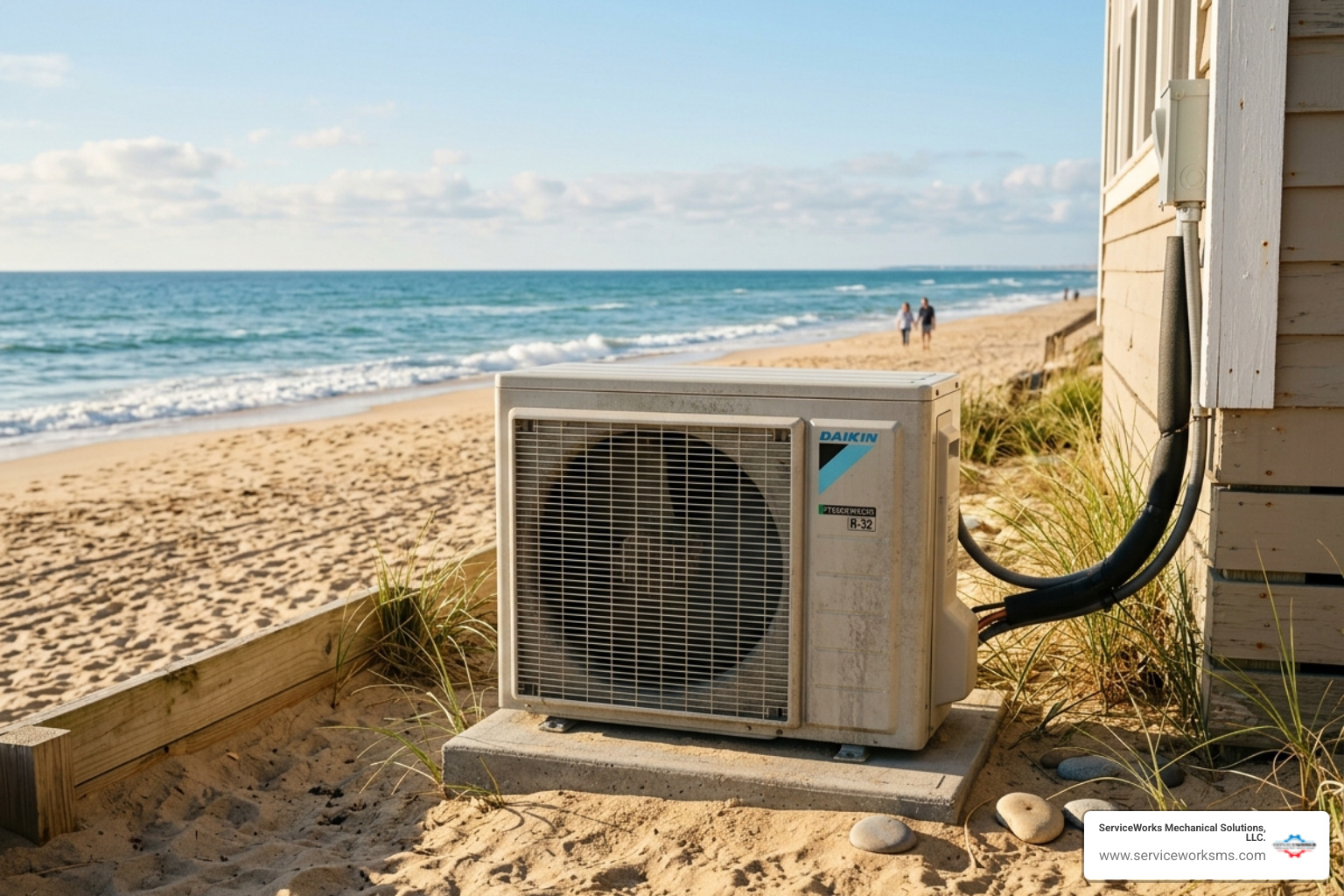
Knowing how to extend the life of your AC on the coast is one of the most valuable things you can do as a homeowner in Surfside Beach, SC. The ocean air that makes coastal South Carolina so beautiful is the same force quietly working against your air conditioning system every single day. Salt particles, high humidity levels averaging 70–85%, and intense summer heat create conditions that can cut your AC's lifespan nearly in half compared to inland systems — from a national average of 15–20 years down to just 8–12 years for homes very close to the water.
That means more breakdowns, more repair bills, and more stress — exactly what no homeowner wants. The good news is that with the right habits and professional support, you can push back against that accelerated wear and keep your system running efficiently for years longer.
Here's a quick summary of how to extend the life of your AC on the coast:
- Rinse your outdoor unit monthly with a garden hose (power off first) to remove salt buildup
- Change air filters every 30–60 days — not the standard 90 days recommended on most packages
- Schedule professional maintenance twice a year instead of the typical once-a-year service
- Keep at least two feet of clearance around your outdoor condenser unit
- Clean your condensate drain line every few months to prevent algae clogs
- Apply protective coil coatings to shield aluminum fins from salt corrosion
- Install a whole-home dehumidifier to reduce the extra strain coastal humidity puts on your system
- Use surge protection to guard against storm-related electrical damage
- Address small repairs early — minor issues snowball faster in coastal conditions
- Track your repair history so you can plan proactively for replacement before a full breakdown
Understanding the Coastal Environment's Impact on Your AC
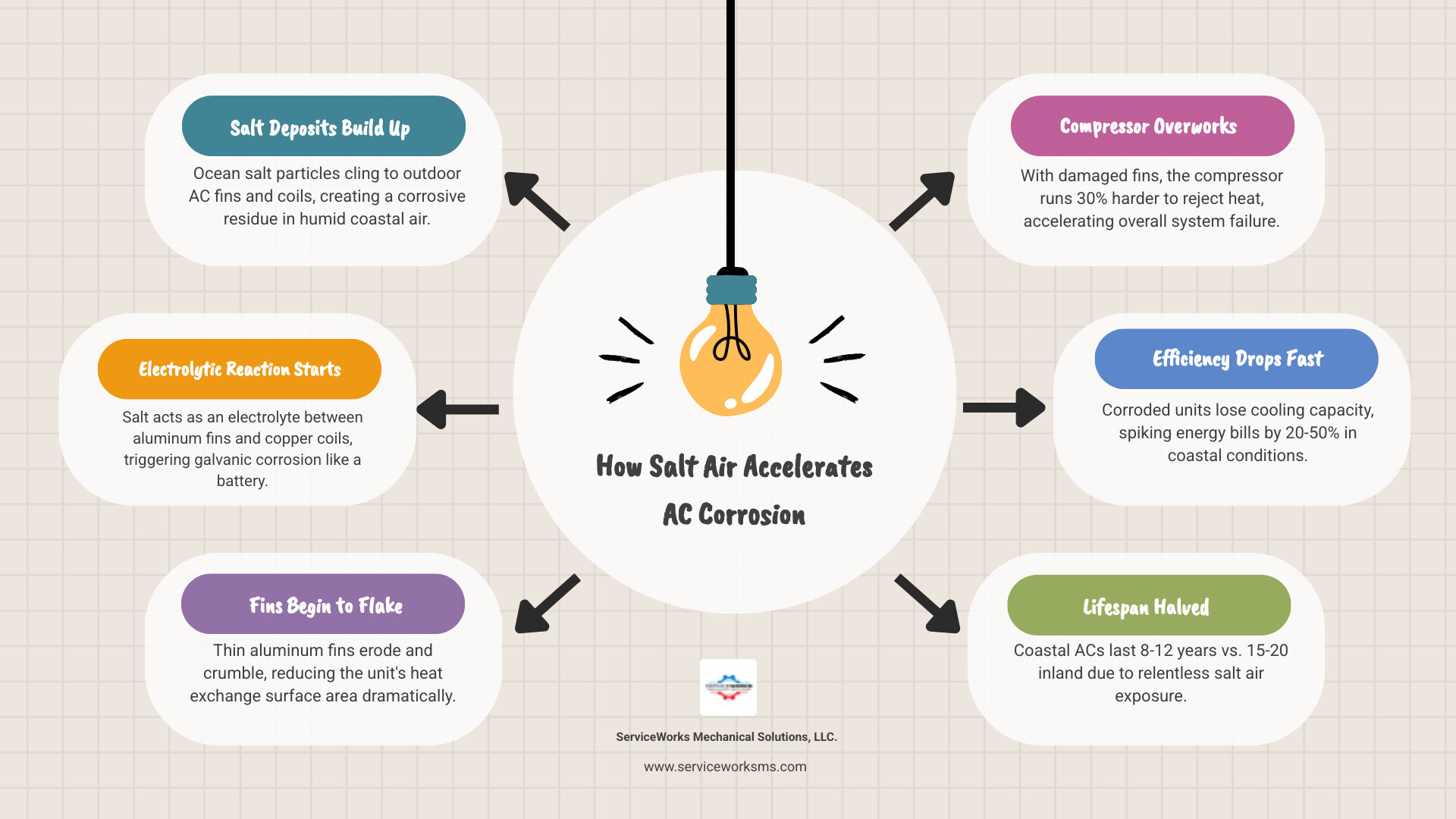
Living in places like Charleston or Myrtle Beach means enjoying the marine layer and the refreshing breeze, but for your AC, that air is a chemical cocktail. The primary culprit is salt air corrosion. When salt-laden air hits the warm, moist surfaces of your outdoor unit, it triggers an electrolytic reaction. This is essentially a "slow-motion battery" effect that eats away at the metal.
The most vulnerable components are the aluminum fins and copper condenser coils. These fins are paper-thin to allow for heat exchange. When salt gets between the aluminum and copper, it creates a corrosive bond that causes the fins to "flake" or crumble. Once those fins are gone, your AC loses its ability to release heat, forcing the compressor to work 30% harder and significantly raising your energy bills.
In April 2026, as we look at the data from the past few seasons, the disparity between inland and coastal systems is clearer than ever.
| Location | Typical AC Lifespan | Primary Stressors |
|---|---|---|
| Inland (e.g., Florence, SC) | 15–20 Years | Dust, seasonal heat, debris |
| Coastal (e.g., Surfside Beach, SC) | 10–15 Years | Salt air, high humidity, 3,000+ runtime hours |
| Beachfront (Direct Oceanfront) | 8–12 Years | Constant salt spray, wind-blown sand, storm surges |
Because of these accelerated rates of decay, we often tell our neighbors that a AC Maintenance Charleston SC Guide isn't just a suggestion—it’s a survival manual for your HVAC system.
How to Extend the Life of Your AC on the Coast Through Routine Care
The single most effective DIY task is the freshwater rinse. Think of it like rinsing your car after a trip to the beach; you wouldn't let salt sit on your paint, so don't let it sit on your coils.
The Monthly Rinse Protocol:
- Power Down: Turn the thermostat to "Off" and pull the outdoor disconnect switch for safety.
- Gentle Spray: Use a standard garden hose with a gentle spray nozzle. Never use a pressure washer, as the high pressure will bend the delicate aluminum fins, permanently restricting airflow.
- Top to Bottom: Spray the exterior of the unit, focusing on the coil fins. This washes away the salt film before it can "pitting" the metal.
- Debris Check: While you're there, remove any leaves, pine needles, or sand that has accumulated at the base.
Airflow clearance is equally critical. Coastal winds in North Myrtle Beach often blow sand and debris against the unit. We recommend maintaining at least two feet of clear space on all sides of the condenser. This means trimming back any hibiscus bushes or palmettos that might be crowding the unit. Proper airflow ensures the system doesn't overheat, which is a major factor in how to extend the life of your ac on the coast.
If you're looking for more localized advice, checking out AC Maintenance North Myrtle Beach SC can provide specific insights for the Grand Strand area.
Managing Humidity and Airflow to Extend the Life of Your AC on the Coast
In the South Carolina Lowcountry, humidity levels often hover between 70% and 85%. Your AC doesn't just cool the air; it acts as a giant dehumidifier. In coastal climates, systems can log 2,500 to 3,500 runtime hours annually—nearly triple what a unit in a northern state might experience.
This constant operation means your air filters get dirty much faster. In a humid environment, dust becomes "sticky" as it absorbs moisture, leading to a thick mat of grime on your filter that chokes the system. We recommend changing your filters every 30 to 60 days. If you have pets or live in a particularly sandy area like Socastee, check them every month.
High indoor humidity also invites mold and mildew growth within the ductwork. To combat this, consider a whole-home dehumidifier. By taking the moisture-removal load off your AC, the system doesn't have to run as long to make the home feel comfortable. For more tips on handling these specific local challenges, see our page on AC Maintenance Socastee SC.
Preventing Clogs with Regular Drain Line Cleaning
Because coastal ACs pull so much water out of the air—sometimes a gallon or more per hour during a humid July afternoon—the condensate drain line is under constant use. This moist, dark pipe is the perfect breeding ground for algae and biofilm (often called "white slime").
If this line clogs, the water backs up, which can lead to expensive floor damage or trigger a safety float switch that shuts your system down entirely right when you need it most.
The Vinegar Flush:Every three months, find the PVC access point on your indoor drain line and pour about a cup of distilled white vinegar down the pipe. The acidity helps kill algae and keep the line flowing freely. If you aren't comfortable doing this yourself, our team provides this as part of our AC Service Surfside Beach SC visits.
Professional Maintenance and Protective Upgrades
While homeowner care is the foundation, professional intervention is what truly pushes a system past the 10-year mark on the coast. Inland homeowners might get away with annual service, but for us on the coast, semi-annual (twice a year) maintenance is the gold standard.
One of the best professional upgrades is the application of protective coil coatings. These are specialized epoxy or "e-coat" treatments applied to the condenser coils. They act as a barrier, preventing salt from making direct contact with the metal. While many modern units come with some factory protection, an additional aftermarket coating can add years to a unit's life.
Another "must-have" for coastal South Carolina is surge protection. Between our frequent summer thunderstorms and the occasional tropical system, power surges are common. A surge can instantly fry a compressor or a control board—components that are already stressed by the salt air. A dedicated HVAC surge protector is a small investment that protects a very large one.
Regular check-ups also allow us to catch "pitting" and electrical corrosion early. Coastal units require replacement parts like capacitors and contactors roughly 40% more frequently than inland units due to salt-induced electrical shorts. Catching a weak capacitor during a HVAC Maintenance Myrtle Beach SC visit prevents it from failing and potentially damaging the much more expensive compressor.
Advanced Upgrades to Extend the Life of Your AC on the Coast
If you want to go the extra mile, there are several advanced upgrades that can help:
- UV Lights: Installed inside the air handler, these kill mold and bacteria on the evaporator coil, improving indoor air quality and keeping the coil clean for better heat transfer.
- Float Switches: These are "flood insurance" for your AC. If the drain line clogs, the switch cuts power to the unit before water overflows into your home.
- Zoning Systems: These allow you to cool only the rooms you are using. By reducing the overall workload on the system, you reduce wear and tear on the compressor.
- Programmable Thermostats: Setting the system to "Auto" instead of "On" ensures the fan only runs when cooling is needed, which helps manage humidity levels more effectively.
For those in the historic or coastal areas of Charleston, a AC Tune Up Charleston SC is the perfect time to discuss these upgrades with a licensed technician.
Signs Your Coastal AC System is Nearing the End of Its Life
Even with the best care, the ocean eventually wins. It's important to know when you're throwing good money after bad. Here are the signs that your coastal unit is ready for retirement:
- The "Crumbling" Look: If the aluminum fins on your outdoor unit look like they are turning into powder or flaking off when touched, the unit can no longer breathe.
- Frequent Electrical Failures: If you've replaced the capacitor or fan motor multiple times in two years, the salt has likely compromised the internal wiring.
- The Comfort Threshold: If your system runs 24/7 and still can't keep the house below 75 degrees on a humid day, the efficiency has likely dropped too far to recover.
- Visible Rust and Pitting: Deep rust on the cabinet or "pitting" on the copper lines often leads to refrigerant leaks, which are expensive and difficult to fix in older units.
If you notice these signs, it might be time to look into AC Service Myrtle Beach SC or even a full HVAC Service Surfside Beach SC evaluation. Proactive replacement is always better than an emergency breakdown in the middle of a July heatwave.
Frequently Asked Questions about Coastal AC Maintenance
How often should I rinse my outdoor unit with fresh water?
We recommend a gentle rinse once a month. If you live directly on the oceanfront or after a major storm with high winds, you should rinse it once a week. Always remember to turn the power off at the disconnect first and avoid spraying water directly into the electrical panel.
Why do coastal AC units fail faster than inland systems?
It’s a combination of salt air corrosion and high runtime. The salt creates a chemical reaction that destroys the metal fins, while the high humidity forces the system to run thousands of extra hours every year to remove moisture. This "double whammy" accelerates mechanical and structural wear.
Is a protective coil coating worth the investment for my home?
Absolutely. In our experience across the South Carolina coast, coated coils can last 3–5 years longer than uncoated coils in high-salt environments. It is one of the most cost-effective ways to protect your investment. For more localized tips, check out our AC Maintenance Georgetown SC Tips.
Conclusion
At ServiceWorks Mechanical Solutions, LLC, we understand the unique relationship between South Carolina homeowners and their air conditioners. As a veteran-owned company, we take pride in providing the disciplined, expert care required to fight back against the harsh coastal elements. From Surfside Beach to North Myrtle Beach and down to Charleston, our licensed technicians have the specialized experience to know exactly what your system is up against.
Whether you need a routine tune-up, protective coatings, or you've reached the point where you need an AC Replacement North Myrtle Beach SC, we are here to help. Don't let the salt air steal your comfort—be proactive, stay consistent with your maintenance, and give us a call to ensure your system stays "coastal strong" for years to come.
testimonials
Customer Testimonials

With approved credit through Wisetack, you can enjoy zero down financing and convenient monthly payments, so you don’t have to wait to get the comfort you deserve.
Recent Blog
Stay updated with our latest blog posts.
Why Is My Home So Humid? How Your HVAC System Controls Indoor Humidity in South Carolina