Is Geothermal Heating and Cooling Worth It? Here's the Honest Answer
Is geothermal heating and cooling worth it for most homeowners — and especially for those in Surfside Beach, SC? The short answer is: yes, for the right home and the right situation.
Here's a quick summary before we dig into the details:
Geothermal Is Worth It If You:
- Plan to stay in your home for 7+ years
- Currently heat with oil, propane, or electric resistance
- Have land available for ground loop installation
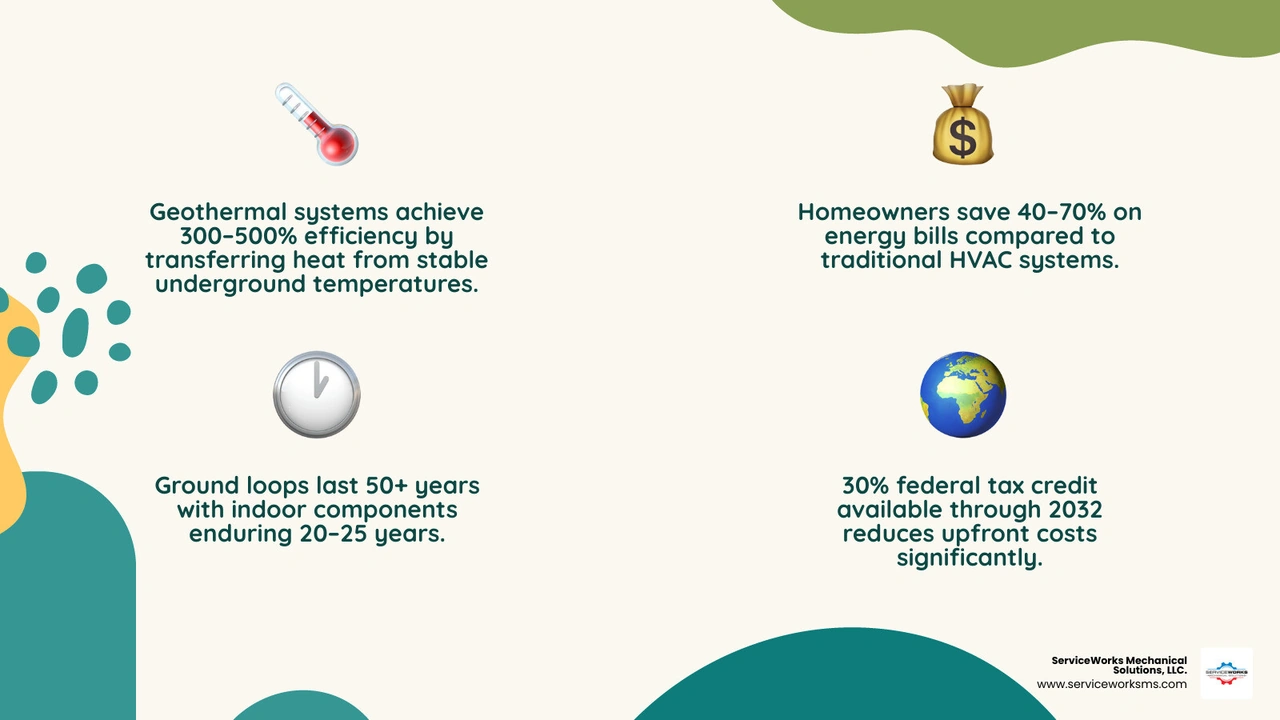
- Want to reduce energy bills by 40–70%
- Are eligible for the 30% federal tax credit (available through 2032)
Geothermal May Not Be the Best Fit If You:
- Recently installed a high-efficiency gas system in a mild climate
- Plan to sell within a few years
- Have geological conditions that significantly raise drilling costs
At a Glance: Key Geothermal Facts
| Factor | Geothermal System | Traditional HVAC |
|---|---|---|
| Efficiency | 300–500% | 80–98% |
| Annual Operating Cost | Lower (significant savings) | Higher baseline |
| Indoor Component Lifespan | 20–25 years | 12–18 years |
| Ground Loop Lifespan | 50+ years | N/A |
| Federal Tax Credit | 30% through 2032 | Not applicable |
| Works in All Climates | Yes | Varies |
The idea is simple: instead of burning fuel or fighting outdoor air temperatures, a geothermal system pulls stable heat from a few feet underground — where temperatures in South Carolina stay consistently moderate year-round. That consistency is the foundation of everything that makes geothermal so efficient.
Still, the upfront investment is real, and it's not a one-size-fits-all decision. As one homeowner put it after switching from propane, the system practically eliminated their fuel costs and they expected to break even in about five years — but results depend on your home, your energy use, and your local conditions.
This guide from ServiceWorks Mechanical Solutions, LLC breaks down the real numbers, the real trade-offs, and what coastal South Carolina homeowners in particular need to know before making the call.
Understanding Geothermal Technology and System Types
To truly grasp whether a Geothermal system is right for your home, we first have to look at what’s happening beneath the surface. While a standard air conditioner or furnace relies on the ever-changing outdoor air, a geothermal system (also known as a ground-source heat pump) uses the Earth as a massive thermal battery.
Regardless of whether it’s a sweltering July afternoon in Charleston or a brisk January morning in Florence, the temperature just a few feet underground remains remarkably stable—usually between 50°F and 70°F. Geothermal technology simply moves heat between your home and the ground to keep you comfortable.
How ground-source heat pumps function
The magic happens through a relatively simple refrigerant cycle. During the winter, the system acts as a heat source. A water-based solution circulates through underground pipes, absorbing the Earth’s natural warmth. The heat pump then concentrates this energy and transfers it into your home's air or radiant system.
In the summer, the process reverses. The system acts as a heat sink, pulling excess heat out of your house and "depositing" it back into the cool earth. Because it is much easier to move heat into a 65-degree ground than into 95-degree humid air, the efficiency is off the charts. If you've been searching for Geothermal Service Charleston SC, you likely already know that this process eliminates the need for noisy outdoor compressors that struggle in the South Carolina sun.
Common loop configurations for residential properties
The "loop" is the network of pipes buried on your property, and the type you choose depends largely on your yard.
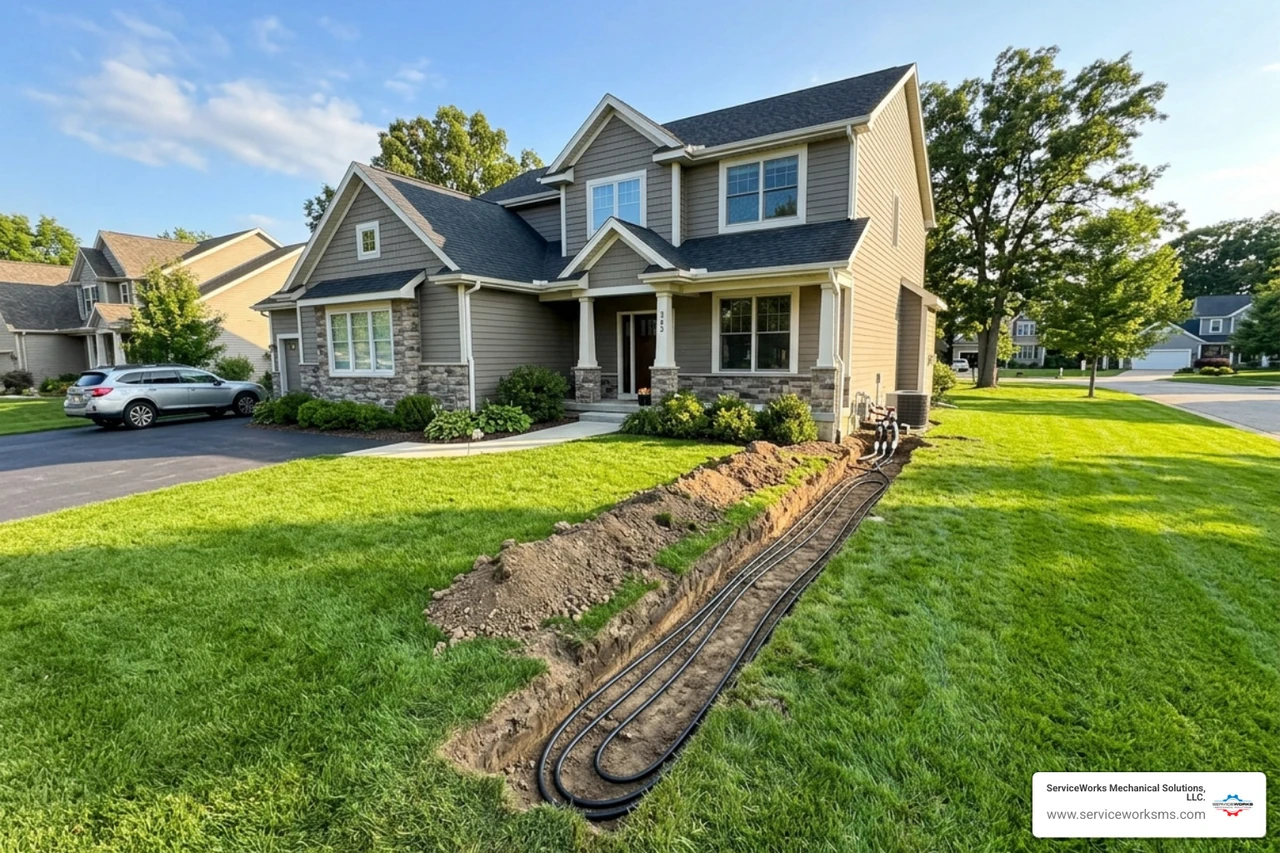
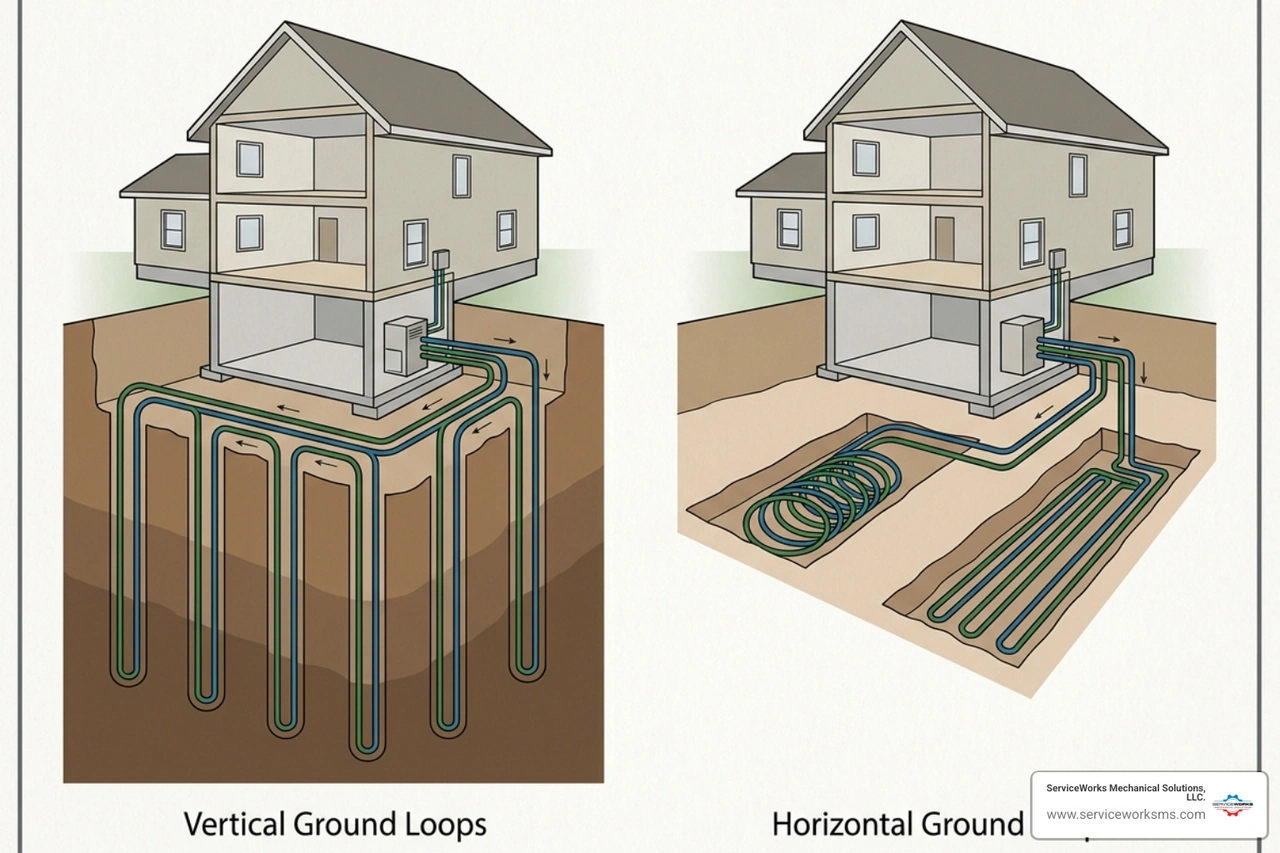
- Horizontal Loops: These are often the most common for new construction where land is plentiful. Pipes are placed in trenches about four to six feet deep. They require more surface area but are generally easier to install if you have at least a quarter-acre of space.
- Vertical Boreholes: If you have a smaller lot in a place like Myrtle Beach, vertical loops are the answer. We drill holes between 100 and 400 feet deep, allowing the system to access the same thermal energy with a very small footprint. This is a popular choice for Geothermal Installation Myrtle Beach SC projects in established neighborhoods.
- Pond/Lake Loops: If your property includes a sufficiently deep body of water, we can actually submerge the loops. This is often a highly cost-effective method because it avoids extensive excavation or drilling while providing excellent heat transfer.
- Open-Loop Systems: These use local groundwater directly as the heat transfer fluid, though they require a steady supply of clean water and specific discharge options.
Is Geothermal Heating and Cooling Worth It for South Carolina Homeowners?
When we talk to homeowners from Columbia to Murrells Inlet, the big question is always about the bottom line. Is geothermal heating and cooling worth it when you look at the total investment?
The financial landscape for geothermal has changed significantly as we move through 2026. With the Residential Clean Energy Credit (Section 25D) providing a 30% federal tax credit on the total installed cost through 2032, the "sticker shock" of the installation is often mitigated. This credit has no dollar cap, meaning it applies to the drilling, the heat pump, and the labor.
Is geothermal heating and cooling worth it for coastal climates?
In our coastal region, we face unique challenges: high humidity and salty, corrosive air. Traditional outdoor AC units take a beating here, often rusting out or losing efficiency within a decade. Geothermal systems have a major advantage here because there is no outdoor equipment. Everything is either buried safely underground or housed inside your home.
For those seeking Geothermal Service Surfside Beach SC, the benefits extend to superior humidity control. Geothermal systems typically run at lower speeds for longer cycles, which is far more effective at pulling moisture out of the air than the "all-or-nothing" blast of a traditional system. Furthermore, regular Geothermal Maintenance Georgetown SC ensures that these systems remain the most reliable way to handle the intense South Carolina summers.
Determining if your property is suitable for a ground-source system
Not every property is a "slam dunk" for geothermal. When we perform a site assessment for a Geothermal Installation Charleston SC, we look at three main factors:
- Land Availability: Do you have space for a horizontal trench, or do we need to bring in a vertical drilling rig?
- Soil Conductivity: Some soil types (like dense clay) transfer heat better than others (like dry sand). South Carolina’s varied geology means we have to test the ground makeup to size the loops correctly.
- Home Insulation: Geothermal works best in a "tight" home. If your attic insulation is thin or your windows are drafty, we usually recommend addressing those issues alongside the HVAC upgrade to maximize your ROI.
Comparing Geothermal to Traditional HVAC and Air-Source Heat Pumps
To understand the value, you have to look at the "Coefficient of Performance" (COP). A standard electric heater has a COP of 1.0—meaning for every unit of electricity you pay for, you get one unit of heat. Geothermal systems boast COPs between 3.0 and 5.0. That means you are getting 3 to 5 units of energy for every 1 unit you buy.
| Feature | Geothermal | Air-Source Heat Pump | Gas/Oil Furnace |
|---|---|---|---|
| Efficiency (Heating) | 300–500% | 175–300% | 80–98% |
| Efficiency (Cooling) | EER 20–30 | EER 10–15 | SEER 14–22 |
| Lifespan (Indoor) | 20–25 Years | 10–15 Years | 15–20 Years |
| Energy Savings | Up to 70% | Baseline | -30% (vs Heat Pump) |
If you are currently looking into Geothermal Service Goose Creek SC, these numbers represent a massive shift in your monthly budget.
Efficiency ratings and energy reduction percentages
The Department of Energy notes that geothermal systems can reduce energy consumption by 25% to 50% compared to even the most modern air-source heat pumps. When compared to older oil or propane systems, the heating savings can skyrocket to 70%.
Because the ground temperature is so much more stable than the air, the system doesn't have to work nearly as hard. This translates to lower electricity bills and less wear and tear on the machinery. If you ever need a Geothermal Repair Charleston SC, you’ll find that the indoor components are often more accessible and easier to service than complex outdoor units.
Environmental impact and carbon footprint reduction
For many of our neighbors, the "worth" of a system isn't just measured in dollars. Geothermal is the greenest way to heat and cool a home. It produces zero on-site emissions because there is no combustion. According to the EPA, switching to geothermal can reduce greenhouse gas emissions by up to 75% compared to fossil fuel systems.
In fact, some experts estimate that installing a single geothermal system is the environmental equivalent of planting an entire acre of trees. By choosing Geothermal Service Florence SC, you are investing in a technology that integrates perfectly with renewable energy sources like solar panels, moving your home closer to a net-zero carbon footprint.
Long-Term Benefits: Lifespan, Maintenance, and Efficiency
The real "secret sauce" of geothermal ROI is the lifespan. A traditional air conditioner is lucky to make it to 15 years in the humid, salty air of the Lowcountry. In contrast, the indoor heat pump unit of a geothermal system typically lasts 20 to 25 years.
But the real winner is the ground loop itself. These high-density polyethylene pipes are rated to last 50 to 100 years. Once they are in the ground, they are essentially a permanent part of your home’s infrastructure.
Is geothermal heating and cooling worth it when considering total cost of ownership?
When evaluating ROI, you have to look past the initial setup. Most homeowners see a "payback period"—the time it takes for energy savings to cover the extra cost of the system—of between 5 and 10 years. With the 30% federal tax credit, that often drops to the 7-to-8-year range.
Beyond the monthly savings, there is the factor of home equity. Studies show that homes with high-efficiency, sustainable upgrades like geothermal often sell faster and at a premium. As energy costs continue to fluctuate, a home with a "built-in" low-cost energy source becomes incredibly attractive to future buyers. If you keep up with Geothermal Maintenance Myrtle Beach SC, your system will likely outlast two or three generations of traditional HVAC units, saving you the cost of multiple replacements.
If you ever find yourself needing a Geothermal Repair Summerville SC, you’ll appreciate that these systems have fewer moving parts than traditional setups, leading to fewer emergency calls over the decades.
Reliability and performance in extreme weather
One of the biggest complaints about traditional air-source heat pumps is that they struggle when it gets truly cold or incredibly hot. As the air temperature drops, an air-source pump has to work harder to find heat, eventually relying on expensive "backup" heat strips.
Geothermal doesn't have this problem. Because the ground stays at a constant temperature, the system provides the same level of comfort whether it's 20°F or 100°F outside. This reliability is why Geothermal Service Socastee SC is becoming more popular—it offers a level of consistent, even comfort that traditional systems simply can't match.
Frequently Asked Questions about Geothermal Systems
Does geothermal work well in cold climates?
Absolutely. In fact, that is where it shines most. While air-source pumps lose efficiency as the air gets colder, geothermal draws from the constant warmth of the earth. Even in the coldest winters South Carolina can throw at us, the system remains highly efficient.
Can I pair geothermal with solar panels?
Yes, and this is the ultimate "power couple" for home energy. Because geothermal uses so little electricity to move heat, a relatively small solar array can often power the entire HVAC system, potentially bringing your heating and cooling costs down to near zero.
How loud is a geothermal system compared to traditional AC?
You will be shocked at how quiet it is. Since there is no outdoor compressor unit kicking on and off, there is no "clatter" in your backyard. The indoor unit is roughly as loud as a modern refrigerator. You’ll finally be able to enjoy your patio in peace!
Conclusion
At ServiceWorks Mechanical Solutions, LLC, we believe that an informed homeowner is a happy homeowner. Is geothermal heating and cooling worth it? For those looking for long-term stability, incredible efficiency, and a way to protect their home from the corrosive coastal air, the answer is a resounding yes.
As a veteran-owned company, we take pride in providing honest, dependable service across the South Carolina coast. From Myrtle Beach and Surfside Beach to Charleston and Columbia, our licensed technicians are ready to help you evaluate your property and see if the Earth’s natural energy can work for you. We offer 24/7 emergency service and a 100% satisfaction guarantee, ensuring that your transition to renewable energy is smooth and worry-free.
If you’re ready to stop fighting the outdoor air and start using the ground beneath your feet, visit our Geothermal page to learn more or schedule a consultation today. Let us help you bring your home’s comfort "down to earth."
testimonials
Customer Testimonials

With approved credit through Wisetack, you can enjoy zero down financing and convenient monthly payments, so you don’t have to wait to get the comfort you deserve.
Recent Blog
Stay updated with our latest blog posts.

Why Is My Home So Humid? How Your HVAC System Controls Indoor Humidity in South Carolina