
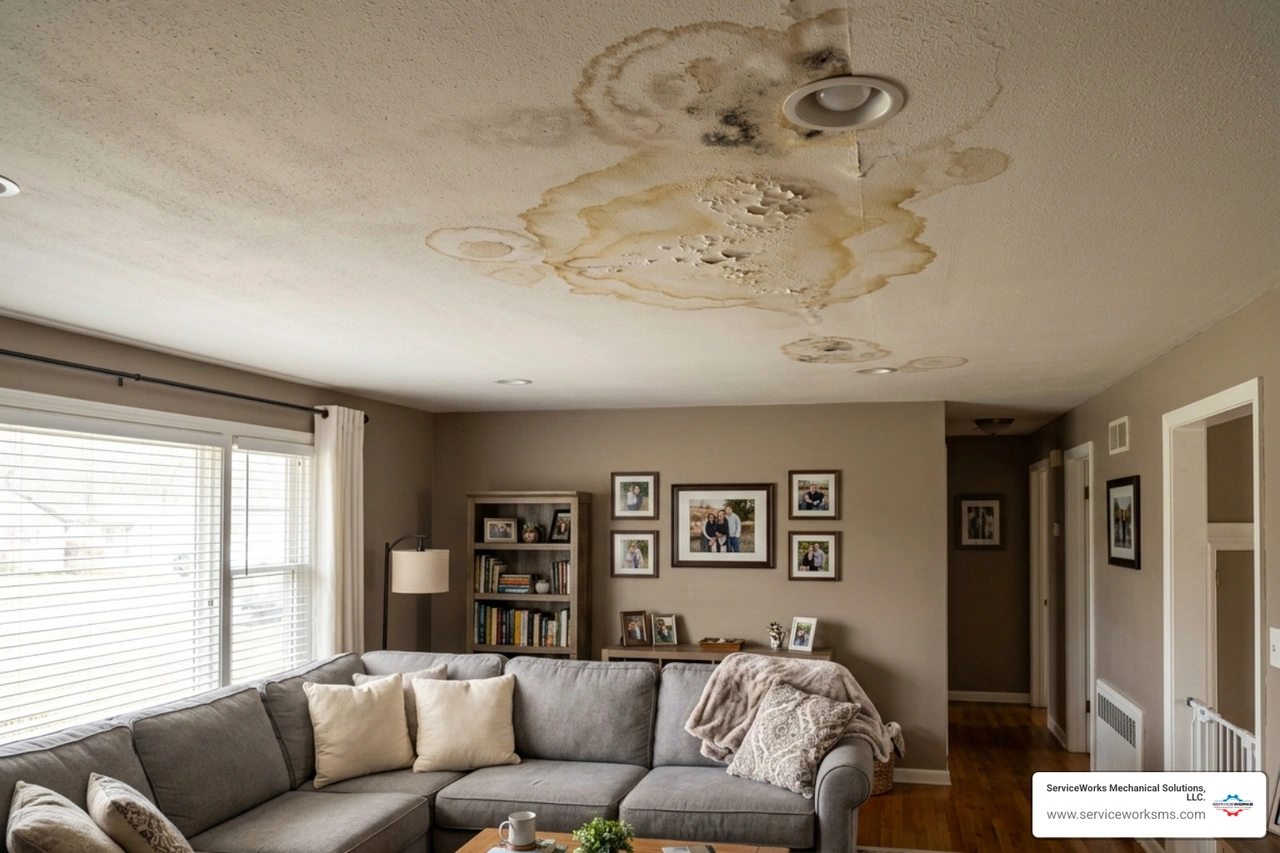
The Signs of a Hidden Water Leak in Your Home Are Easy to Miss — Until Real Damage Sets In
The most common signs of a hidden water leak in your home include:
- Unexplained spike in your water bill — usage jumps without any change in habits
- Water meter moving when no fixtures are on — the leak indicator triangle spins even at midnight
- Musty or earthy odors — especially in bathrooms, basements, or under sinks
- Water stains or discoloration on walls and ceilings — yellow or brown rings that grow over time
- Peeling paint or bubbling wallpaper — moisture pushing through from behind
- Warped, soft, or spongy flooring — subfloor absorbing water slowly
- Mold or mildew growth — can begin within 24 to 48 hours of a leak starting
- Low water pressure — water escaping elsewhere in the system
- Sounds of running water when nothing is on — hissing, dripping, or gurgling inside walls
- Foundation cracks or doors that won't close — structural shifts caused by soil erosion beneath the home
Hidden leaks are one of the sneakiest problems a homeowner can face. The water isn't pooling on your floor. There's no obvious burst pipe. Everything looks fine — until it isn't.
According to the EPA, the average household's leaks can waste nearly 10,000 gallons of water every year. And 10% of homes have leaks losing 90 gallons or more every single day. That's not a drip — that's a slow-motion disaster working quietly behind your walls, under your floors, and beneath your foundation for weeks or even months before any obvious damage appears.
In Surfside Beach, SC, the coastal humidity makes things worse. Moisture trapped inside walls doesn't dry out the way it might in drier climates. Mold can take hold fast. Wood rots sooner. And because sandy coastal soil absorbs water so readily, an underground pipe leak may never create a puddle on the surface — leaving you with no visible clue while hundreds of gallons disappear each week.
The good news? There are clear warning signs if you know what to look for.

Financial and Meter Indicators of Water Loss

One of the most reliable signs of a hidden water leak in your home isn't something you see or smell—it’s something you feel in your wallet. If your habits haven't changed, but your water bill has suddenly skyrocketed, you are likely paying for water that is leaking into your crawlspace, foundation, or yard.
In May 2026, as utility rates continue to fluctuate, a sudden jump from a standard $60 bill to $200 or more is a major red flag. We often see homeowners in coastal South Carolina assume it’s just a seasonal rate hike, but a leak can waste thousands of gallons of water each month. If you suspect your bill is lying to you, it’s time for Leak Detection Florence SC to pinpoint the exact source of the waste.
Beyond the bill, look at your irrigation system. In areas like Murrells Inlet or Pawleys Island, complex sprinkler systems are common. A split supply pipe or a stuck valve can dump hundreds of gallons into the sandy soil without ever showing a puddle on the surface. Similarly, an outdoor hose bib (the faucet on the outside of your house) can have a slow leak that seeps back toward your foundation, causing structural issues over time.
Using Your Meter to Find Signs of a Hidden Water Leak in Your Home
Your water meter is the most powerful tool you have for DIY leak detection. It’s like a heartbeat monitor for your home's plumbing. Most meters have a "leak indicator," which is usually a small rotating triangle, star, or silver wheel. If that little triangle is spinning while every faucet in the house is off, you have a leak.
To perform a "Two-Hour Test," follow these steps:
- Turn off every water-using fixture in your home (don't forget ice makers and irrigation).
- Head out to the meter and record the current reading.
- Wait exactly two hours without using a single drop of water.
- Check the reading again.
If the numbers have changed, water is escaping somewhere. If you can’t find a drip under a sink or a running toilet, the leak is likely hidden behind a wall or underground. For residents in the Pee Dee region, getting professional Leak Detection Loris SC is the next logical step to prevent that "money down the drain" feeling from becoming a permanent fixture of your monthly budget.
Visual and Olfactory Signs of a Hidden Water Leak in Your Home
Your nose and your eyes are often the first to know when something is wrong. Because many pipes run through the "envelope" of your home—the spaces between walls and floors—water often saturates materials long before it creates a puddle.
Musty, Earthy OdorsHave you ever walked into a room and thought it smelled like an "old gym bag" or a damp basement? That musty scent is the smell of microbial volatile organic compounds (mVOCs). In plain English: it’s the smell of mold and mildew eating your house. If you clean your bathroom or kitchen and that "earthy" smell persists, there is likely moisture trapped behind the cabinetry or under the floorboards.
Surface DamageWater is a universal solvent. Over time, it softens drywall, dissolves glue, and causes wood to swell. Look for:
- Peeling Paint or Bubbling Wallpaper: This happens when water seeps through the drywall from the back, breaking the bond between the wall and its finish.
- Ceiling Discoloration: Yellow, brown, or copper-colored rings on a ceiling are classic indicators of a leak in a second-floor bathroom or a pipe in the attic.
- Efflorescence: If you have a brick or concrete foundation and see white, chalky streaks, that’s mineral deposits left behind as leaking water evaporates.
If you notice these visual cues, don't just paint over them. That’s like putting a band-aid on a broken leg. You need Leak Repair Myrtle Beach SC to stop the moisture at its source before the structural integrity of your home is compromised.
Auditory Signs of a Hidden Water Leak in Your Home
When the house is quiet—usually late at night or early in the morning—your plumbing might try to talk to you. If you hear sounds of water moving when no one is showering or running the dishwasher, pay attention.
- Hissing: This often indicates a high-pressure pinhole leak in a copper pipe.
- Gurgling or Sloshing: This can mean water is pooling in a wall cavity or a drain line is backed up and leaking.
- Dripping: A rhythmic "tick-tick-tick" inside a wall is a clear sign of a failing joint or a cracked pipe.
If you are in the Midlands and hear these phantom sounds, Leak Repair Irmo SC can help you find the "ghost" in your walls before it turns into a flood.
Structural Damage and Foundation Risks
In coastal South Carolina, our homes face unique challenges. The combination of sandy soil and high water tables means that even a "small" leak can lead to major structural shifts. When a pipe leaks beneath your home, it can either wash away the soil (creating a void) or cause certain types of clay-heavy soil to expand (creating "heave").
Both scenarios lead to foundation cracks. If you notice new cracks in your drywall, doors that suddenly stick or won't latch, or windows that are hard to open, you might be dealing with a slab leak. A slab leak occurs when the pipes buried beneath your concrete foundation fail. Because the water is trapped under the house, it can erode the very ground your home sits on.
For those living in the Lowcountry, Slab Leak Surfside Beach SC services are essential for protecting your property value. Ignoring a foundation leak is a "slow-motion disaster" that can eventually lead to the house sagging or even partial collapse in extreme cases.
Pests: The Unlikely Leak DetectorsBelieve it or not, pests like termites, carpenter ants, silverfish, and cockroaches are attracted to the moisture provided by hidden leaks. If you find yourself dealing with a sudden pest infestation despite a clean home, you might actually have a plumbing problem. Termites, in particular, love damp wood. A slow leak behind a baseboard provides the perfect environment for them to thrive.
| Feature | Surface Leak | Slab Leak |
|---|---|---|
| Visibility | Stains on ceilings/walls | Often invisible; check for hot floor spots |
| Primary Danger | Mold and wood rot | Foundation cracking and soil erosion |
| Detection Method | Visual inspection/Dye test | Acoustic sensors/Thermal imaging |
| Urgency | High (prevents mold) | Critical (prevents structural failure) |
If you suspect your foundation is at risk, reaching out for Slab Leak Georgetown SC expertise can save you from a massive renovation bill down the road.
Specialized Tests for Toilets and Slabs
Not every leak requires high-tech gear to find. Some of the most common signs of a hidden water leak in your home come from the most used fixture in the house: the toilet.
The Silent Toilet LeakA leaking toilet flapper can waste hundreds of gallons of water per day, and it’s often completely silent. To test this:
- Remove the lid from your toilet tank.
- Drop a few drops of food coloring or a dye tablet into the tank.
- Wait 15 to 20 minutes without flushing.
- Check the water in the toilet bowl.
If the color has seeped from the tank into the bowl, your flapper is leaking. This is one of the easiest fixes in plumbing, but if left unaddressed, it’s like leaving a faucet running 24/7. For homeowners in Cayce and the surrounding areas, Leak Repair Cayce SC can handle these "silent killers" of your monthly budget.
Hot Spots and Low PressureIf you walk across your kitchen or bathroom floor barefoot and notice a patch of floor that feels unusually warm, you likely have a hot water line leaking under your slab. This is a classic sign of a slab leak. Because the hot water is constantly running through the break, it heats up the concrete and the flooring above it.
This often goes hand-in-hand with low water pressure. If your shower feels like a "light drizzle" instead of a powerful spray, the water is likely being diverted through a hole in a pipe before it ever reaches your showerhead. In areas like Socastee, Slab Leak Socastee SC experts use specialized equipment to find these underground breaks without tearing up your entire floor. If you're further north, Slab Leak North Myrtle Beach SC specialists can provide the same pinpoint accuracy.
Professional Detection Technology
In the old days, finding a hidden leak meant "search and destroy"—plumbers would have to tear out drywall or jackhammer concrete just to find the source. Thankfully, in 2026, we have much better options.
Thermal ImagingWater changes the temperature of the materials it touches. By using infrared cameras, we can see "cold spots" or "hot spots" behind your walls or under your floors. This allows us to find the leak non-invasively. If you are in the Mount Pleasant area, Leak Detection Mount Pleasant SC utilizes this technology to save you from unnecessary demolition.
Acoustic SensorsEven if a leak is buried under three feet of dirt and concrete, it makes a sound. Professionals use high-sensitivity microphones to listen for the specific frequency of escaping water. This is particularly useful for Leak Detection Conway SC when dealing with long supply lines between the street meter and the house.
Smart Leak DetectorsWe highly recommend that homeowners install smart water monitors. These devices attach to your main water line and use AI to learn your home's water patterns. If they detect an unusual flow—like a pipe bursting while you're on vacation at the beach—they can automatically shut off your water and send an alert to your phone. It’s the ultimate peace of mind for the modern homeowner.
Frequently Asked Questions about Hidden Leaks
How can I tell if I have a leak if my bill is high but I see no water?
If your bill is high but your home is dry, the leak is likely "out of sight." This usually means a silent toilet leak (where water goes straight down the drain), a leak in the main supply line buried in your yard, or a slab leak under your foundation. Because coastal SC has sandy soil, thousands of gallons can soak into the ground without ever surfacing. We recommend a Leak Detection Socastee SC professional check your meter and main line to find the invisible culprit.
How quickly can a hidden leak cause mold growth?
Mold is incredibly fast. It only needs moisture, a food source (like drywall or wood), and a little bit of warmth. Mold spores can begin to colonize within 24 to 48 hours of a leak starting. In our humid South Carolina climate, mold can spread through wall cavities long before you see a single black spot on your baseboards. If you suspect moisture, Leak Repair West Columbia SC should be your first call to prevent a plumbing issue from becoming a health crisis.
What are the most common signs of a slab leak?
The most "telltale" signs of a slab leak include:
- Unexplained warm spots on your floor (especially on tile or laminate).
- The sound of running water when all taps are off.
- Cracks in your foundation or exterior brickwork.
- A water heater that never stops running (because it's trying to keep up with a hot water leak).If you see these signs in the Florence area, Slab Leak Florence SC experts can help. For those on the coast, Slab Leak Myrtle Beach SC services are available 24/7.
Conclusion
At ServiceWorks Mechanical Solutions, LLC, we know that your home is your biggest investment. A hidden water leak isn't just a nuisance; it’s a threat to your home’s structural integrity, your family’s health, and your financial peace of mind. As a veteran-owned company, we take pride in providing disciplined, honest, and expert service to our neighbors throughout coastal South Carolina.
Whether you're dealing with a mysterious musty smell in Surfside Beach or a foundation crack in Columbia, our licensed technicians have the tools and experience to find the problem and fix it right the first time. We offer 24/7 emergency response because we know that leaks don't wait for business hours to cause damage.
Immediate Steps to Take if You Suspect a Leak:
- Check your water meter immediately to confirm if water is flowing.
- Perform the toilet dye test to rule out the most common "silent" leak.
- Inspect under every sink and around your water heater for dampness or corrosion.
- Look at your most recent water bills and compare them to the same month from last year.
- Call a professional if you can't find the source but the meter is still spinning.
Don't wait for a damp spot on the ceiling to become a collapsed roof. Protect your home with professional leak detection and repair from the team that understands the unique needs of South Carolina homeowners. Give us a call today—we’re here to make sure your money stays in your pocket and out of the drain.
testimonials
Customer Testimonials

With approved credit through Wisetack, you can enjoy zero down financing and convenient monthly payments, so you don’t have to wait to get the comfort you deserve.
Recent Blog
Stay updated with our latest blog posts.


Commercial HVAC Replacement Planning: How to Know When It’s Time to Replace Your System