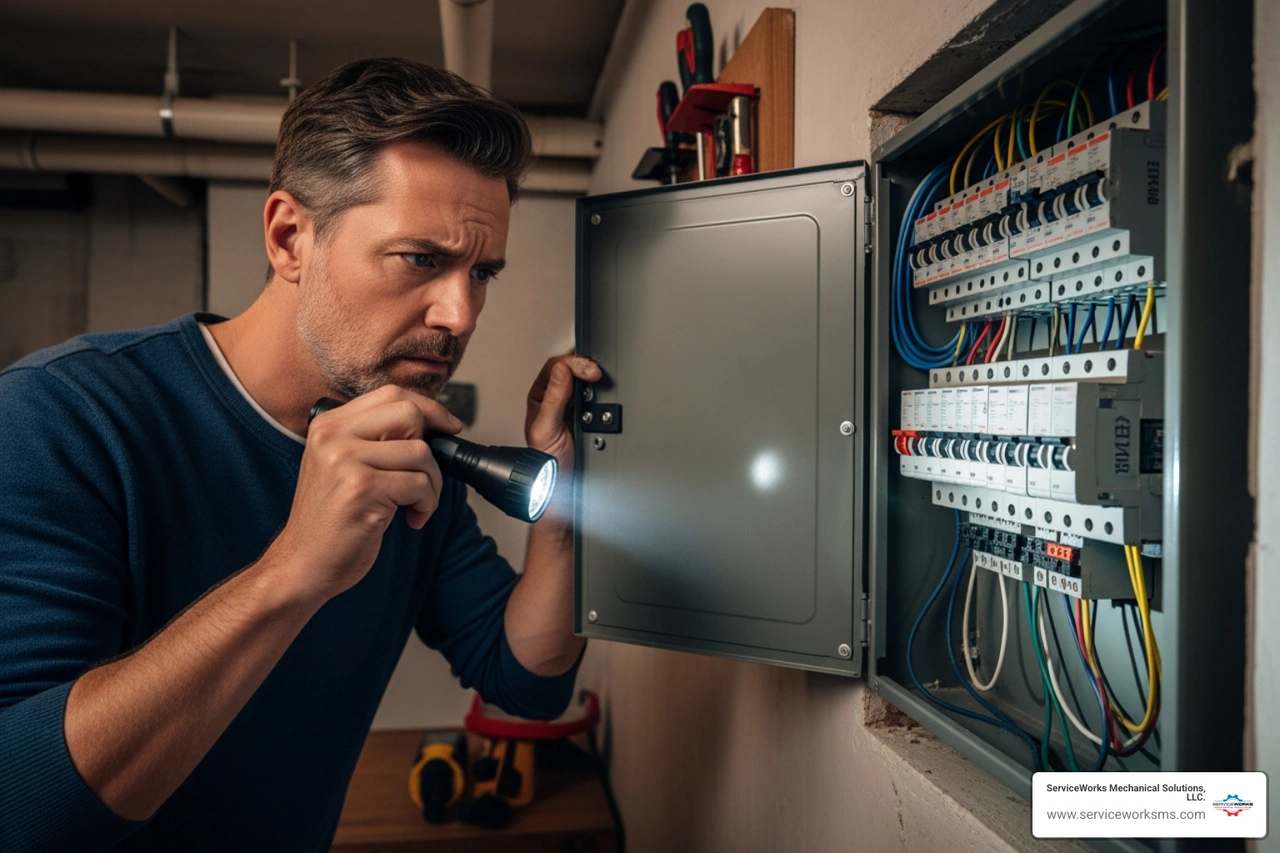
Why Knowing When Should You Call an Electrician Could Save Your Home
Knowing when should you call an electrician is one of the most important safety decisions you can make as a homeowner. Here is a quick answer:
Call an electrician immediately if you notice any of the following:
- Burning smells from outlets, switches, or your panel
- Outlets or switch plates that feel hot to the touch
- Buzzing, crackling, or humming sounds from walls or fixtures
- Flickering lights throughout multiple rooms
- Frequent circuit breaker trips that keep coming back
- Sparks from an outlet, appliance, or breaker box
- Electric shocks when touching switches or plugging in devices
- Scorch marks or discoloration around outlets
- No GFCI protection in kitchens, bathrooms, or outdoor areas
- An older home that has never had a professional electrical inspection
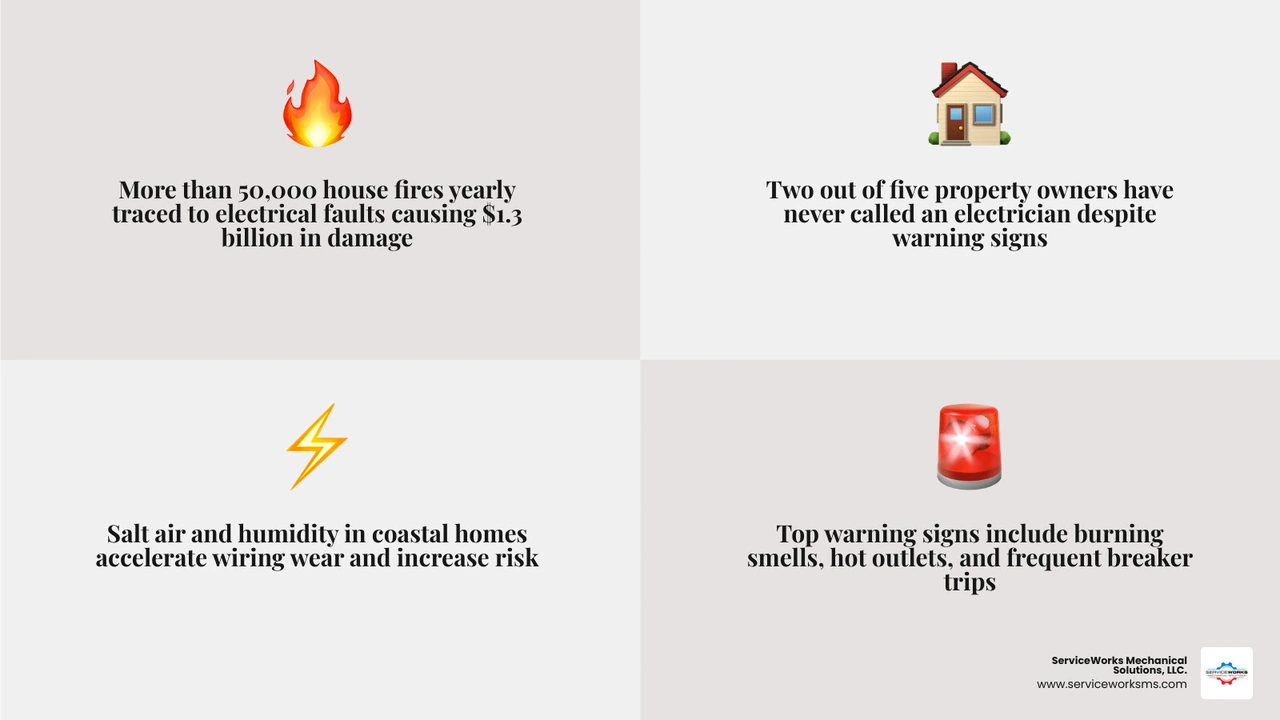
These are not minor inconveniences. Every year, more than 50,000 house fires in the United States are traced back to electrical malfunctions, resulting in roughly $1.3 billion in property damage. Despite that, two out of five property owners in North America have never called an electrician — even after noticing warning signs. That gap between "something seems off" and "I should call a professional" is exactly where house fires start.
If you are a homeowner in Surfside Beach, SC or the surrounding Myrtle Beach area, the coastal climate adds extra risk. Heat, humidity, and salt air can accelerate wear on wiring, outlets, and panels — making routine electrical issues worse, faster.
Immediate Warning Signs: When Should You Call an Electrician Right Away?

Some electrical issues can wait for a scheduled visit. Others belong in the "stop using it and call now" category.
Here are the most common danger signs that mean you should contact a professional right away:
- Burning smells
- Hot outlets or switch plates
- Buzzing, humming, or crackling sounds
- Sparks or smoke
- Repeated breaker trips
- Electric shocks or tingling
- Scorch marks or outlet discoloration
- Power loss in part of the home with no clear cause
A healthy electrical system should be boring. No drama, no strange smells, no mystery sounds coming from inside the wall. If your outlets smell like burning plastic, your panel is warm, or your light switch buzzes when you touch it, that can point to loose connections, damaged wiring, or arcing.
Arcing is especially serious. It happens when electricity jumps through air between connections instead of flowing cleanly through the circuit. Arc temperatures can become extremely hot, hot enough to ignite nearby materials. That is why hot outlets, smoke marks, and buzzing sounds should never be shrugged off as "probably nothing."
If this is happening in your home, stop using the affected outlet, switch, or fixture. If it is safe to do so, turn off the breaker for that circuit and call a licensed electrician. For fast local help, explore our Electrician Myrtle Beach SC services.
A few signs deserve special attention:
- Burning odor from an outlet or panel: treat it as urgent
- Outlet or switch cover that feels hot at room load: not normal
- Buzzing inside walls: not bees, and definitely not a good sign
- Breaker that trips, resets, and trips again: possible fault, not just overload
- Shock when plugging something in: stop immediately
When should you call an electrician for flickering lights?
Flickering lights are one of the most misunderstood warning signs.
Sometimes the cause is harmless, like a loose bulb or an aging lamp. But you should call an electrician when:
- Multiple lights flicker in different rooms
- Lights dim when major appliances turn on
- Flickering happens daily or keeps getting worse
- Lights flicker with buzzing, heat, or breaker trips
- A room loses power intermittently
Widespread flickering can mean voltage fluctuations, loose wiring connections, panel problems, or overloaded circuits. If the issue appears when the AC, microwave, dryer, or another large appliance starts running, your system may be struggling to handle the demand.
This matters in homes and businesses alike. If you manage a commercial property, electrical load issues can spread quickly across work areas, lighting, and equipment. Learn more about our Commercial Electrician Myrtle Beach SC services for professional troubleshooting.
Safety First: Knowing When to Call an Electrician vs. DIY
Homeowners can safely handle a few basic electrical-adjacent tasks. But actual electrical repair is where confidence can become a bad safety plan.
In general, it is usually reasonable for homeowners to:
- Reset a tripped breaker once
- Replace a burned-out light bulb
- Test a GFCI outlet using the test and reset buttons
- Unplug overloaded power strips or extension cords
It is not reasonable to DIY:
- Panel work of any kind
- New wiring or circuit additions
- Troubleshooting burning smells
- Diagnosing shocks, buzzing, or sparking
- Replacing breakers without finding the cause
- Working around wet electrical equipment
- Rewiring outlets when you are unsure about grounding
Why the hard line? Because electrical mistakes can injure you immediately and still leave a hidden fire hazard behind the wall after you are done. Live wires do not look dangerous. Loose terminations can seem "fixed" until they overheat later. And code issues may not show up until inspection, insurance review, or a much worse moment.
Licensed electricians understand current flow, grounding, bonding, circuit protection, load balancing, and safety procedures. We use that training to find the cause of the problem, not just the symptom.
For complete diagnostics, repairs, and safety checks, our Electrical Services Myrtle Beach SC team can help.
Safe homeowner maintenance vs. professional-only repairs
| Homeowner task | Usually safe? | Notes |
|---|---|---|
| Reset a breaker once | Yes | If it trips again, call a pro |
| Replace a light bulb | Yes | Use correct bulb wattage/type |
| Press GFCI test/reset | Yes | If it will not reset, call |
| Unplug overloaded extension cords | Yes | Extension cords are temporary only |
| Replace panel components | No | High shock and fire risk |
| Diagnose buzzing in walls | No | Possible loose wiring or arcing |
| Investigate burning smell inside outlet | No | Shut power off if safe and call |
| Install new circuits or outlets | No | Requires proper design and code compliance |
| Repair shock-causing switches | No | Immediate professional attention needed |
A simple rule works well here: if you are opening anything beyond a cover plate or dealing with wiring you cannot fully identify, stop and call an electrician.
Hidden Hazards: When Should You Call an Electrician for Outdated Systems?
Some of the most dangerous electrical problems are not dramatic. They are old, quiet, and hiding behind drywall.
Older homes in coastal South Carolina can have:
- Aging insulation on wiring
- Ungrounded two-prong outlets
- Panels that no longer match modern power needs
- Corrosion from moisture and salt air
- Too few outlets for today's appliances and electronics
- Heavy reliance on extension cords and plug strips
If your home depends on extension cords in multiple rooms, that is not a convenience issue. It is often a sign your electrical system was never designed for current demand. Extension cords cause about 3,300 home fires each year in the United States, and they should never become permanent wiring by default.
Likewise, older wiring materials can create added risk. Homes built decades ago may contain cloth-covered wiring, deteriorated insulation, or aluminum branch wiring. Aluminum wiring itself is not automatically a disaster, but its connections can loosen over time and create dangerous heat buildup if not professionally addressed.
Old panels are another concern. Certain older panel types have a documented history of failure to trip properly, which defeats the whole point of circuit protection. And even when an older panel is technically still operating, it may not have enough capacity for modern loads like upgraded HVAC systems, added kitchen appliances, home offices, or generator transfer equipment.
If your home shows these signs, it may be time for House Rewiring Myrtle Beach SC or an Electric Panel Upgrade Myrtle Beach SC.
Common clues your system may be outdated include:
- Two-prong outlets
- Breakers tripping when normal appliances run
- Lights dimming when HVAC turns on
- Mystery switches that seem to control nothing
- No GFCI outlets near sinks or outside
- Visible rust, corrosion, or moisture near the panel
- Frequent use of outlet extenders and power strips
When should you call an electrician for ungrounded outlets?
If your home still has two-prong outlets, call an electrician sooner rather than later.
Two-prong outlets usually mean there is no equipment grounding path at that location. That increases shock risk and makes it harder for modern devices and surge protection to work correctly. Many homeowners try to work around this with adapters, but that is not the same as correcting the problem.
You should also call if:
- You have no GFCI protection in bathrooms, kitchens, garage areas, laundry rooms, or outdoors
- Outlets near water sources look old or damaged
- You feel a tingle from appliances
- Your home has never had its grounding system evaluated
GFCI outlets are designed to shut off power quickly if they sense current leaking where it should not go, such as through water or a person. In older homes without them, the urgency goes up.
If your panel is outdated or your grounding protection is incomplete, our team can help with Electric Panel Replacement Myrtle Beach SC.
Emergency Protocols: When to Call 911 vs. a Licensed Electrician
This is one of the most important distinctions a homeowner can understand.
Call 911 first if:
- You see active flames
- There is visible smoke filling the home
- Someone has been seriously shocked or is unresponsive
- Downed power lines are involved
- Water and live electricity are creating an immediate danger
- You cannot safely stay in the home
Call a licensed electrician if:
- You smell burning from an outlet or panel but there is no active fire
- A breaker keeps tripping
- Lights are flickering throughout the house
- An outlet is hot, scorched, or buzzing
- You got a mild shock from a switch or appliance
- Part of the home lost power and resetting did not help
If there is a dangerous smell, sparking, or shock risk, the first step is to reduce danger, not investigate like a home improvement detective. If it is safe to access your electrical panel, turn off the affected circuit. If you are not sure which breaker it is, and the issue is serious, shut off the main breaker. Never stand in water or touch electrical equipment with wet hands.
Then:
- Keep people away from the affected area
- Unplug devices only if safe
- Do not remove outlet covers
- Do not reset a tripping breaker over and over
- Call for professional help
If you need service in the Conway area, visit our Electrician Conway SC page.
While waiting for the electrician to arrive:
- Leave the problem circuit off
- Keep children and pets away
- Avoid using extension cords as a workaround
- Write down what happened, when it started, and what appliances were running
- Note whether the issue happened after rain, humidity spikes, or storm activity
That last point matters in our area. Coastal moisture can affect outdoor equipment, GFCIs, panels, and service connections faster than many homeowners expect.
Preventive Maintenance and Modern Upgrades for 2026
The best time to call an electrician is before something smells like toast and not the breakfast kind.
Regular inspections can help catch:
- Loose connections
- Corrosion at the panel
- Worn outlets
- Missing GFCI protection
- Overloaded circuits
- Undersized service for modern appliances
- Unsafe generator connections
If your home is older, has had remodels over time, or still uses original electrical components, a professional inspection is smart preventive maintenance. This is especially true if you are buying an older home, adding major appliances, converting part of the house into a workspace, or planning electrical upgrades.
Modern upgrades homeowners often need in 2026 include:
- Panel upgrades for increased load capacity
- Generator connections with proper transfer equipment
- Dedicated circuits for new equipment
- Rewiring for safety and reliability
- Outlet additions to reduce extension cord use
- GFCI protection updates in wet areas
For storm preparedness in coastal South Carolina, whole-home backup power is also worth considering. If you are planning for outages, explore our Whole House Generator Myrtle Beach SC services.
Knowing where your main breaker is and labeling your panel clearly can also prevent panic during an emergency. In a real electrical event, shaving even a minute off your response can matter.
Frequently Asked Questions about Electrical Safety
Why is my circuit breaker tripping repeatedly?
A breaker trips to protect the circuit. If it trips once because you ran too many things on one line, that may be a simple overload. If it keeps tripping after you reset it, the issue may be:
- An overloaded circuit
- A short circuit
- A ground fault
- A faulty breaker
- A hidden wiring problem
- A problem appliance on that circuit
The important part is this: repeated trips are not the nuisance. They are the warning. Stop resetting it again and again and have the circuit diagnosed.
Is a buzzing sound in the wall dangerous?
Yes, it can be.
Electrical systems should be silent. Buzzing, humming, or crackling can mean loose wires, faulty breakers, failing switches, or arcing. That is a fire risk, especially if the sound is paired with warmth, flickering lights, or a burning smell.
If you hear buzzing inside a wall, do not ignore it and do not assume it is nothing serious. Call for professional diagnosis.
What should I do if I smell burning plastic?
Treat it as urgent.
- Stop using the outlet, switch, or appliance
- Turn off the breaker for that circuit if safe
- Shut off the main breaker if the source is unclear and the smell is strong
- Evacuate and call 911 if there is smoke or visible fire
- Call a licensed electrician once the area is safe
Do not open the outlet. Do not sniff around for clues. Do not keep testing it "just one more time." Burning plastic smells often mean overheating insulation or arcing, and those are not DIY situations.
Conclusion
Electrical issues rarely fix themselves. They usually get worse, and sometimes they get worse quietly.
If you are wondering when should you call an electrician, the safest answer is this: call as soon as you notice heat, smell, sound, sparks, shocks, or repeated electrical failures. Quick action can prevent injuries, protect your home, and stop a small repair from becoming an emergency.
At ServiceWorks Mechanical Solutions, LLC, we are proud to serve homeowners across coastal South Carolina with dependable electrical help. As a veteran-owned company, we believe in clear communication, reliable service, 24/7 emergency support, and a 100% satisfaction guarantee.
If you need trusted help with electrical issues, inspections, rewiring, panels, or upgrades, visit our main electrical page here: Electrical Services Loris SC.
testimonials
Customer Testimonials

With approved credit through Wisetack, you can enjoy zero down financing and convenient monthly payments, so you don’t have to wait to get the comfort you deserve.
Recent Blog
Stay updated with our latest blog posts.
Why Is My Home So Humid? How Your HVAC System Controls Indoor Humidity in South Carolina