
Why Coastal South Carolina Water Quality and Your Plumbing Are More Connected Than You Think
Coastal South Carolina water quality and your plumbing are linked in ways most homeowners never see — until something breaks. From Edisto Island's private wells to Conway's municipal taps to Charleston's aging pipes, the water flowing through your home carries minerals, bacteria, and chemicals that silently wear down fixtures, foul water heaters, and raise real health concerns.
Here's a quick look at the biggest ways local water affects your plumbing:
- Hard water minerals from coastal aquifers build up inside pipes and water heaters, cutting efficiency by up to 29% and shortening appliance life
- Bacteria and nitrates from failing septic systems and flooding put private well owners at serious risk — especially families with infants
- Saltwater intrusion corrodes pipes and degrades well water quality along the coast
- Disinfection byproducts like trihalomethanes (TTHMs) and Chromium-6 appear in municipal supplies, including Conway, where 8 contaminants exceed health advocacy guidelines
- Lead from old plumbing is a concern in historic coastal homes built before 1986
- Point-of-use water can be worse than your utility report suggests, thanks to aging home pipes and fixtures
More than 20% of South Carolina residents rely on private wells, and many more receive municipal water that's been flagged for contaminants above recommended health limits. That combination — aggressive coastal water chemistry plus aging home plumbing — is a recipe for expensive repairs and preventable health risks.
This guide breaks down where the problems come from, what to watch for, and how to protect your home and family in Surfside Beach and across the Lowcountry.
Where Coastal South Carolina Water Comes From
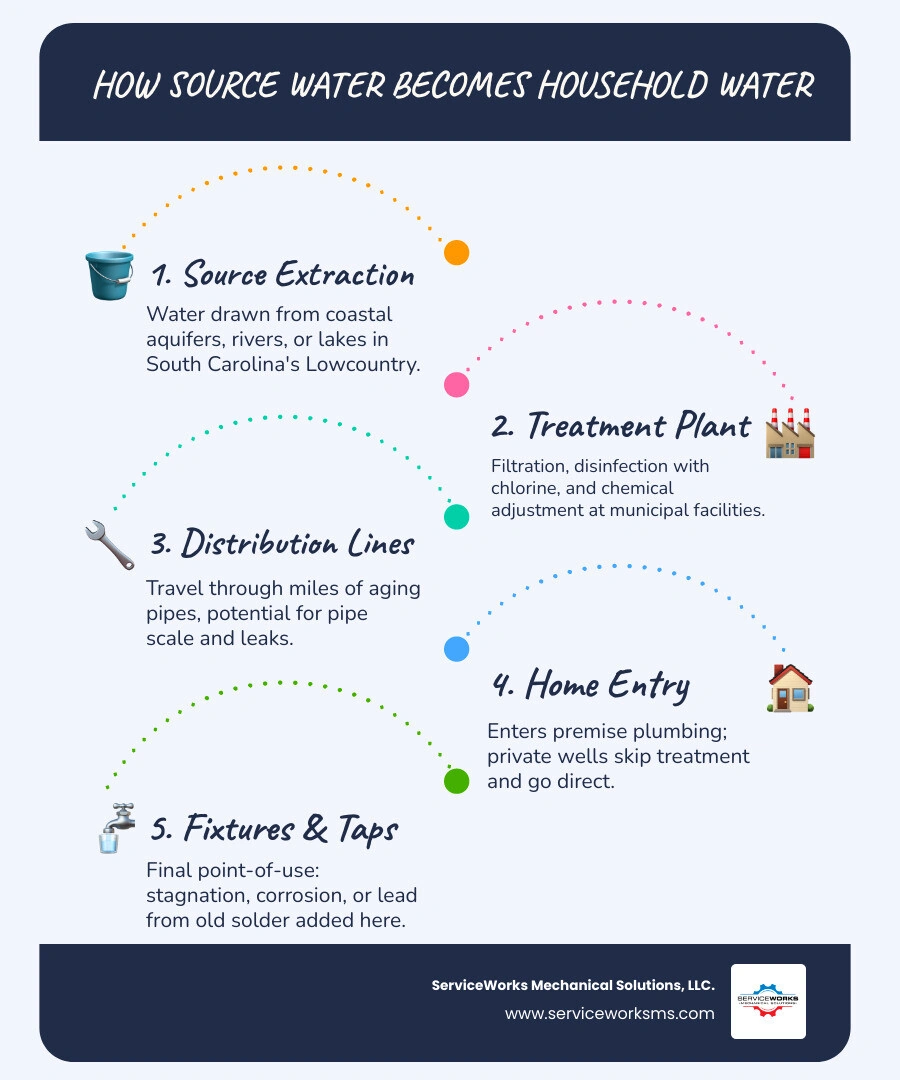
Understanding the journey water takes before it hits your faucet is the first step in protecting your home. In the Lowcountry, our water sources are as diverse as our landscape, ranging from deep underground aquifers to vast surface water systems.
Coastal South Carolina water quality and your plumbing starts with the source
The majority of our region sits atop the South Carolina coastal plain, a geological feature rich in groundwater aquifers. These underground "rivers" provide the lifeblood for thousands of homes. While the earth acts as a natural filter, it also imparts a unique chemical signature to the water—specifically high levels of calcium and magnesium gathered from ancient limestone and shell beds. For those on municipal systems, water is pulled from these aquifers or surface sources, treated at massive plants, and sent through miles of distribution lines before reaching your property.
Public water vs. private wells in Charleston, Conway, and Edisto Island
The experience of a homeowner in downtown Charleston is vastly different from one on Edisto Island. Charleston Water System serves a large portion of the metro area, utilizing advanced treatment to meet federal standards. In contrast, Conway’s supply relies heavily on groundwater where, despite meeting legal minimums, recent data shows 13 different contaminants detected, with 8 exceeding health advocacy guidelines.
Then there are the rural areas. More than 20% of South Carolina residents depend on private wells. On Edisto Island and in parts of Colleton County, the homeowner is essentially their own utility operator. This means you are responsible for testing, treating, and ensuring the safety of every drop that enters your home.
Why point-of-use water can differ from the utility report
You might read a glowing water quality report from your local utility and wonder why your water tastes metallic or leaves blue stains in the sink. The reason is "premise plumbing." Once water leaves the main city line and enters your service pipe, it can pick up contaminants from aging iron pipes, lead solder in pre-1986 homes, or even bacteria colonizing a stagnant water heater. The utility tests the water at the plant; we care about the water at your tap.
The Biggest Water Quality Problems Affecting Coastal Homes
When we talk about coastal south carolina water quality and your plumbing, we aren't just talking about a bad taste. We’re talking about chemical and biological factors that impact your health and your checkbook.
Common contaminants found in coastal South Carolina water quality and your plumbing
Our research into local water supplies reveals a "cocktail" of substances:
- Bacteria: Fecal coliform and E. coli are frequent flyers in rural areas with high water tables.
- Nitrates: Often a result of agricultural runoff or septic seepage.
- Disinfection Byproducts: Chemicals like Trihalomethanes (TTHMs) and Haloacetic acids form when chlorine reacts with organic matter.
- Heavy Metals: Lead from old pipes and Chromium-6 (the "Erin Brockovich" chemical) have been detected in areas like Conway and Little River.
| Issue | Municipal Water Risk | Private Well Risk |
|---|---|---|
| Bacteria | Low (due to chlorine) | High (septic/flooding) |
| Hardness | Moderate to High | Very High |
| Chemicals | TTHMs, Chromium-6 | Nitrates, Pesticides |
| Lead | From home pipes only | From well components/pipes |
Which contaminants raise the biggest health concerns
The risks aren't just in the glass you drink. The "Skin Absorption Factor" is a major concern in the Lowcountry. During a 10-minute hot shower, your skin can absorb chemicals, and your lungs can inhale vaporized contaminants like chloroform. For infants, nitrates are particularly dangerous, as levels above the 10 mg/L limit can cause "blue-baby syndrome," a condition that interferes with the blood's ability to carry oxygen.
How saltwater intrusion changes taste, corrosion, and appliance life
As sea levels rise and we experience more frequent "king tides," saltwater intrusion is becoming a reality for coastal aquifers. This increases the chloride levels in the water, making it "brackish." Salt is incredibly corrosive; it eats through copper pipes and destroys the internal components of dishwashers and ice makers long before their time.
Why flooding and high water tables make contamination worse
Our humid subtropical climate and low-lying geography mean that during heavy rains, the water table rises quickly. This can cause septic systems to back up, sending untreated waste into the groundwater that feeds private wells. 24 locations across the Edisto Island watershed have shown bacteria levels exceeding limits, often tied to these environmental surges.
How Coastal Water Quality Damages Plumbing, Water Heaters, and Appliances
If your water isn't treated, your plumbing system becomes the filter. Over time, that "filter" gets clogged and broken.
The plumbing effects of coastal south carolina water quality and your plumbing
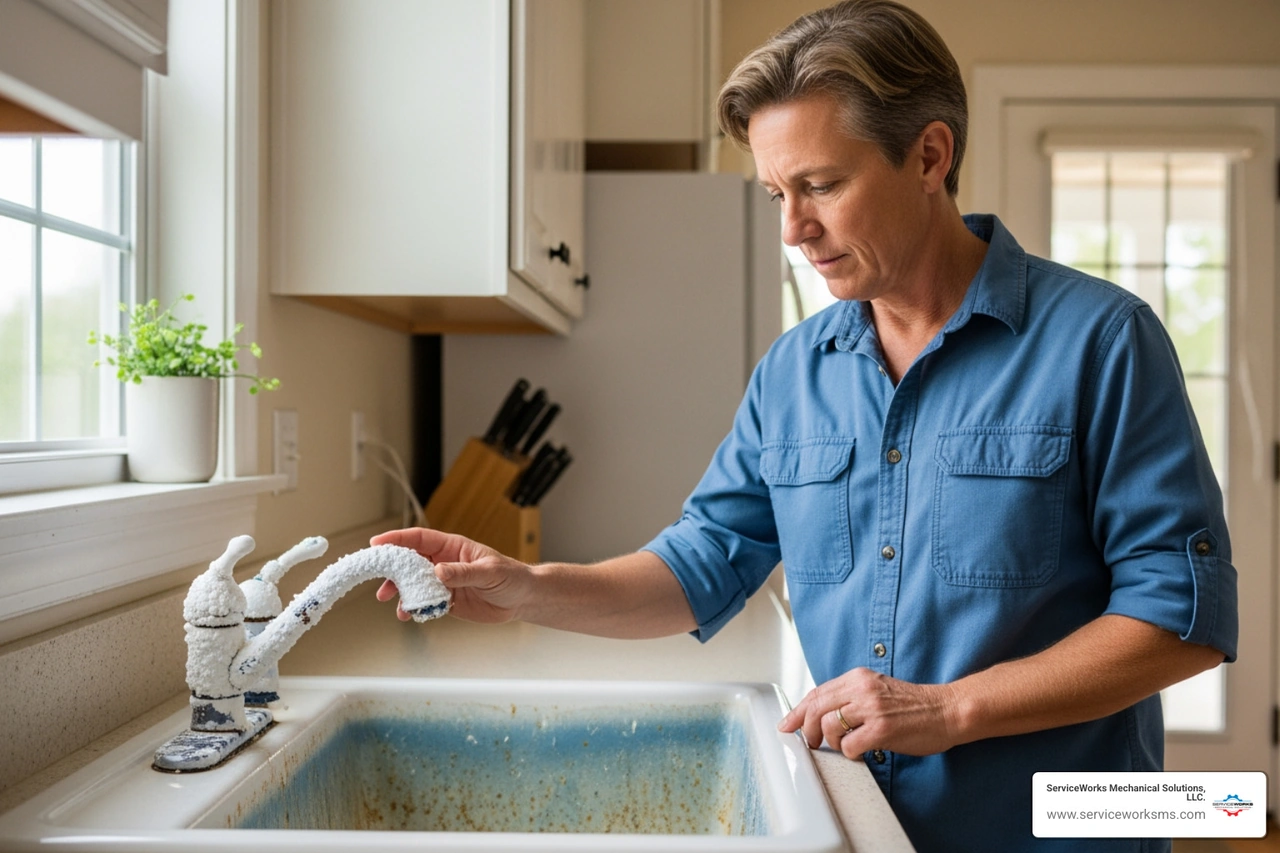
The most immediate sign of poor water quality is "scale." This white, crusty buildup clogs faucet aerators and showerheads, leading to frustratingly low water pressure. Even worse, certain water chemistries can cause "pinhole leaks" in copper pipes or leave unsightly orange (iron) or blue-green (copper corrosion) stains on your expensive fixtures.
Hard water from coastal aquifers and why it is so rough on homes
The water in many of our service areas, from Myrtle Beach to Summerville, is notoriously hard. This isn't just a nuisance; it's a financial drain. Hard water requires more soap to get a lather, meaning families spend more on detergents. It also creates a layer of "rock" inside your pipes that acts as an insulator, forcing your appliances to work harder to move or heat water.
Warning signs homeowners should notice early
We tell our customers to keep an eye (and a nose) out for these red flags:
- The "Rotten Egg" Smell: Usually indicates sulfur bacteria or hydrogen sulfide gas.
- Metallic Taste: Often a sign of high iron or leaching pipes.
- White Crust: If your showerhead looks like it’s growing salt crystals, you have a hardness problem.
- Frequent Clogs: Mineral buildup can narrow the effective diameter of your pipes.
Why water heaters often suffer first
Your water heater is the most vulnerable part of your plumbing system. As water is heated, minerals like calcium "fall out" of the liquid and settle at the bottom of the tank. This sediment layer buries the heating element, causing it to overheat and burn out.
In coastal SC, untreated hard water can cause a water heater to lose 29% of its efficiency. Instead of lasting 12-15 years, many local heaters fail in just 6-8 years.
Septic Systems, Wells, and Rural Lowcountry Risks
In areas like Edisto Island and rural Georgetown County, the relationship between waste management and drinking water is uncomfortably close.
How failing septic systems affect Edisto Island water quality
Failing septic systems are a primary source of bacterial pollution in our coastal watersheds. When a system fails, fecal coliform and enterococcus bacteria seep into the groundwater. This doesn't just affect your drinking water; it leads to restrictions on shellfish harvesting and makes local waterways unsafe for swimming.
Unique water challenges for private well owners in Charleston and nearby Lowcountry areas
Private wells in the Lowcountry are often shallow, making them highly susceptible to surface contamination. If you live near an industrial area or a high-traffic corridor like Highway 17, your well may be at risk for chemical runoff that municipal systems are better equipped to handle.
What coastal well owners should test for every year
If you own a well, SCDHEC and the EPA recommend a "physical" for your water at least once a year. Your checklist should include:
- Total Coliform and E. coli (The most critical tests)
- Nitrates/Nitrites (Especially if you have a baby at home)
- pH Levels (Acidic water eats pipes)
- Hardness and Iron
- Lead and Copper
Maintenance habits that protect both groundwater and plumbing
To keep your water safe, we recommend a "whole-home" approach to maintenance. This includes pumping your septic tank every 3-5 years and ensuring your well cap is tightly sealed and elevated above the flood line. After any major storm or flood event, well owners should always disinfect their systems and re-test before drinking the water.
Best Testing, Treatment, and Prevention Options for Coastal Homes
The good news is that you don't have to live with poor water. There are proven solutions that can turn even the harshest coastal water into high-quality H2O.
How often to test municipal water and private wells
While municipal water is tested at the source, we recommend testing at your tap every 2-3 years, or immediately if you notice a change in taste, color, or smell. If you are moving into a historic home in Charleston or Summerville, a lead test is a non-negotiable first step.
Matching the right treatment to the problem
One size does not fit all in water treatment.
- Water Softeners: Essential for protecting your plumbing and appliances from the "relentless" mineral buildup found in the SC coastal plain.
- Reverse Osmosis (RO): The gold standard for drinking water. It removes up to 98% of contaminants, including Chromium-6 and TTHMs.
- Carbon Filtration: Great for removing the "pool water" taste of chlorine.
- UV Disinfection: A must-have for well owners to kill bacteria without using chemicals.
- More info about water filtration in Myrtle Beach SC
- More info about water purification in Mount Pleasant SC
How homeowners in historic coastal homes can reduce lead exposure
If your home was built before 1986, you likely have lead solder in your pipes. To reduce risk:
- Flush the taps: Run the water for 30-60 seconds if it hasn't been used for several hours.
- Use cold water for cooking: Hot water leaches lead much faster than cold water.
- Upgrade fixtures: Replace old brass faucets with modern, lead-free versions.
Conservation efforts that support cleaner coastal water
We are big fans of "living shorelines." By using oyster shells and native marsh grasses to control erosion, we can reduce the turbidity (cloudiness) in our waterways. This helps protect the aquifers that eventually feed our wells and municipal intakes.
Local help for homeowners dealing with wells and septic concerns
There are resources available! Charleston and Colleton Counties often have financial assistance programs for septic upgrades. Organizations like the South Carolina Department of Environmental Control (SCDHEC) provide guidance on well testing and can help you interpret your results if you find a problem.
Frequently Asked Questions about Coastal South Carolina Water Quality and Your Plumbing
Is coastal South Carolina tap water safe if it meets legal standards?
Legal standards and health standards are two different things. While most municipal water is "legal," it may still contain "legal" levels of carcinogens that many health advocates believe are too high for long-term exposure. Furthermore, the city cannot guarantee the safety of the pipes inside your home.
What is the first sign that my water is damaging my plumbing?
Look at your water heater. If it’s making "popping" or "rumbling" sounds, that’s the sound of steam bubbles escaping from beneath a thick layer of mineral sediment. That is your first warning that your plumbing is under attack.
Do I need a whole-home system or just a drinking water filter?
A drinking water filter (like a pitcher) only treats about 1% of the water you use. It won't stop your water heater from failing, it won't stop your skin from absorbing chemicals in the shower, and it won't protect your pipes from corrosion. For true protection, a whole-home system is the way to go.
Conclusion
At ServiceWorks Mechanical Solutions, LLC, we’ve seen how coastal south carolina water quality and your plumbing interact. We’ve replaced countless water heaters that died a decade too early and fixed pinhole leaks that could have been prevented with proper filtration.
As a veteran-owned business serving communities from Myrtle Beach to Florence and down to Charleston, we believe that clean, safe water is a fundamental right for every Lowcountry family. Whether you need a high-efficiency softener to battle scale or a reverse osmosis system to protect your family from hidden contaminants, we are here to help.
Don't wait for a major leak or an appliance failure to take action. Protect your home's infrastructure and your family's health today.
testimonials
Customer Testimonials

With approved credit through Wisetack, you can enjoy zero down financing and convenient monthly payments, so you don’t have to wait to get the comfort you deserve.
Recent Blog
Stay updated with our latest blog posts.

Commercial HVAC Replacement Planning: How to Know When It’s Time to Replace Your System