



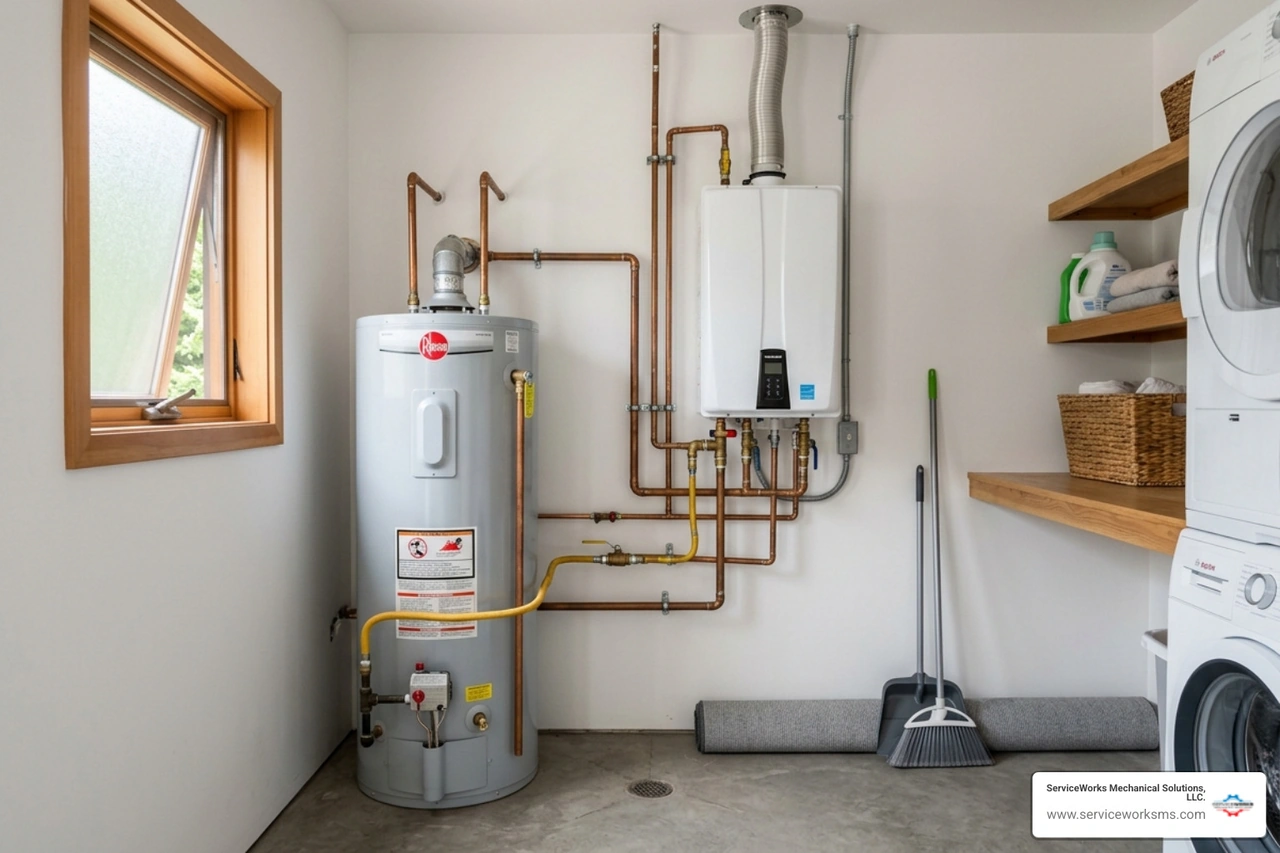
Understanding the Operation: Tankless vs Tank Water Heater for Your Home
Choosing between a tankless vs tank water heater for your home is one of the most important decisions you'll make as a homeowner in Surfside Beach, SC. The right choice affects your daily comfort, your monthly energy bills, and how often you're calling for repairs. And since nearly 90% of water heater replacements happen during an emergency, it pays to understand your options before you're standing in a cold shower.
Quick Answer: Tankless vs Tank Water Heater
| Factor | Tank Water Heater | Tankless Water Heater |
|---|---|---|
| Hot water supply | Limited by tank size (30–80 gal) | Continuous, on demand |
| Energy efficiency | 60–78% | 80–99% |
| Lifespan | 10–15 years | 20+ years |
| Space needed | Large floor footprint | Compact, wall-mounted |
| Installation complexity | Simple | Moderate to complex |
| Best for | Smaller households, tight budgets | Larger homes, long-term savings |
Bottom line: Tank water heaters cost less upfront and are easier to install. Tankless units use less energy, last longer, and never run out of hot water — but they require a larger initial investment. The best choice depends on your household size, hot water habits, and how long you plan to stay in your home.
Most homes in the Surfside Beach area have a traditional storage tank tucked away in a utility closet or garage. It does the job — until it doesn't. When that tank finally gives out, you're faced with a real question: replace it with the same thing, or make the switch to a tankless system?
Both options have genuine strengths. And both have real trade-offs that don't always show up in the marketing brochures. This guide breaks it all down clearly, so you can make a confident decision without the guesswork.
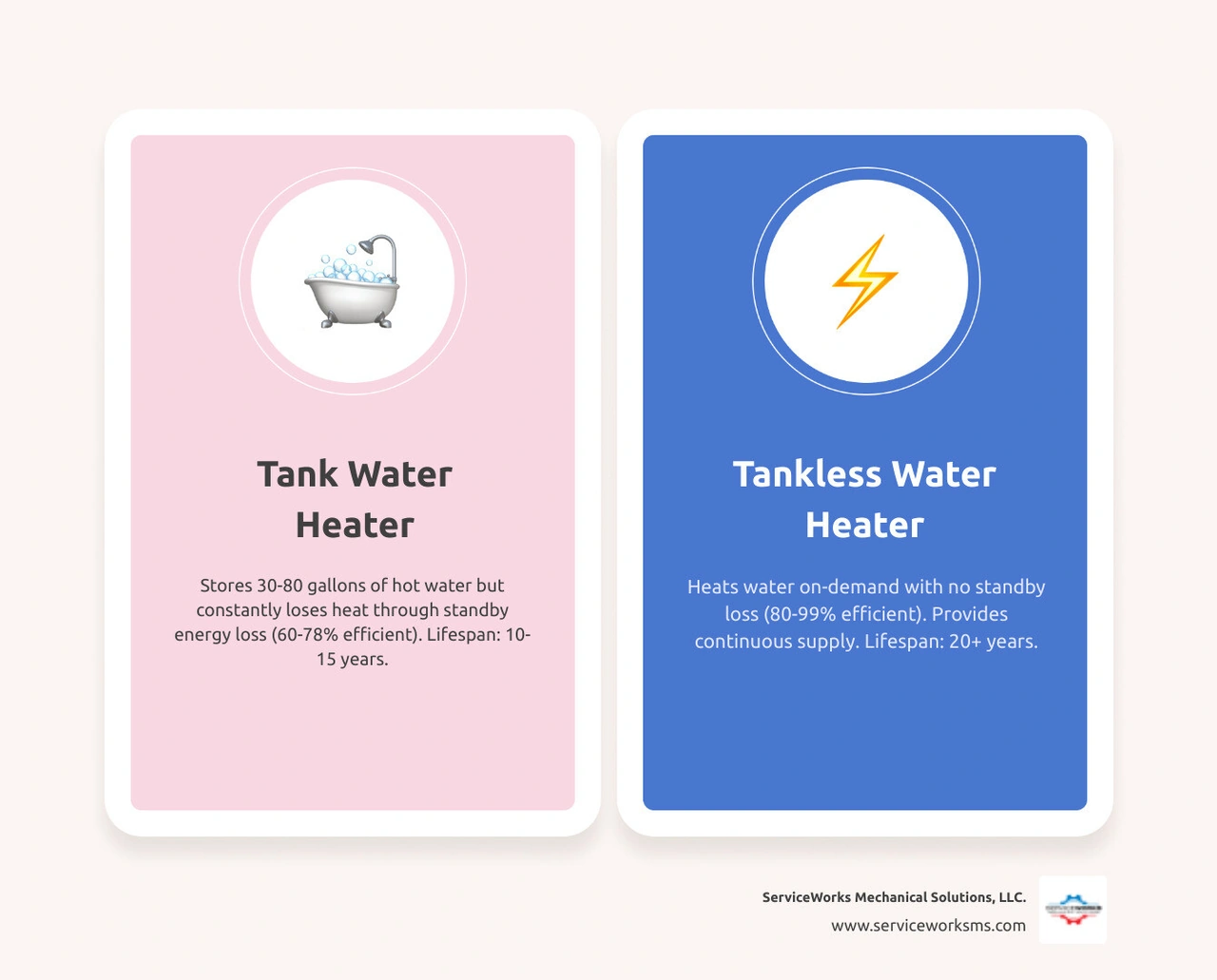
When we talk about Water Heater Services, the most fundamental difference lies in how these two systems handle your water supply. A traditional tank is a "storage" system, while a tankless unit is an "on-demand" or "instantaneous" system.
The core issue with storage tanks is something called standby energy loss. Because the tank is constantly heating a large volume of water to keep it ready for you, it loses heat through the walls of the tank. Think of it like keeping a giant pot of water simmering on the stove all day just in case you want a cup of tea at 4:00 PM. It’s convenient, but it wastes energy. Tankless units eliminate this by only heating water when a faucet is actually turned on.
How Traditional Storage Tanks Work
Standard water heaters are essentially large, insulated cylinders. They typically hold between 30 and 80 gallons of water. An internal thermostat monitors the temperature; when it drops below a certain point, the gas burner or electric element kicks in to heat the whole volume back up.
The biggest drawback here is the recovery time. Once you’ve used up those 50 gallons in back-to-back showers, the tank has to refill with cold water and heat it all over again. This can take anywhere from 30 minutes to over an hour. Furthermore, because water sits in these tanks for years, they are prone to sediment buildup. In our coastal South Carolina environment, minerals can settle at the bottom, reducing efficiency and eventually leading to the tank "bursting" or leaking—a fate that nearly 75% of tank heaters eventually face. For more on managing these transitions, check out our Water Heater Replacement Guide Surfside Beach SC.
The Mechanics of Tankless vs Tank Water Heater for Your Home
A tankless unit doesn't have a reservoir. Instead, when you turn on the hot water tap, a flow sensor detects the movement. This triggers a powerful heat exchanger—powered by either a gas burner or electric elements—that flash-heats the water as it travels through the pipes.
This means you get a constant supply of hot water that never runs out. As long as there is water flowing into the house and a power source, the unit will keep producing heat. It’s a sophisticated process that requires precise calibration to ensure the water reaching your shower is exactly the temperature you requested. If you’re curious about how these units perform specifically in our area, our Tankless Water Heater Myrtle Beach Guide offers deeper local insights.
Performance and Capacity for Coastal South Carolina Households
Performance isn't just about how hot the water gets; it’s about how much hot water can be delivered at once. This is measured in Gallons Per Minute (GPM).
In South Carolina, we have a bit of an advantage. Our groundwater temperature typically averages around 65°F to 75°F. This means a Tankless Water Heater Surfside Beach SC doesn't have to work nearly as hard as a unit in Minnesota to reach a comfortable 120°F. Because the "temperature rise" is smaller, a single tankless unit in Charleston or Myrtle Beach can often provide a higher GPM than the exact same model installed up North.
Handling High Demand in Larger Homes
While tankless units provide "endless" water, they do have a "flow limit." A standard unit might provide 5 GPM. If you are running a high-flow shower head (2.5 GPM) and the dishwasher (2.0 GPM) at the same time, you’re hitting the limit. If a third person turns on a sink, everyone might feel a drop in temperature.
For larger homes with soaking tubs or multiple simultaneous showers, we often recommend larger 7–9 GPM units or even multi-unit systems. A soaking tub, for instance, can take forever to fill with a traditional tank if the tank isn't large enough, but a tankless unit will fill it with consistent heat from start to finish. If you're experiencing issues with your current supply, you may need Water Heater Repair Murrells Inlet SC to diagnose if your system is simply undersized for your lifestyle.
Consistency and the "Cold Water Sandwich"
One quirk of the tankless vs tank water heater for your home debate is the "cold water sandwich." This happens when you turn the hot water on, then off, then quickly back on again. A small pocket of unheated water can get trapped in the lines between the two heating cycles, resulting in a brief "sandwich" of cold water in your shower. Modern, high-end tankless units have mostly solved this with small internal buffer tanks, but it’s a factor to keep in mind if you have very sensitive family members!
Efficiency, Lifespan, and Maintenance Requirements
When it comes to the long game, the differences are striking. Tankless heaters are significantly more energy efficient. For homes using less than 41 gallons of hot water daily, they can be up to 34% more efficient than conventional tanks. Even in high-usage homes, you're looking at a 14% efficiency gain. If you're ready to make the upgrade, we offer Water Heater Installation Replacement Cayce SC and surrounding areas.
Longevity of Tankless vs Tank Water Heater for Your Home
A traditional tank water heater is a bit like a ticking clock. Because it is constantly holding water, corrosion is inevitable. Most tanks last about 10 to 15 years. Tankless units, however, are built with replaceable parts and don't store water, which makes them far more resistant to the "bursting" failures common in tanks. With proper care, a tankless unit can easily last 20 years or more—often double the lifespan of a tank. This longevity is a key reason many homeowners refer to our Water Heater Replacement Guide Surfside Beach SC when planning their next home investment.
Impact of Hard Water and Coastal Air
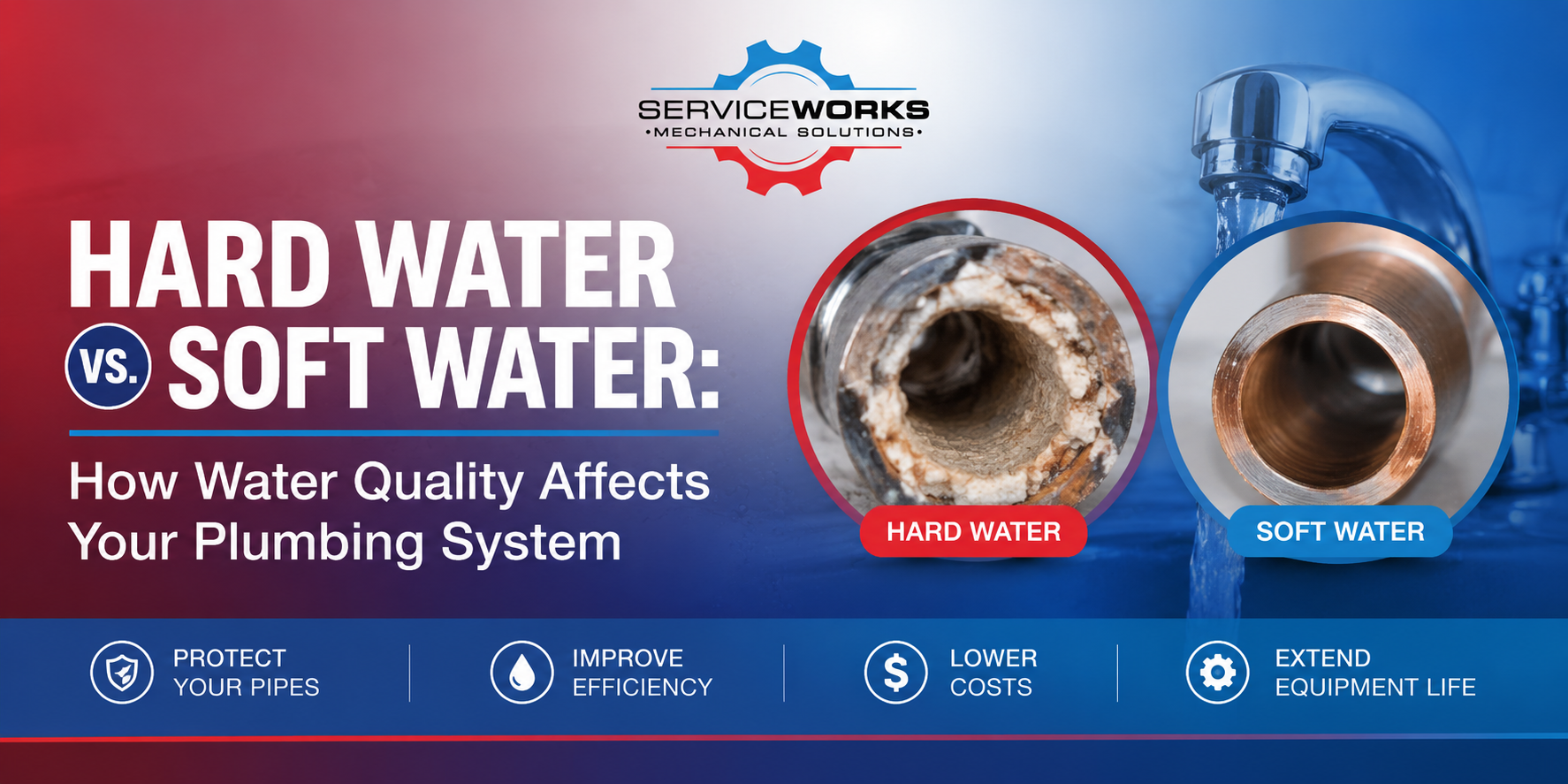
Living near the coast means dealing with salt air and, in many areas, hard water. Hard water is the enemy of the tankless heat exchanger. Calcium and magnesium can create scale buildup that acts like insulation, forcing the unit to work harder and eventually causing it to fail.
In our region, annual flushing is non-negotiable for tankless systems. We use a descaling solution to clear out those minerals. Traditional tanks use an "anode rod" to attract corrosion away from the tank walls, which also needs replacing every few years. For residents in Conway, our Tankless Water Heater Conway SC Guide provides specific tips on handling local water conditions.
Installation Complexity and Space Considerations
If you are tight on space, the tankless vs tank water heater for your home decision is easy. A traditional 50-gallon tank takes up about 10 to 15 square feet of floor space. A tankless unit is about the size of a carry-on suitcase and mounts to the wall. This can free up an entire closet for storage. If you're in the northern part of the Grand Strand, Tankless Water Heater North Myrtle Beach SC installations are a popular way to maximize square footage in beach cottages and condos.
Necessary Infrastructure Upgrades
The "hidden" factor in switching to tankless is the infrastructure. Tankless gas units require much more fuel at once than a tank, which might mean upgrading your gas line from a half-inch to a three-quarter-inch pipe. They also require special stainless steel venting to handle high-temperature exhaust.
Electric tankless models are even more demanding—they can pull 120 to 160 amps, which often necessitates an electrical panel upgrade. These aren't just "plug-and-play" swaps. Whether you're looking at Water Heater Installation Summerville SC or elsewhere, we always perform a full site assessment to ensure your home can handle the load.
Professional vs. DIY Installation
While you might be tempted to DIY a tank replacement, we strongly advise against it for tankless systems. Between gas line pressures, high-voltage electrical work, and complex venting codes, the safety risks are high. Furthermore, most manufacturers will void your 10–12 year warranty if the unit isn't installed by a licensed professional. For a safe and compliant setup, look for Water Heater Installation Replacement Irmo SC experts who understand the specific building codes of the South Carolina coast.
Pros and Cons Summary
To help you visualize the choice, we’ve put together this comparison:
| Feature | Traditional Tank | Tankless (On-Demand) |
|---|---|---|
| Upfront Cost | Lower | Higher |
| Hot Water Supply | Can run out | Endless |
| Energy Bills | Higher (Standby loss) | Lower (Heats on demand) |
| Space | Large footprint | Wall-mounted, saves space |
| Lifespan | 10–15 years | 20+ years |
| Maintenance | Low (Drain/Flush) | Moderate (Annual Descaling) |
For more tips on how to weigh these factors, see our Water Heater Replacement Tips Surfside Beach SC.
Frequently Asked Questions about Water Heaters
Is it worth switching to a tankless system in South Carolina?
Yes, especially if you plan to stay in your home for more than 5 to 10 years. The combination of our warm groundwater (which makes the units more efficient) and the long-term energy savings makes it a very smart move for many. Our Tankless Water Heater Guide Surfside Beach SC goes into even more detail on the local ROI.
Can a tankless unit handle a large soaking tub?
Absolutely. In fact, they are often better for soaking tubs than tanks. A tank might run out of hot water before the tub is even half full. A tankless unit will provide a steady stream of 120°F water until the tub is overflowing.
How often do I need to maintain my water heater?
We recommend an annual service call. For tanks, this involves checking the anode rod and flushing sediment. For tankless, it involves a professional descaling flush to keep the heat exchanger clear. Regular Water Heater Repair Surfside Beach SC and maintenance are the best ways to prevent emergency leaks.
Conclusion
At ServiceWorks Mechanical Solutions, LLC, we know that there is no "one-size-fits-all" answer to the tankless vs tank water heater for your home debate. Whether you’re in Surfside Beach, Charleston, or Florence, the best choice depends on your specific plumbing, your family’s habits, and your long-term goals.
As a veteran-owned company, we pride ourselves on providing honest, expert consultation and a 100% satisfaction guarantee. Our licensed technicians are ready to help you navigate the installation or repair of your system with fast, reliable performance. Ready to upgrade your home comfort? Contact us today for all your Water Heater Services.
testimonials
Customer Testimonials

With approved credit through Wisetack, you can enjoy zero down financing and convenient monthly payments, so you don’t have to wait to get the comfort you deserve.
Recent Blog
Stay updated with our latest blog posts.
Commercial Building Maintenance: The Real Cost of Putting Off Repairs
Guide