Why Post Hurricane Electrical Inspection What to Expect Matters for Surfside Beach Homeowners
Post hurricane electrical inspection what to expect is something every coastal South Carolina homeowner should understand before the next storm season arrives — and especially right after one passes through.
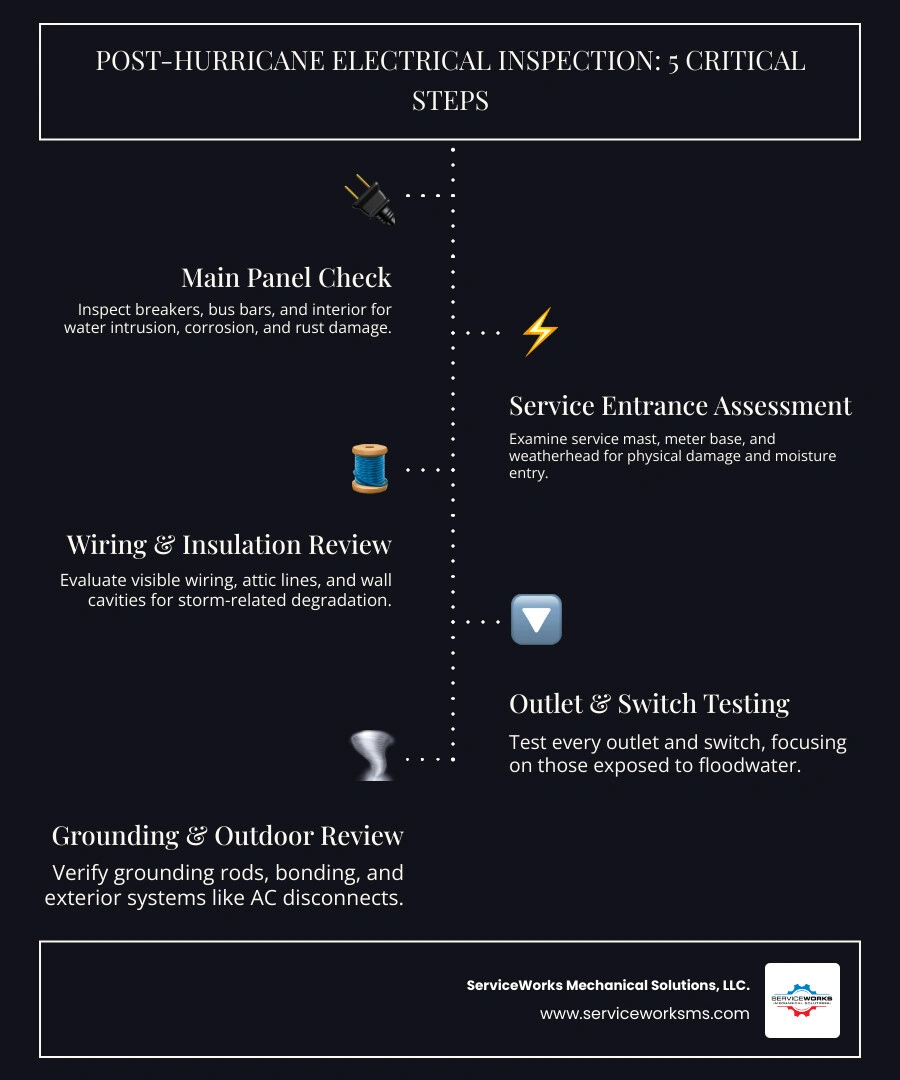
Here is a quick overview of what happens during a professional post-hurricane electrical inspection:
- Main panel check - The electrician inspects breakers, bus bars, and the panel interior for water intrusion, corrosion, and rust.
- Service entrance and meter assessment - The service mast, meter base, and weatherhead are checked for physical damage and moisture.
- Wiring and insulation review - Visible wiring runs, attic lines, and wall cavities are evaluated for storm-related damage.
- Outlet and switch testing - Every outlet and switch is tested, with special attention to any that were near floodwater.
- GFCI and AFCI verification - Safety devices are tested to confirm they still trip and reset correctly.
- Grounding and bonding inspection - Grounding rods and bonding connections are checked to ensure surge protection is still intact.
- Outdoor systems review - Meter boxes, exterior outlets, AC disconnects, and pool pumps are all examined.
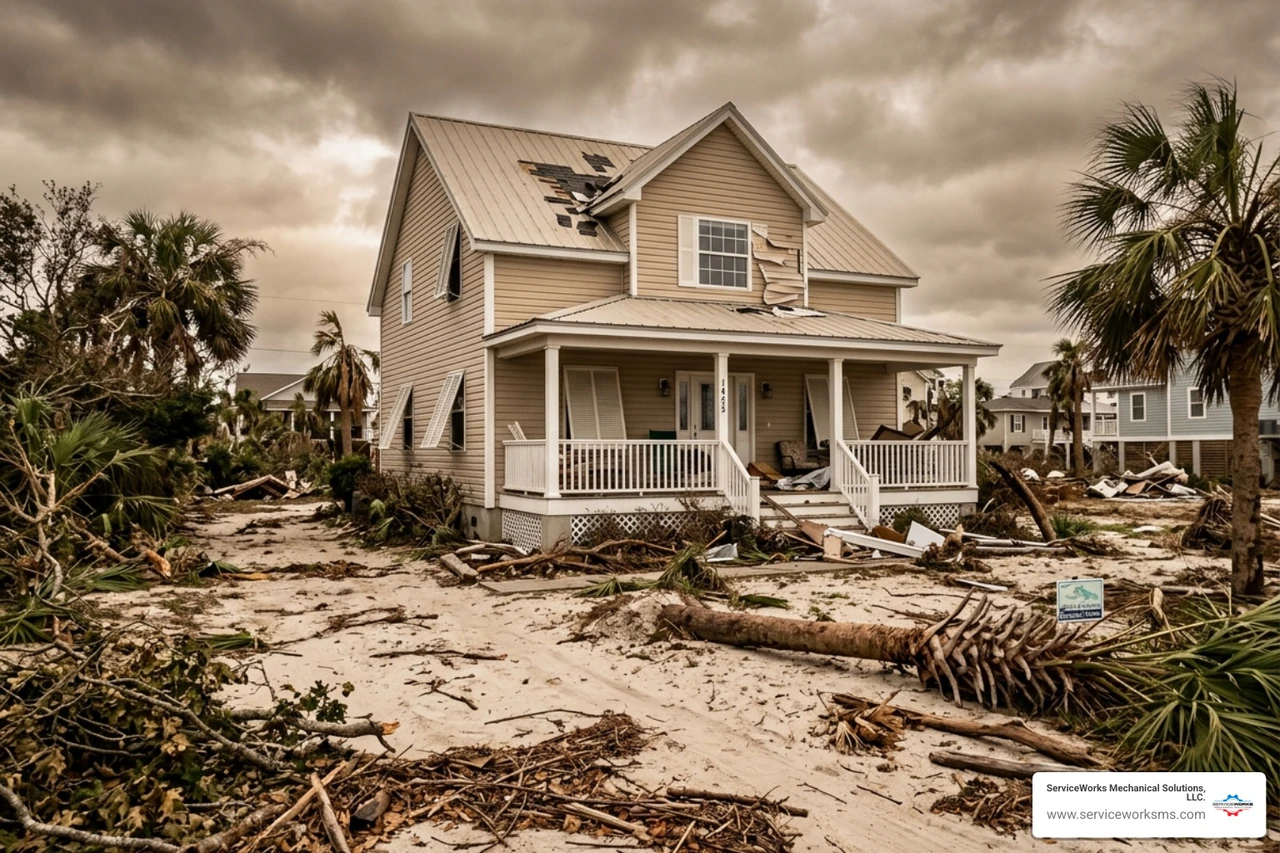
The hard truth is this: when a hurricane rolls through Surfside Beach, SC, the damage you can't see is often more dangerous than what you can. Power might come back on. The house might look dry. But inside your walls, inside your panel, and behind every outlet, saltwater-laced moisture may already be setting off a slow chemical chain reaction — one that can lead to overheating wires, arcing faults, and electrical fires weeks or even months later.
Electrical systems damaged by flooding can function quietly for a long time before problems surface, often failing at the worst possible moment — like during a hot summer afternoon when your AC is running at full load.
This guide walks you through everything you need to know about staying safe after a storm, what a licensed electrician actually checks, and how to protect your home long-term.
Why a Professional Assessment is Mandatory After a Storm
In May 2026, we are more aware than ever that a hurricane's impact lingers long after the winds die down. Many homeowners in areas like Myrtle Beach or Charleston feel a sense of relief when the grid power is restored, assuming that if the lights are on, the danger has passed. However, the "lights on" status is not a safety clearance.
Professional assessments are mandatory because water — particularly the saltwater found in coastal South Carolina — is a brutal conductor of electricity and an even more aggressive corrosive agent. When floodwater enters an electrical system, it leaves behind minerals, sewage, and salt residue. This residue remains even after the water evaporates, creating conductive paths that lead to arcing and overheating.
Hidden Dangers: Post Hurricane Electrical Inspection What to Expect
The most terrifying aspect of storm damage is the "delayed failure." Corrosion increases electrical resistance, which generates heat. This heat can eventually melt wire insulation or ignite nearby flammable building materials like dry wood or paper-backed insulation. According to our Myrtle Beach Electrician Guide, these fires often start quietly behind walls or inside panels weeks after the storm.
Furthermore, hurricanes bring structural shifts. High winds can vibrate a home enough to loosen electrical connections or pull on the service mast where power enters the house. If you have older wiring, you may even need House Rewiring Charleston if moisture has been trapped in the insulation of your cables, as modern insulation is designed for brief moisture exposure, not prolonged submersion.
Post Hurricane Electrical Inspection What to Expect
When our licensed electricians arrive at your home in Murrells Inlet or Pawleys Island, we don't just look for "wet" spots. We perform a systematic diagnostic to ensure every component of your system is safe to handle the load of a modern household.
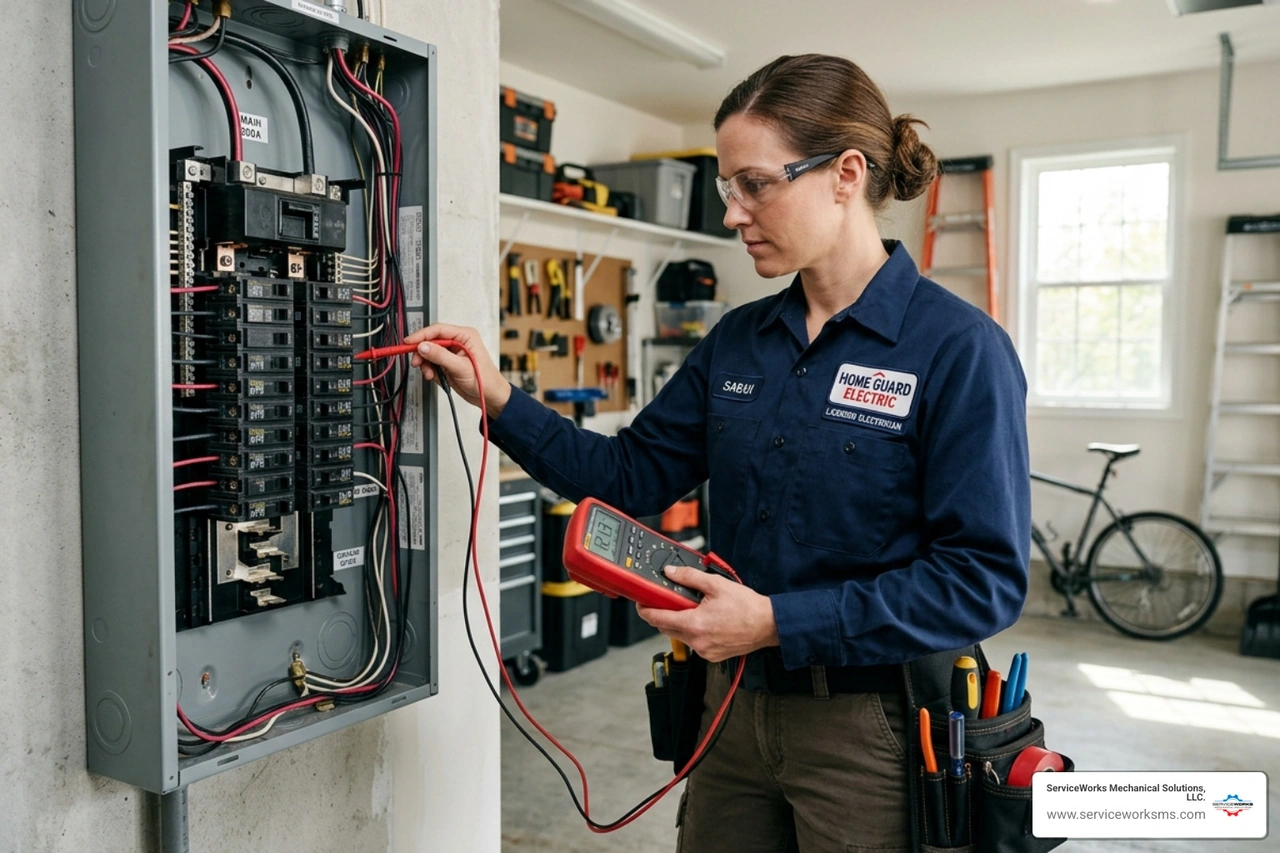
During a post hurricane electrical inspection what to expect includes a deep dive into these critical areas:
- The Main Breaker Panel: We look for any sign of rust or "pitting" on the bus bars (the metal bars that the breakers snap onto). If a panel was reached by floodwater, it almost always requires replacement because internal corrosion prevents breakers from tripping during a short circuit.
- The Service Entrance: We check the meter base and the weatherhead for physical damage from flying debris.
- Grounding and Bonding: We verify that your grounding rod hasn't been displaced by shifting soil or erosion, which is vital for protecting against future surges.
- Outlet and Switch Integrity: We test for "warmth" or discoloration that indicates a poor connection caused by moisture.
Our comprehensive Electrical Services Myrtle Beach ensure that no stone is left unturned. We focus on the "impact zones" where wind and rain are most likely to have breached your home's defenses.
Professional Standards: Post Hurricane Electrical Inspection What to Expect
To provide the highest level of safety, we follow rigorous technical standards like NFPA 70B (Standard for Electrical Equipment Maintenance). This isn't just a visual check; it involves specialized tools.
A qualified Electrician Myrtle Beach may use a megohmmeter (often called a "megger") to test insulation resistance. This tool can detect if moisture has compromised the wiring inside your walls before it causes a fire. We also utilize thermal imaging cameras to find "hot spots" in your panel or at connections that aren't visible to the naked eye. These tools allow us to see the invisible heat generated by high resistance or arcing.
Immediate Safety Steps and Warning Signs for Homeowners
Before an expert arrives, your primary goal is life safety. If you suspect water has entered your electrical system, do not touch the main panel if you have to stand in water to reach it.
Watch for these red flags:
- The Smell of Ozone: A sharp, metallic, or "burning plastic" smell near outlets or the panel.
- Buzzing or Hissing: Sounds coming from inside the walls or from the panel itself.
- Flickering Lights: Lights that dim when a large appliance (like the AC) kicks on, which could indicate a loose neutral or damaged service line.
- Scorched Faceplates: Any discoloration on your outlets or switches is an immediate fire warning.
If you notice these signs, especially in areas like Summerville where flooding can be localized, you might be looking at a situation requiring House Rewiring Summerville to replace compromised circuits.
Dangerous Post-Storm Mistakes to Avoid
We've seen it all in the Lowcountry, and some of the most common mistakes are the most dangerous. First, never repeatedly reset a tripped breaker. If a breaker trips after a storm, it is doing its job by telling you there is a fault. Forcing it back on can cause a fire.
Second, avoid the temptation to use indoor extension cords for outdoor cleanup. They aren't rated for moisture and can lead to severe shocks. Lastly, if your electrical panel was submerged, do not attempt to "dry it out" and keep using it. The internal components are likely ruined. In these cases, Electric Panel Replacement Florence is the only safe path forward.
Managing HVAC, Generators, and Specialized Systems
Your HVAC system and backup power sources are often the most expensive—and vulnerable—parts of your home's electrical infrastructure during a hurricane.
- HVAC Systems: High winds can drive rain and salt spray into the outdoor condenser. If the unit was in standing water, the compressor or fan motor could short out. We recommend keeping the unit off until the water recedes and a pro checks the control boards for moisture.
- Whole-House Generators: If you relied on a Whole House Generator Charleston during the storm, it needs a post-use inspection. We check the transfer switch for arcing and ensure the unit is ready for the next event.
- Solar Panels: Flying debris can cause micro-cracks in panels that aren't visible from the ground but can lead to "hot spots" and reduced efficiency.
- Generator Safety: Always operate portable generators at least 20 feet away from the home to prevent carbon monoxide poisoning. If you want a safer, permanent solution, consider a Whole House Generator Summerville.
Navigating Power Restoration and Insurance Documentation
Restoring power is a coordinated dance between you, the utility company (like Santee Cooper or Dominion Energy), and local municipal inspectors. In many parts of South Carolina, if your home was flooded, the utility company cannot legally restore power until a municipal inspector clears the system.
Once an inspector approves the system, they often place a colored sticker (frequently blue) on the meter base. This is the signal to the utility company that it is safe to energize the home.
| Responsibility | Homeowner | Utility Company |
|---|---|---|
| Service Mast/Weatherhead | Yes (Repairs needed before power) | No |
| The Meter Box (Enclosure) | Yes | No |
| The Electric Meter | No | Yes |
| Main Panel & Interior Wiring | Yes | No |
| Service Drop (Lines from Pole) | No | Yes |
Pro Tip for Insurance: Document everything. Take photos of the meter, the panel, and any water lines on the walls before any repairs begin. This evidence is crucial for FEMA assistance and insurance claims.
Long-Term Upgrades to Mitigate Future Hurricane Damage
Once the immediate danger has passed, it’s time to think about "hardening" your home for the next season.
One of the best investments is Whole-house surge protection. Storms cause massive fluctuations in the grid; a surge protector at the main panel protects your expensive appliances from being fried when the power cycles.
If you live in a flood-prone area of Surfside Beach or Conway, you may want to consider an Electric Panel Upgrade Myrtle Beach to relocate your panel to a higher elevation or install a more modern, weatherproof enclosure for outdoor disconnects. Similarly, an Electric Panel Upgrade Charleston can ensure your home meets the latest safety codes, which are much more stringent than they were even a decade ago.
Frequently Asked Questions about Post-Storm Electrical Safety
Is it safe to turn my power back on if the house is dry?
Not necessarily. Even if the floors are dry, moisture can remain trapped inside wall cavities and electrical boxes. If water reached any part of your electrical system, a professional inspection is the only way to confirm it is safe to re-energize.
Why does my circuit breaker keep tripping after the hurricane?
A tripping breaker is a warning. It usually indicates a short circuit caused by moisture, a ground fault, or a damaged appliance. Do not continue to reset it; leave the circuit off and call an electrician to find the source of the fault.
Does insurance cover a professional electrical inspection?
Many homeowners' insurance policies cover the cost of a certified inspection as part of the "reasonable steps" required to prevent further damage (like a fire). Check with your provider, but the cost of an inspection is far lower than the cost of a house fire.
Conclusion
At ServiceWorks Mechanical Solutions, LLC, we understand the stress that comes with hurricane recovery in South Carolina. As a veteran-owned and family-operated business with over 25 years of experience, we treat your home with the same care and integrity we would our own. Whether you are in Surfside Beach, Myrtle Beach, or Charleston, our licensed technicians are available 24/7 to ensure your family is safe.
Don't guess when it comes to your home's safety. Post hurricane electrical inspection what to expect is about more than just getting the lights back on—it's about ensuring your home stays safe for the long haul.
Schedule your post-storm safety inspection today and get the peace of mind you deserve.
testimonials
Customer Testimonials

With approved credit through Wisetack, you can enjoy zero down financing and convenient monthly payments, so you don’t have to wait to get the comfort you deserve.
Recent Blog
Stay updated with our latest blog posts.
Why Is My Home So Humid? How Your HVAC System Controls Indoor Humidity in South Carolina