For commercial property owners and facility managers, there is always something competing for attention and budget. When an HVAC system is still cooling, a plumbing fixture is only leaking occasionally, or an electrical issue seems minor, scheduling service can easily get pushed down the priority list.
The problem is that building systems rarely improve on their own.
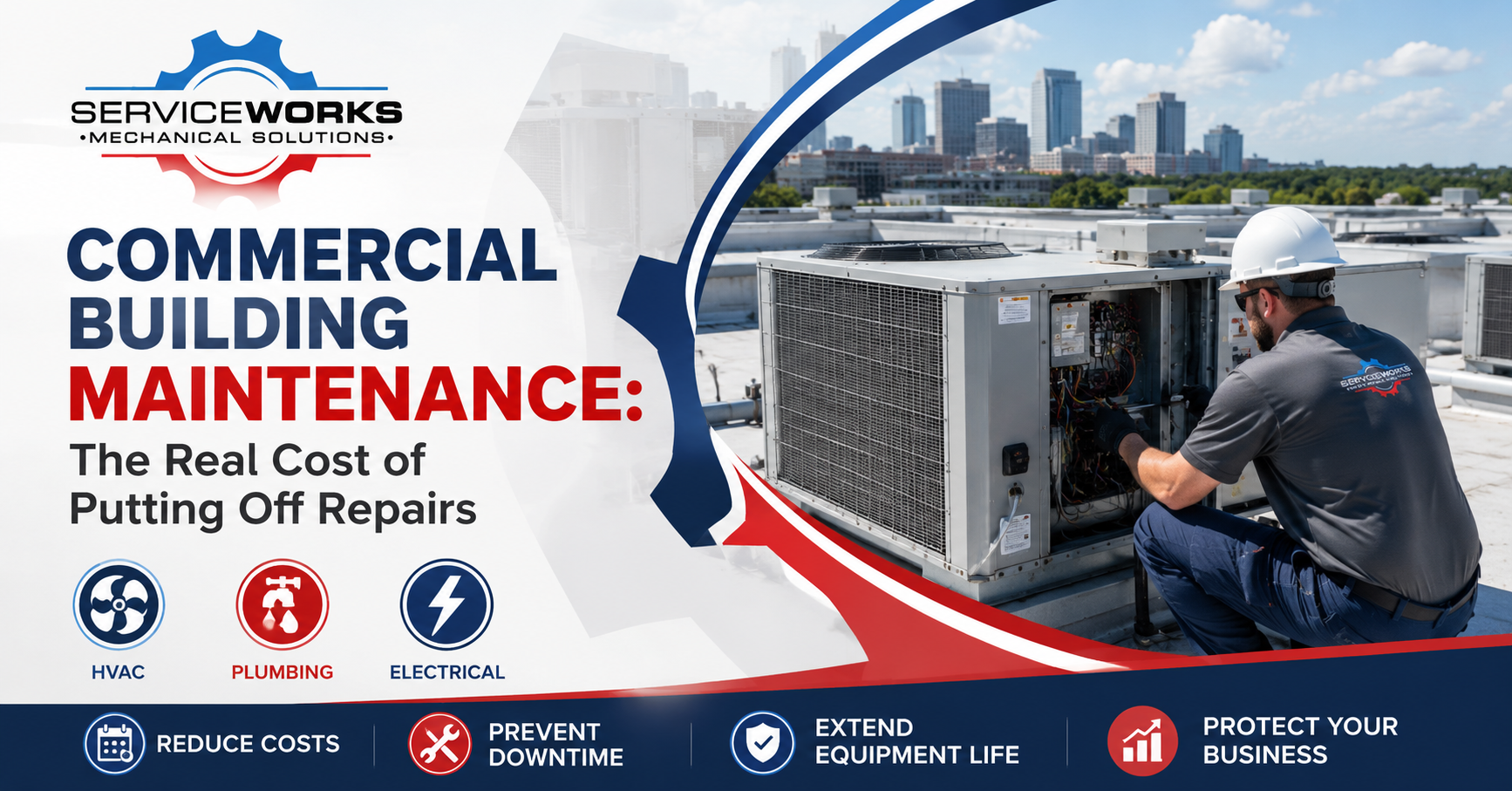
Small issues can gradually increase operating costs, place additional stress on equipment, and eventually turn into larger problems that disrupt normal business operations. Taking a proactive approach to commercial building maintenance can help businesses control costs, extend equipment life, and reduce the likelihood of unexpected downtime.
Here are some of the ways deferred HVAC, plumbing, and electrical maintenance can cost commercial properties more over time.
Small HVAC Problems Can Increase Operating Costs
Commercial HVAC systems often operate for long hours while maintaining comfortable conditions across large or heavily occupied spaces. Even relatively minor problems can have an impact on performance.
Restricted airflow, dirty components, worn parts, thermostat or control issues, and other mechanical problems may cause equipment to work harder than necessary. The building may still feel comfortable, but the system could be using more energy to maintain those conditions.
Over time, that additional workload can increase utility expenses and accelerate wear on important components.
Commercial HVAC maintenance gives technicians an opportunity to identify developing issues before they cause more significant problems. It can also help businesses maintain more consistent temperatures, improve system efficiency, and better understand the overall condition of their equipment.
For businesses throughout South Carolina, where cooling systems often face heavy demand for much of the year, keeping commercial HVAC equipment operating efficiently is particularly important.
Minor Plumbing Problems Can Become Major Disruptions
A dripping fixture or slow drain might not seem urgent in a commercial building, especially when everything remains usable. However, seemingly small plumbing problems can indicate larger issues developing behind the scenes.
Leaks can waste water and potentially damage walls, flooring, ceilings, inventory, or equipment. Recurring drain problems can eventually result in backups. Problems with commercial water heaters can affect businesses that rely on consistent hot water for everyday operations.
There is also the operational impact to consider.
A plumbing problem that takes a restroom, kitchen, break room, or other important area out of service can quickly become more than a maintenance inconvenience. Depending on the type of facility, it may affect employees, tenants, customers, or the business's ability to operate normally.
Addressing plumbing issues early can often give businesses more control over when and how repairs are completed instead of forcing them to respond to an unexpected failure.
Electrical Warning Signs Shouldn't Be Ignored
Commercial properties depend heavily on reliable electrical systems. Computers, lighting, HVAC equipment, machinery, security systems, communications equipment, appliances, and countless other systems rely on the building's electrical infrastructure.
That makes recurring electrical problems worth investigating.
Frequently tripped breakers, flickering lights, outlets that stop working, unusual electrical behavior, or equipment that appears to overload existing circuits can indicate that professional attention is needed.
Older commercial properties may face an additional challenge. Their electrical infrastructure may have been designed for very different operating requirements than the business has today. As organizations add computers, equipment, appliances, charging stations, or other technology, electrical demand can change considerably.
Commercial electrical maintenance and professional inspections can help identify potential concerns and determine whether the building's electrical system continues to meet its current needs.
Deferred Maintenance Can Shorten Equipment Life
Commercial mechanical systems represent a significant investment. Naturally, businesses want to get as much useful life as possible from that equipment.
Continuing to operate equipment with worn or malfunctioning components can sometimes place additional strain on the rest of the system. A relatively small repair that goes unaddressed may contribute to additional component wear and eventually create a much larger repair.
Regular maintenance also provides businesses with valuable information about equipment condition.
Knowing that a rooftop HVAC unit, commercial water heater, electrical panel, or other major component is approaching the end of its expected service life gives decision-makers time to plan. Waiting until equipment fails eliminates much of that flexibility.
Emergency Repairs Can Be More Disruptive Than Planned Service
One of the biggest advantages of proactive commercial building maintenance is control.
When a potential problem is discovered during scheduled maintenance, the business may be able to plan the repair around operating hours, staffing needs, tenant schedules, or periods of lower customer traffic.
Unexpected failures offer far fewer options.
Imagine an air conditioning system going down during a hot South Carolina afternoon, a plumbing backup occurring during peak business hours, or an electrical problem affecting an important section of a facility. Even when repairs can be completed quickly, the disruption may have already affected operations.
Planned service allows facility managers to make decisions before a problem becomes urgent.
Downtime Costs More Than the Repair Bill
When businesses calculate maintenance expenses, it is easy to focus exclusively on the cost of parts and labor. However, the actual cost of a building system failure can extend well beyond the repair itself.
Depending on the facility, downtime could mean employees cannot work normally, customers have to be turned away, tenants experience uncomfortable conditions, certain areas of the building have to close, or equipment cannot be used.
Some businesses may also have temperature-sensitive inventory, specialized equipment, technology infrastructure, or other assets that depend on reliable building systems.
This is why commercial maintenance should be viewed as part of operational planning rather than simply another property expense. Reliable HVAC, plumbing, and electrical systems support the people and processes that keep a business functioning.
Maintenance History Makes Capital Planning Easier
Eventually, every major piece of building equipment will need to be replaced. The goal of preventive maintenance isn't to make equipment last forever. It is to help businesses get appropriate service life from their systems while gaining better visibility into what may need attention next.
Consistent service creates a maintenance history that can help facility managers identify recurring problems, monitor equipment condition, and anticipate future expenses.
For example, knowing that an aging commercial HVAC system has required increasingly frequent repairs can help a business begin budgeting for replacement. The same applies to water heaters, plumbing infrastructure, electrical panels, and other building systems.
That information makes it easier to develop realistic capital improvement plans instead of being caught off guard by major expenses.
Take a Whole-Building Approach to Commercial Maintenance
HVAC, plumbing, and electrical systems may serve different purposes, but they all contribute to the reliability and functionality of a commercial property.
Managing each system proactively can help businesses reduce surprises and gain a clearer picture of the overall condition of their building.
Facility managers should consider maintaining records of inspections, repairs, equipment age, recurring issues, and recommended improvements. Creating a regular maintenance schedule can also make it easier to address smaller concerns before they become urgent.
Most importantly, employees and building occupants should know how to report unusual conditions. A strange noise from an HVAC unit, recurring drain problem, flickering light, or unexpected change in building temperature may provide an early warning that something needs attention.
Protect Your Business With Proactive Commercial Building Maintenance
Putting off maintenance may save money in the short term, but unresolved problems can become more expensive and disruptive as they develop.
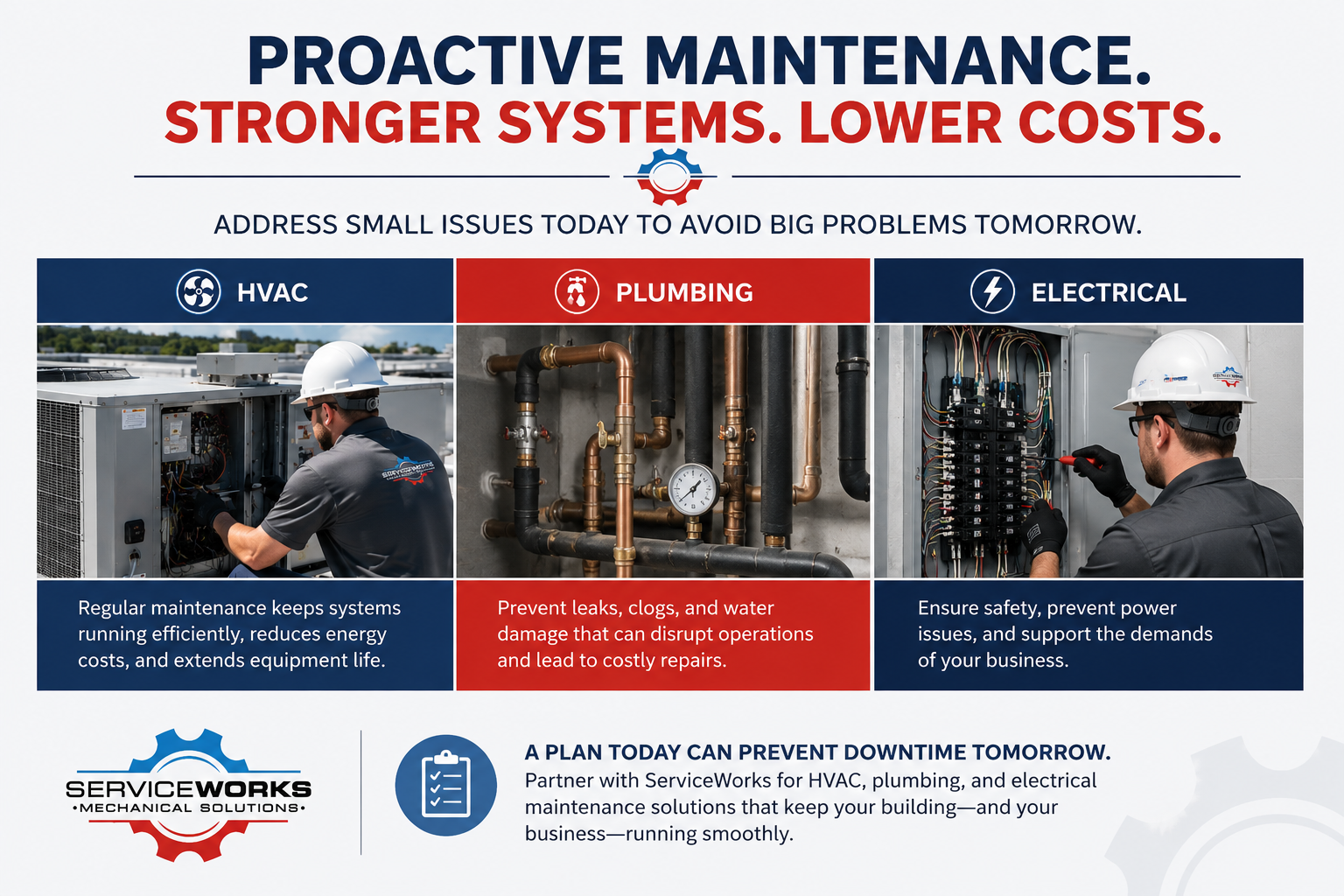
A proactive commercial building maintenance strategy helps businesses identify problems earlier, plan repairs around their operations, protect major equipment investments, and reduce the risk of unexpected downtime.
ServiceWorks Mechanical Solutions provides commercial HVAC, plumbing, and electrical services to help South Carolina businesses keep their facilities operating reliably. Whether your property needs routine maintenance, professional repairs, or help addressing a developing issue, the ServiceWorks team can evaluate your building's systems and recommend the right next steps.
Call ServiceWorks because our service, works!
testimonials
Customer Testimonials

With approved credit through Wisetack, you can enjoy zero down financing and convenient monthly payments, so you don’t have to wait to get the comfort you deserve.
Recent Blog
Stay updated with our latest blog posts.
Guide
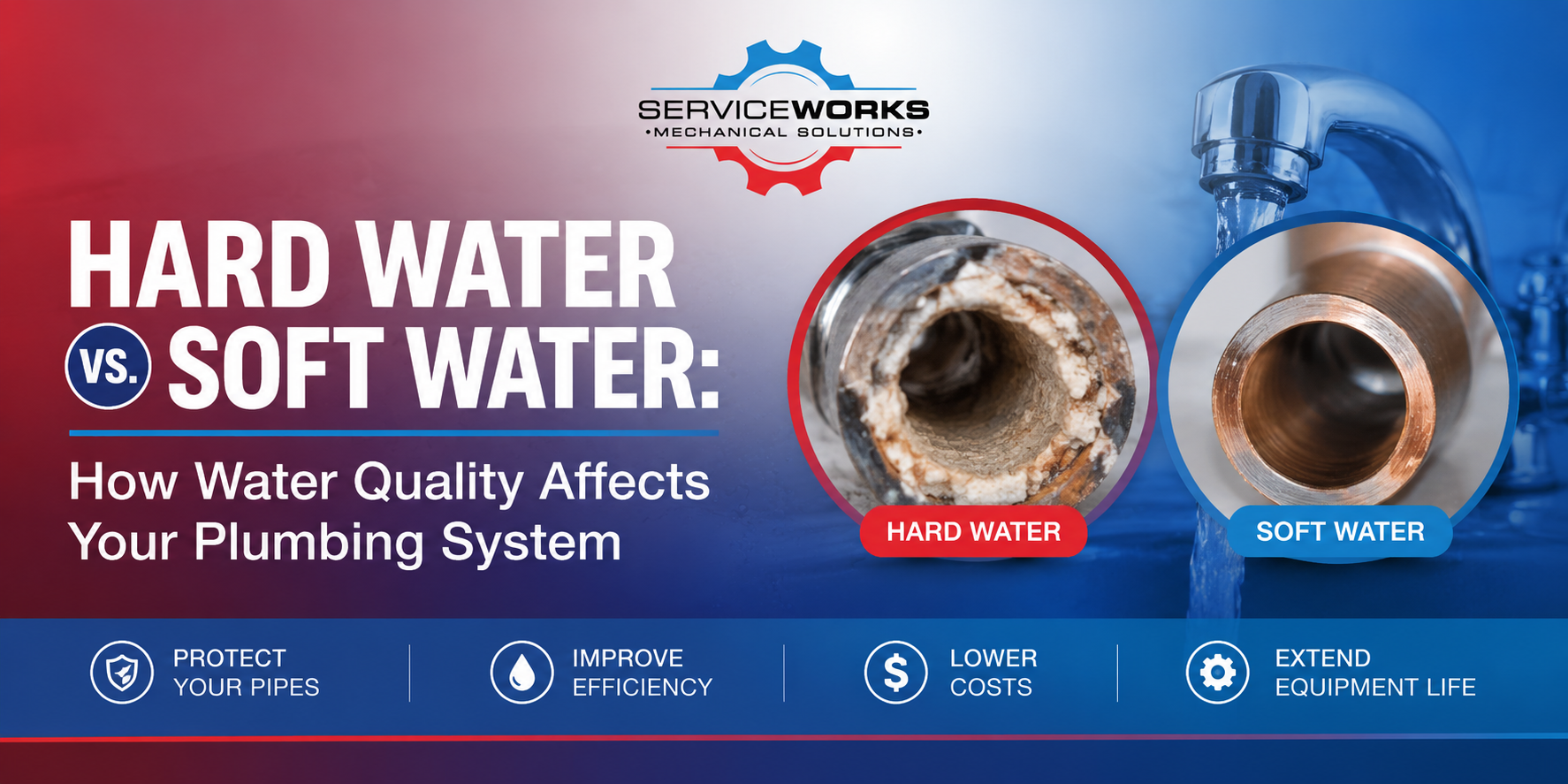
Hard Water vs. Soft Water: How Water Quality Affects Your Plumbing System