
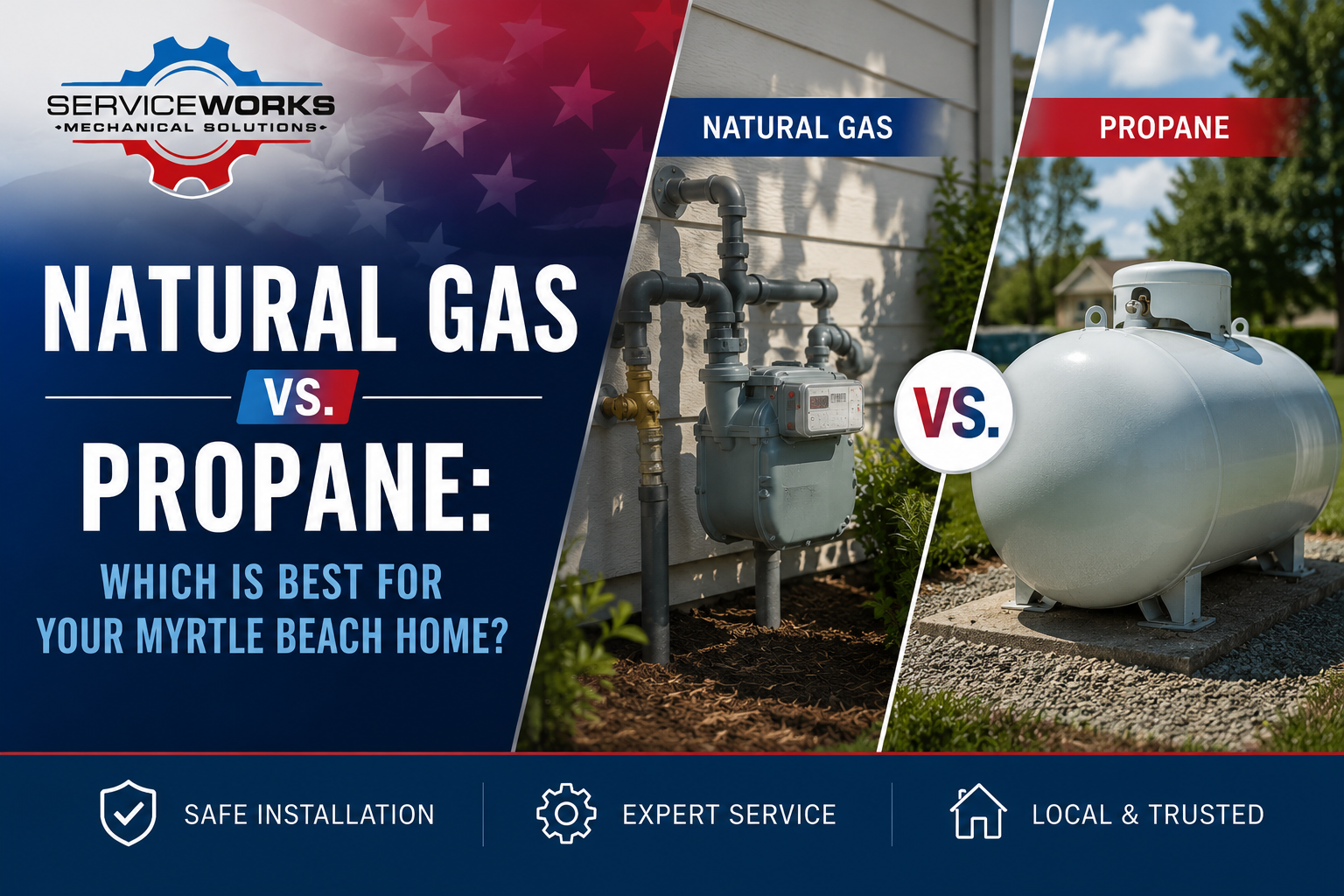
Whether you're installing a new gas range, upgrading to a tankless water heater, adding an outdoor kitchen, or preparing your home for a standby generator, choosing the right fuel source is an important decision. For many homeowners in the Myrtle Beach area, that choice comes down to natural gas vs. propane.
While both fuels offer efficient, reliable performance, they differ in availability, cost, installation requirements, and long-term convenience. Understanding these differences can help you make the best choice for your home's needs while planning for future upgrades.
Here's what every homeowner should know before investing in a new gas appliance or gas line installation.
Understanding the Difference Between Natural Gas and Propane
Natural gas and propane are both clean-burning fossil fuels used to power a wide variety of residential appliances. However, they reach your home in different ways.
Natural gas is delivered through an underground utility pipeline. If your neighborhood has natural gas service available, your home can be connected directly to the municipal gas supply.
Propane, on the other hand, is stored in a tank located on your property. The tank must be periodically refilled by a propane supplier.
Although many appliances can operate using either fuel, they are not interchangeable without proper conversion because each burns at different pressures.
Availability in the Myrtle Beach Area
One of the biggest factors when choosing between natural gas and propane is availability.
Many established neighborhoods throughout the Myrtle Beach area have access to natural gas utilities. However, newer developments, rural properties, or homes farther from municipal infrastructure may rely on propane instead.
If natural gas service is available at your property, connecting to the utility can eliminate the need for fuel deliveries and tank maintenance. If it isn't available, propane provides an excellent alternative that offers many of the same benefits.
A professional evaluation can determine which fuel source is practical for your home and whether a new gas line installation is required.
Comparing Installation Costs
The upfront installation costs vary depending on your property's existing infrastructure.
With natural gas, installation may include:
- Connecting your home to the utility main
- Installing or extending interior gas piping
- Adding shut-off valves
- Pressure testing the system
- Connecting new appliances
For propane systems, installation often includes:
- Installing the propane storage tank
- Running underground or above-ground gas piping
- Connecting appliances
- Scheduling regular fuel deliveries
Every property is different, so installation costs depend on factors such as:
- Distance from the gas source
- Number of appliances being connected
- Existing gas piping
- Local permitting requirements
- Accessibility of the installation area
Planning multiple gas appliances at once can often reduce installation costs compared to adding each appliance individually over several years.
Fuel Costs and Long-Term Value
Fuel prices naturally fluctuate over time, but homeowners should think beyond today's rates.
Natural gas often offers more stable pricing because it is supplied through a public utility. Homeowners also avoid scheduling deliveries or monitoring fuel levels.
Propane prices can vary based on market conditions and seasonal demand. However, propane appliances are generally very efficient, and many homeowners appreciate the flexibility of owning their own fuel supply.
Rather than focusing only on the cost per gallon or therm, it's important to consider:
- Appliance efficiency
- Annual fuel consumption
- Maintenance requirements
- Expected equipment lifespan
- Overall operating costs
An experienced professional can help estimate long-term operating expenses based on your household's energy usage.
Appliances That Can Use Gas
Both natural gas and propane can power a wide range of household equipment.
Some of the most popular gas-powered appliances include:
Tankless Water Heaters
Tankless water heaters provide continuous hot water while using less energy than traditional storage tanks. Many homeowners choose gas-powered models because they recover quickly and operate efficiently.
Gas Ranges
Home chefs often prefer gas cooking because it provides precise temperature control and instant heat adjustments.
Furnaces
Gas furnaces remain one of the most efficient heating options for homes throughout South Carolina.
Fireplaces
Gas fireplaces provide warmth and ambiance without the cleanup associated with wood-burning fireplaces.
Outdoor Kitchens
Gas grills, pizza ovens, fire pits, and patio heaters become much more convenient when connected to a permanent gas line instead of relying on portable propane cylinders.
Standby Generators
Whole-home generators frequently operate on either natural gas or propane, automatically restoring power during outages.
Installing gas lines with future appliance additions in mind can save time and money down the road.
When Do You Need a New Gas Line?
Many homeowners assume adding a new appliance simply involves connecting it to an existing pipe, but that's not always the case.
A new gas line installation may be necessary when:
- You're installing your first gas appliance.
- Existing gas piping cannot safely support additional demand.
- You're adding an outdoor kitchen or fire pit.
- You're installing a standby generator.
- You're converting appliances to gas.
- Existing gas piping is outdated or damaged.
Proper gas line sizing is essential. If pipes are too small, appliances may not receive adequate gas flow, leading to poor performance or safety concerns.
A licensed professional will calculate the appropriate pipe size based on the total gas demand of your home's appliances.
Why Professional Installation Matters
Gas line installation is never a DIY project.
Improper installation can lead to gas leaks, appliance damage, fire hazards, or violations of local building codes.
Professional installation includes:
- Proper pipe sizing
- Secure fittings and connections
- Pressure testing
- Leak detection
- Code-compliant installation
- Safe appliance startup
Working with experienced professionals helps ensure your entire gas system operates safely and efficiently for years to come.
Which Fuel Is Right for Your Home?
There isn't a single answer that fits every homeowner.
Natural gas may be the better choice if:
- Utility service is available.
- You want continuous fuel without deliveries.
- You're planning multiple gas appliances.
- You prefer lower maintenance.
Propane may be ideal if:
- Natural gas isn't available in your area.
- Your property is more rural.
- You want flexibility independent of utility infrastructure.
- You're installing a standby generator or outdoor living features.
The right decision depends on your home's location, your future renovation plans, and your family's energy needs.
Trust ServiceWorks Mechanical Solutions for Safe Gas Line Installation
Whether you're connecting a new gas range, installing a tankless water heater, adding an outdoor kitchen, or preparing your home for a standby generator, properly installed gas lines are the foundation of a safe and reliable system.
The experienced team at ServiceWorks Mechanical Solutions provides professional gas line installation throughout the Myrtle Beach area. We ensure every installation is properly sized, thoroughly tested, and completed to current safety codes, giving you confidence that your new gas appliances will operate safely and efficiently.
If you're considering natural gas or propane for your home, contact ServiceWorks Mechanical Solutions today to schedule a consultation and learn more about our professional gas line installation services.
testimonials
Customer Testimonials

With approved credit through Wisetack, you can enjoy zero down financing and convenient monthly payments, so you don’t have to wait to get the comfort you deserve.
Recent Blog
Stay updated with our latest blog posts.
7 Warning Signs Your HVAC, Plumbing and Electrical Systems Need Professional Attention