Keeping a commercial building operating smoothly requires more than responding when equipment breaks down. HVAC systems, plumbing, electrical components, and other mechanical systems work every day to keep employees, customers, tenants, and visitors comfortable and safe.
Without regular attention, small issues can develop into equipment failures, water damage, comfort problems, higher utility bills, and unexpected repair costs.
A commercial building maintenance schedule gives facility managers and business owners a more organized approach. Instead of waiting for warning signs, you can routinely evaluate critical building systems and address developing problems earlier.
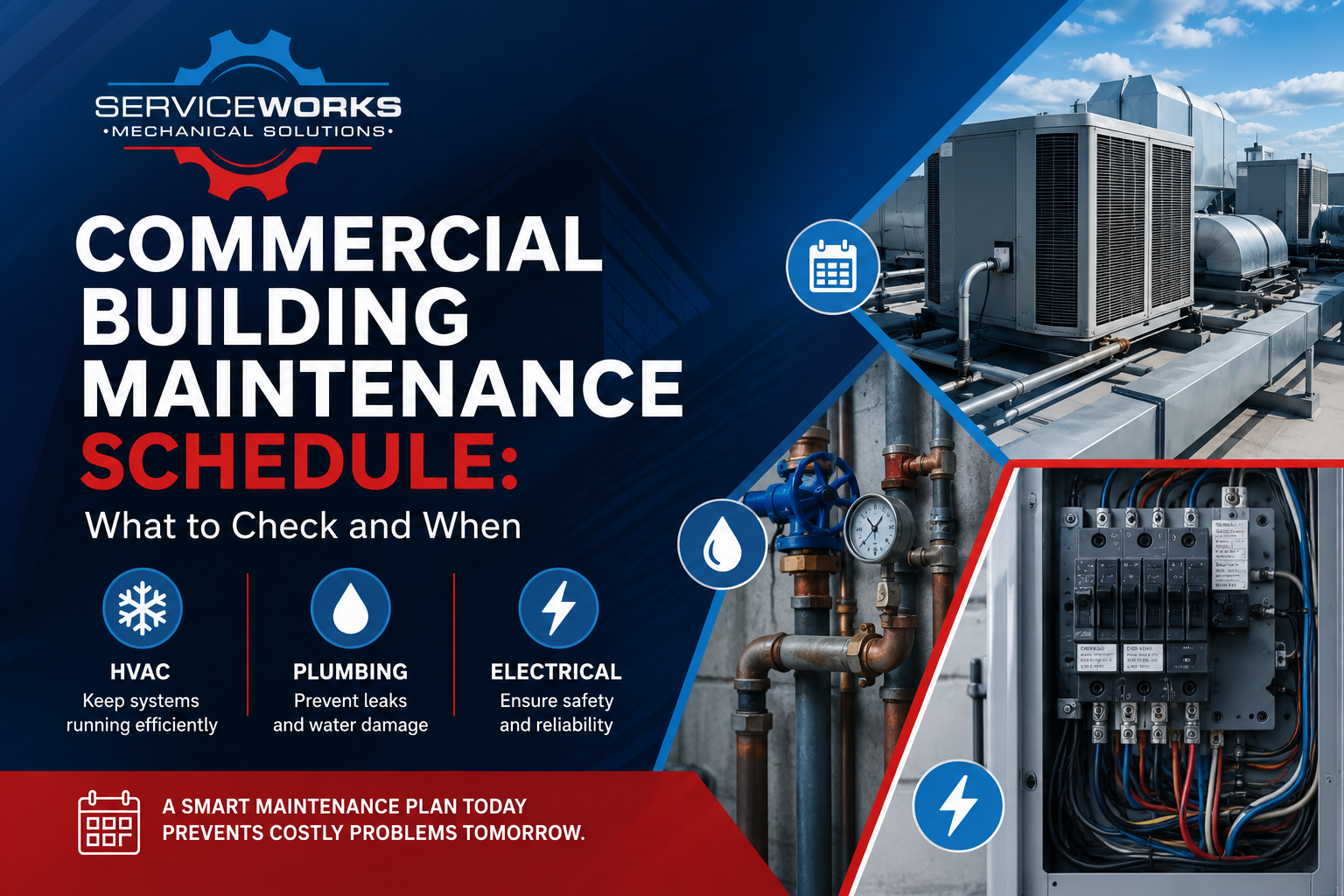
While every property has different equipment and maintenance requirements, the following schedule provides a useful starting point for planning commercial HVAC, plumbing, and electrical maintenance throughout the year.
Why Commercial Building Maintenance Should Be Scheduled
Commercial systems often operate under much greater demand than residential equipment. An HVAC system may run for extended periods to maintain comfortable temperatures throughout a large facility. Plumbing fixtures can serve dozens or hundreds of people each day, while electrical systems support lighting, computers, machinery, appliances, security equipment, and other essential operations.
Regular maintenance helps businesses stay ahead of that demand.
A structured maintenance schedule can help:
- Identify developing equipment problems
- Reduce the likelihood of unexpected breakdowns
- Maintain consistent indoor comfort
- Improve system efficiency
- Protect equipment from unnecessary wear
- Reduce disruptions to daily operations
- Provide a clearer history of repairs and equipment condition
The exact schedule will depend on your building, equipment, occupancy, and operating environment. However, dividing maintenance into monthly, quarterly, seasonal, and annual tasks makes the process easier to manage.
Monthly Commercial Building Maintenance
Monthly checks should focus primarily on easily identifiable problems and systems that require frequent attention.
Check HVAC Filters
Dirty air filters can restrict airflow and make HVAC equipment work harder to maintain the desired temperature. Filters should be checked regularly and replaced according to the equipment manufacturer's recommendations and the conditions inside the building.
Facilities with high occupancy, dust, manufacturing processes, or other airborne contaminants may require more frequent filter changes.
Look for Plumbing Leaks
Check visible pipes, sinks, toilets, water heaters, mechanical rooms, and other accessible plumbing components for signs of leaks.
Even a small leak can waste water and potentially damage surrounding building materials if it continues unnoticed.
Pay Attention to Drains
Slow drains, recurring clogs, unusual odors, and standing water can indicate developing plumbing or drainage problems. Addressing these warning signs early can help prevent larger disruptions.
Watch for Electrical Warning Signs
Facility managers should pay attention to flickering lights, frequently tripped breakers, outlets or switches that are not functioning properly, and other unusual electrical behavior.
Electrical repairs and inspections should always be performed by qualified professionals rather than untrained building staff.
Quarterly Commercial Maintenance
Quarterly maintenance provides an opportunity to look more closely at equipment performance and identify changes that may not be obvious during routine daily operations.
Review HVAC Performance
Are certain areas suddenly warmer or colder than others? Is the HVAC system running longer? Have employees or tenants started reporting comfort problems?
Changes in HVAC performance can sometimes indicate airflow restrictions, control problems, equipment wear, or other issues that warrant professional inspection.
Commercial HVAC equipment should also receive preventive maintenance based on its manufacturer's recommendations and operating demands.
Inspect Plumbing Fixtures
High-use fixtures can experience significant wear. Check faucets, toilets, valves, and other fixtures for leaks, poor performance, or visible damage.
Commercial kitchens, restrooms, and other high-demand areas may require additional attention.
Review Electrical Demand
Businesses change over time. New computers, appliances, machinery, production equipment, or other devices can increase electrical demand.
If your facility has added significant equipment, renovated spaces, or changed how certain areas are used, it may be worth evaluating whether the electrical system is still appropriately supporting the building's needs.
Seasonal Maintenance
South Carolina's climate places significant demands on commercial HVAC equipment, making seasonal preparation especially important.
Prepare Cooling Systems Before Summer
Commercial cooling equipment can face long operating hours during hot, humid South Carolina summers.
Before peak cooling season, schedule professional HVAC maintenance so technicians can inspect the system, identify potential concerns, and make sure the equipment is prepared for increased demand.
This is also a good time to evaluate thermostats, controls, airflow, and overall cooling performance.
Prepare Heating Systems Before Colder Weather
Heating equipment should receive similar attention before temperatures fall.
Waiting until the first cold day to discover a heating problem can leave your business scrambling for repairs at the exact time the system is needed most.
Seasonal preparation gives businesses more time to identify and address issues before they become urgent.
Consider Humidity and Coastal Conditions
Businesses in areas such as Myrtle Beach and Charleston may also face environmental factors such as high humidity and coastal air.
These conditions can affect building systems and equipment over time, making routine professional inspections particularly valuable for properties near the coast.
Annual Commercial Building Maintenance
At least once a year, businesses should take a broader look at the condition and performance of their major building systems.
This may include professional HVAC, plumbing, and electrical inspections based on the property's specific equipment and requirements.
An annual review is also an opportunity to evaluate the bigger picture.
Ask questions such as:
Is equipment requiring more frequent repairs?
Have utility costs increased unexpectedly?
Are certain areas experiencing recurring comfort problems?
Have plumbing issues become more common?
Has the building's electrical demand changed?
Are major systems approaching the end of their expected service lives?
Looking at these patterns can help facility managers make more informed decisions about maintenance, repairs, upgrades, and future capital expenses.
Update Your Maintenance Plan After Building Changes
A maintenance schedule shouldn't remain unchanged forever.
Commercial properties evolve. Businesses add employees, install equipment, renovate offices, expand production areas, change layouts, or convert spaces for entirely new purposes.
These changes can affect multiple building systems.
For example, adding heat-producing equipment could increase HVAC demand. A new breakroom or restroom could change plumbing requirements. Additional machinery could increase electrical loads.
After a significant renovation or operational change, have the affected systems evaluated to determine whether your existing maintenance plan is still appropriate.
Maintenance Needs Vary by Commercial Property
There is no single maintenance schedule that works perfectly for every commercial building.
An office building may have very different demands than a restaurant, retail store, healthcare facility, warehouse, school, or industrial property.
Factors that can influence maintenance frequency include:
- Building size
- Number of occupants
- Hours of operation
- Equipment age
- Type of HVAC system
- Plumbing usage
- Electrical demand
- Indoor air quality requirements
- Business operations
- Environmental conditions
A professional commercial service provider can help you develop a maintenance plan based on your facility rather than relying on a generic schedule.
Keep a Commercial Building Maintenance Log
In addition to scheduling maintenance, document what happens.
Your maintenance log can include inspection dates, repairs, equipment problems, recurring issues, filter changes, upgrades, and recommendations from service professionals.
Over time, this history can make it easier to identify patterns.
For example, if the same HVAC unit requires repeated repairs, the maintenance history can help determine whether continued repairs make sense or whether replacement should be considered. Similar records can help with plumbing and electrical systems.
Documentation can also make transitions easier when facility managers, property managers, or maintenance personnel change.
Build a Maintenance Plan Around Your Facility
Preventive commercial building maintenance is an ongoing process. The goal is to understand the condition of your building's systems and give your team time to address problems before they interfere with normal operations.
ServiceWorks Mechanical Solutions provides commercial HVAC, plumbing, electrical, and mechanical services for businesses throughout South Carolina. Our team can help identify maintenance needs, address equipment problems, and develop solutions based on your facility's systems and operating requirements.
Whether you need seasonal HVAC maintenance, plumbing repairs, electrical services, system upgrades, or ongoing commercial support, ServiceWorks is ready to help keep your building operating safely, comfortably, and efficiently.
Need commercial building maintenance or repairs? Contact ServiceWorks Mechanical Solutions to schedule professional HVAC, plumbing, electrical, or mechanical service for your South Carolina property.
testimonials
Customer Testimonials

With approved credit through Wisetack, you can enjoy zero down financing and convenient monthly payments, so you don’t have to wait to get the comfort you deserve.
Recent Blog
Stay updated with our latest blog posts.
Commercial HVAC Replacement Planning: How to Know When It’s Time to Replace Your System