



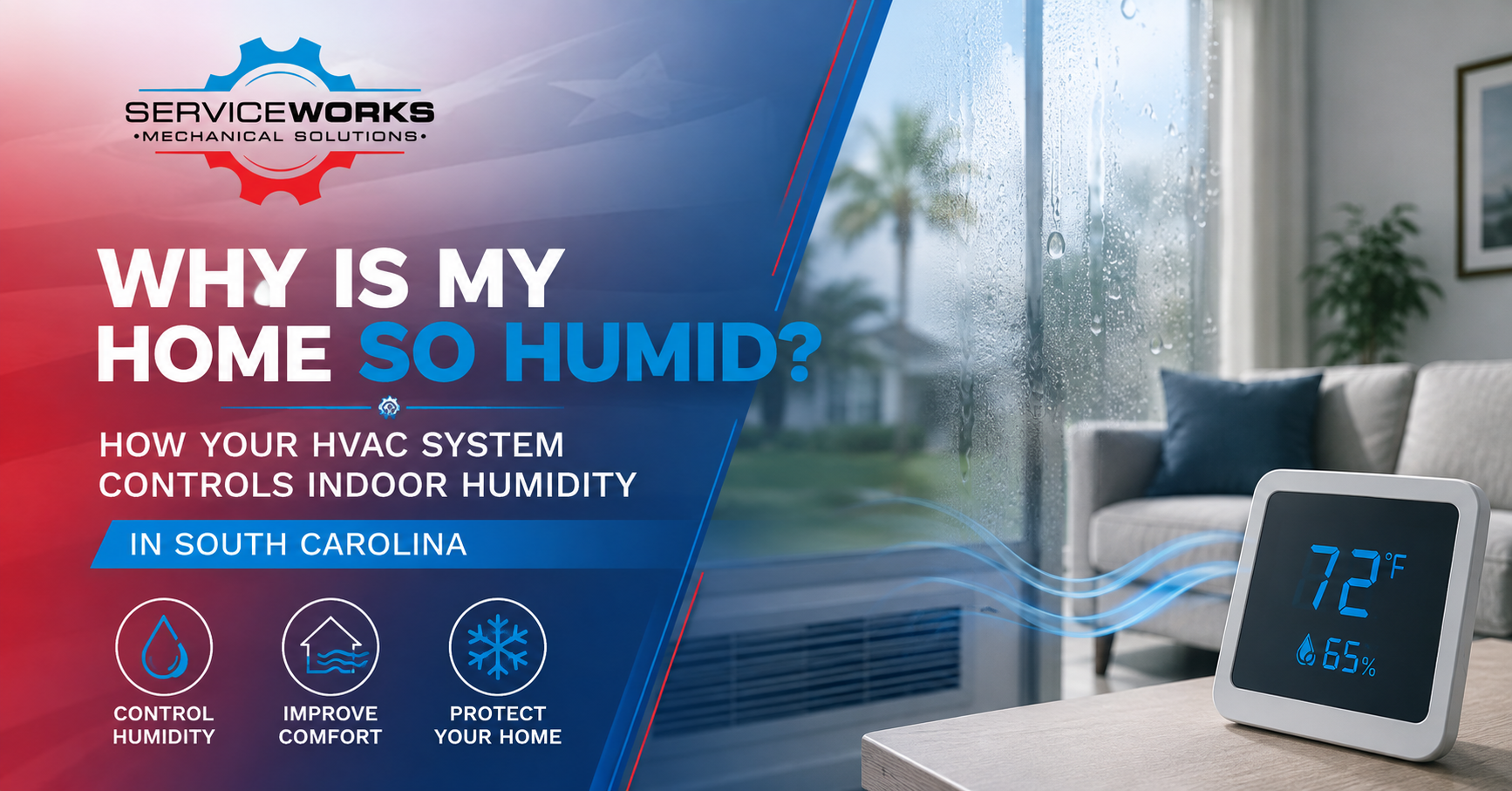
Living in South Carolina means dealing with plenty of warm weather, but it also means dealing with humidity. When outdoor moisture levels rise, keeping your home comfortable can become more difficult. Even if your air conditioner is running, the air inside may still feel sticky, damp, or warmer than the thermostat suggests.
Your HVAC system plays an important role in managing indoor humidity. While air conditioners are primarily designed to cool your home, they also remove moisture from the air during the cooling process. When something interferes with that process, indoor humidity levels can quickly become uncomfortable.
If you have been wondering, "Why is my house so humid?" your HVAC system may be part of the answer. Understanding what causes excessive indoor humidity can help you determine when simple maintenance is enough and when it may be time to call a professional.
Why Is Humidity Such a Problem in South Carolina?
South Carolina's warm, humid climate creates an ongoing challenge for homeowners. Moisture from the outdoor air can enter through doors, windows, gaps around the home, and normal ventilation. Your cooling system then has to manage both the temperature and the moisture that enters your living space.
Ideally, indoor relative humidity should generally stay around 30% to 50%. When levels remain higher, your home may feel uncomfortable even at a reasonable temperature.
High indoor humidity can also contribute to condensation, musty odors, moisture damage, and conditions that encourage mold and mildew growth. It can even cause your air conditioner to work harder as you lower the thermostat in an attempt to feel cooler.
For homes throughout Myrtle Beach, Charleston, Columbia, Florence, and other South Carolina communities, effective humidity control can be an important part of year-round indoor comfort.
How Does Your Air Conditioner Remove Humidity?
Your air conditioner doesn't just lower the temperature. As warm indoor air passes over the system's cold evaporator coil, moisture in the air condenses on the coil.
That moisture collects and eventually exits the home through the condensate drain system. The cooled and dehumidified air is then circulated back through your home.
This process happens naturally whenever your AC completes a cooling cycle. However, the system needs enough runtime to effectively remove moisture.
When an HVAC system isn't operating properly, runs for unusually short periods, or isn't correctly sized for the home, it may cool the space without removing enough humidity.
7 Reasons Your House May Feel Too Humid
Several HVAC and home-related problems can contribute to excessive indoor humidity.
1. Your AC System Is Too Large
A bigger air conditioner isn't necessarily better.
An oversized AC system may cool your home very quickly and then shut off. These short cycles can prevent the system from running long enough to remove sufficient moisture from the air.
You may reach your desired thermostat temperature while the house still feels sticky or clammy. Proper HVAC sizing is based on factors such as square footage, insulation, windows, home orientation, and other characteristics rather than simply installing the largest unit available.
2. Your Air Conditioner Needs Maintenance
Dirty or poorly maintained equipment may struggle to control both temperature and humidity.
A dirty evaporator coil, clogged filter, drainage issue, or other maintenance problem can reduce system performance. Restricted airflow can also interfere with the air conditioner's ability to effectively move air across the evaporator coil.
Routine HVAC maintenance helps keep the equipment clean and operating as intended while giving technicians an opportunity to identify potential issues before they become larger problems.
3. You Have Airflow Problems
Proper airflow is essential for effective cooling and humidity control.
Dirty filters, blocked vents, ductwork problems, blower issues, and other restrictions can prevent conditioned air from circulating correctly throughout your home.
Airflow issues may also explain why certain rooms feel more humid or uncomfortable than others. A professional HVAC inspection can help determine whether the problem is related to equipment, ducts, vents, or another part of the system.
4. Your AC Is Short Cycling
Short cycling occurs when an air conditioner repeatedly turns on and off without completing normal cooling cycles.
Several issues can cause short cycling, including oversized equipment, thermostat problems, dirty components, airflow restrictions, or mechanical problems.
Because moisture removal requires adequate runtime, frequent short cycles can leave humidity behind even if the AC is technically cooling your home.
If you notice your system starting and stopping unusually often, having it inspected can help protect comfort and potentially prevent unnecessary wear on the equipment.
5. Your Ductwork Is Leaking
Ductwork carries conditioned air throughout your home, but leaks can interfere with that process.
Depending on where your ducts are located, damaged or poorly sealed ductwork may allow warm, humid air from attics, crawl spaces, or other unconditioned areas to enter the system.
Leaky ducts can also allow cooled air to escape before reaching your rooms, causing longer runtimes, inconsistent temperatures, and higher energy consumption.
Inspecting and sealing ductwork may improve both HVAC performance and indoor comfort.
6. Moisture Is Entering Your Home From Other Sources
Your HVAC system isn't always the only reason humidity levels are high.
Bathrooms without adequate ventilation, cooking, plumbing leaks, crawl space moisture, gaps around doors and windows, and other sources can introduce additional moisture.
South Carolina's humid outdoor air can make these issues more noticeable.
If humidity remains high despite a properly functioning AC system, it may be worth evaluating the home as a whole to identify other sources of moisture.
7. Your Home May Need Additional Dehumidification
In some homes, the air conditioner alone may not provide enough humidity control.
A whole-home dehumidifier works with your HVAC system to remove additional moisture from indoor air. Unlike portable units designed for individual rooms, whole-home systems can help manage humidity throughout the house.
These systems can be especially useful in humid climates where moisture remains a concern during much of the year.
An HVAC professional can evaluate your home's current humidity levels and determine whether additional dehumidification would be beneficial.
Signs Your Home Has Too Much Humidity
Sometimes excessive humidity is obvious, but other signs can be easier to overlook.
You may notice:
- Air that feels sticky or clammy
- Condensation on windows or other surfaces
- Musty or damp odors
- Mold or mildew growth
- Rooms that feel warmer than the thermostat indicates
- Moisture around vents
- Increased allergy or indoor air quality concerns
- Your AC running frequently without making the home comfortable
A digital hygrometer can also help you monitor indoor relative humidity and identify when levels are consistently elevated.
Can Lowering the Thermostat Fix High Humidity?
Lowering the thermostat may make the house colder, but it doesn't necessarily solve the underlying humidity problem.
In fact, repeatedly lowering the temperature can increase energy consumption while leaving the actual cause unresolved.
If your home feels uncomfortable at a normal thermostat setting, the better solution is to determine why the HVAC system isn't removing enough moisture. The issue could involve system sizing, maintenance, airflow, ductwork, equipment performance, or the need for additional humidity control.
Improve Indoor Comfort With ServiceWorks Mechanical Solutions
High indoor humidity shouldn't be something you simply have to accept as part of living in South Carolina.
A properly functioning HVAC system should help manage both temperature and moisture, keeping your home more comfortable through hot and humid weather. If your house feels sticky, your AC runs constantly, or humidity levels remain high, having your system evaluated can help uncover the cause.
ServiceWorks Mechanical Solutions provides HVAC services for homeowners throughout Myrtle Beach, Charleston, Columbia, Florence, and surrounding South Carolina communities. From AC repair and routine maintenance to system replacement and indoor comfort solutions, our experienced team can help keep your HVAC system performing efficiently.
If excessive humidity is making your home uncomfortable, contact ServiceWorks Mechanical Solutions to schedule HVAC service and find the right solution for your home.
Call ServiceWorks because our service, works!
testimonials
Customer Testimonials

With approved credit through Wisetack, you can enjoy zero down financing and convenient monthly payments, so you don’t have to wait to get the comfort you deserve.
Recent Blog
Stay updated with our latest blog posts.
Commercial Building Maintenance: The Real Cost of Putting Off Repairs
Guide